|
| ‘Tripura, Meghalaya and Nagaland went to the polls recently and the results were scheduled for February 28, the same day that the budget was presented to the nation...’ |
Still the dispensable periphery
Recently the Rajya Sabha channel looked at how media is reporting India’s Northeast. This is a recurrent theme and a conundrum that will remain unresolved as long as commerce drives the media. The core and periphery debate has gone on for a long time in trying to understand this conundrum. But it remains a debate. Udayan Mishra’s book, The Periphery Strikes Back talks about this feeling of neglect and the violent talking-back and reprisal from the alienated region. But nothing has changed the situation. Delhi cannot be bothered and even institutions like the Election Commission (EC) do not consider the region important enough or politically strategic to the country to think intelligently as to when the counting of votes should happen.
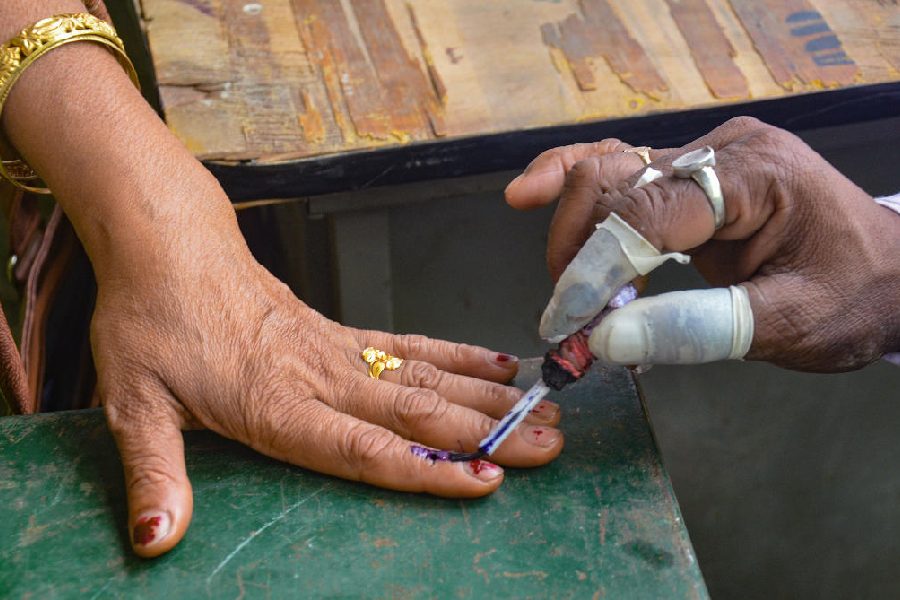
Tripura, Meghalaya and Nagaland went to the polls recently and the results were scheduled for February 28, the same day that the budget was presented to the nation.
The EC knows that the last day of February every year is the year of the annual budget presentation when everyone is glued to the TV to get a glimpse of what would go up and what would come down (although the latter hardly happens). Those who are overly bothered about the budget should try living in the Northeast, where the vegetable called ladies finger sells at Rs 120 a kg and where a 100-hour bandh is called by some crank in the Bodo belt and everyone goes along with the bandh call at the expense of education, commerce and social harmony. But I am digressing and that is natural when you live in a place that does not allow concentration for that is a luxury we can ill afford.
Yes, so the EC announced that the election results of the three states would coincide with the budget presentation. And guess what? No one in the so-called “mainstream” (possibly the Ganges and Yamuna streams) really knows which party/parties won, or lost the elections. And no one really cares! Why would Delhi care about a region that sends only 26 MPs from eight states? Think Uttar Pradesh or Gujarat or even Himachal Pradesh and see how much excitement there is in the air when election results to these states are announced. Why? Because they can make or break governments and can upset the ruling dispensation in this country.
At the end of the day numbers matter. The anchor for the Rajya Sabha programmes, “Media manthan,” a senior journalist, asked some of us who were connected to the programme over telephone what we thought of this continued neglect of the metro-centric media (which goes by the oxymoron of national media). All we could say is that most of these privately owned TV channels and newspapers are driven by pure commerce and viewership.
This neglect of the region by the media has resulted in the average Indian citizen languishing in ignorance about the Northeast. They believe the region is one large geographical space occupied by more or less homogenous groups of tribes who want to secede from India and who have been taking up arms against the nation state to pursue these demands. One “general knowledge” that no Indian misses is that “Northeast India is unsafe, bloody and ruthless”. This caricature sticks to the mind and is reinforced by the violence that happened in Kokrajhar, a district in the Bodoland Territorial Council (BTC) of Assam last year and which triggered a counter exodus of northeasterners from different cities of India following a rumour that Muslims are being persecuted here and a counter-posturing by Muslims elsewhere in the country.
No peace effort
Between rumours, realities and images this region has tried to negotiate its own steep and sharp bends and its people have learnt to squeeze out some sanity from the cacophony and chaos. Of course the region has been wracked by violence for decades. Its people and its growing generation carry the scars of the trauma they witness each time there is an ethnic cleansing bout and blood flows freely and lives are destroyed in a moment of fury. This region is so used to hearing of people being uprooted from their hearths and homes and living in camps for decades that it has numbed their senses. Even the state administration has learnt to “cope” and “manage” such situations. After all, a district collector has a fixed tenure of three years. He/she knows that there is no place for feelings or for humanness. They have to give relief and ration to the inmates and that’s it. Why should they be bothered about the livelihoods of the inmates or the education of their children? These are issues that NGOs and the churches have to take up. The state only tries to contain violence and manage conflicts.
At the best of times, the state is only reactive. It is also ironic that in a region known to the outside world as a hub for violence there is no institution for peace building as yet. Some universities have a peace studies centre but they have a limited outreach and are purely academic in nature.
They do not provide the tools for conflict resolution or the language of accommodation as opposed to the strident language of aggression. There is no neutral space where communities in conflict can get away from their ghettoised locations and mindsets and sit and talk to each other as “people” and not as Nagas, Bodos, Khasis, Garos, Dimasas, Karbis, Muslims, Christians, Hindus, non-tribals, et al. The academia is too elitist to allow such a space. What we need are peoples’ forums and institutions, non-threatening spaces where they can talk in their lingo without fear of being judged.
Tag problem
How is it that we have not developed such a space in any of the conflict-ridden states all these years? It is true that we have been too dependent on the state for resources. It is true that running any kind of institution requires funds and that institutions get bogged down by a constant need for financial resources and the pressures to keep the institution afloat. But the Northeast has its attributes and those are that community platforms need not turn into monoliths. We need to tap into our own ingenuity and strengths.
A public interface platform one can think of is the Naga Hoho where ways towards peace, however untidy, are discussed and dialogued about.
These sort of forums are of particular import in states where different communities occupy contiguous spaces and yet find it hard to talk to each other because of the circumscribed “tags” of community, religion and “outsider” which bar that from happening.
How long has it been since the warring groups in Kokrajhar have sat and talked “with” each other instead of talking “to” each other through the media?
We know that TV today plays a major role in a state like Assam. There are several channels and each one is competing for space, hence the stories they prefer to do are controversial ones. Peace pays no dividends for the media because the political economy of violence is well entrenched here. And yet it is important for groups in the region to work out their peace formulas and not be overly dependent on a reactive, unintelligent, unresponsive and capricious Centre.
The recent instance where the election results were completely subsumed by the budget should teach us some lessons in adversity. Ethnic groups demanding their political space cannot be considered impudent.
The Centre has to learn why these demands emerge and deal with them with greater sensitivity without giving the appearance that it buys peace with those who trigger unwieldy violence.
(The author can be contacted at patricia17@rediffmail.com)
|