|
| People protest in front of the ASEB office in Tinsukia over frequent power cuts. File picture |
The power situation is bleak throughout the Northeast and threatens to get bleaker. Somewhat thinly-populated states like Arunachal Pradesh, Meghalaya and Mizoram are in a better position in this respect, but a heavily-populated state like Assam is moving towards a literally darker future. It needs to be noted that Assam had massive loadshedding this winter, a season when demand for power is at its lowest. One may well imagine what the situation would be in the coming summer months!
The ominously increasing gap between the peak-hour requirement and actual availability is certain to widen with each passing year, since there is no viable mechanism put in place to close it and there has been no attempt to initiate rectification measures. This also needs to be taken in the context of the fact that the Northeast is the least industrialised region of the country, with power-guzzling heavy industries being totally absent from the overall scenario. Despite this, the “powers” that be have been unable to catch up with the shortfall and instead allowed things to deteriorate almost beyond the point of no return.
In Assam, for instance, we have had the same government for over a decade now. All we have had during its tenure are a bouquet of excuses of various kinds for the suffering of the people brought about because of inefficiency and lack of foresight of the electricity department, but no new initiative is in sight.
It was only some days ago that the state government took the decision to dissolve the Assam State Electricity Board while giving three different companies the responsibility of power generation, transmission and distribution. However, the layman is at a loss to understand how this will help the consumers in getting his or her daily quota of electricity.
Even an inferior intelligence grasps the reality that the most important component of the three operations is power generation. Unless one has adequate power in the first place, issues such as transmission and distribution are rendered redundant. Thus structural adjustment to the mechanism will do little to alleviate the problem of power shortage unless viable measures are taken to generate electricity, dependence on sources beyond the control of the state being fraught with uncertainties.
The irony that this region has a river system with the highest hydropower potential in the country, being 41 per cent of the total, estimated to be around 41,000MW, will not be lost on the knowledgeable. Nor will the fact that less than three per cent of this has been tapped even over six decades after Independence. But now a state like Arunachal Pradesh seems to have gone to the opposite extreme, envisaging scores of new projects to be built within an impossibly short span, including 10 hydroelectric projects with an aggregate capacity of 7,221MW in the Lohit basin alone! The Arunachal Pradesh government has signed MoUs with all sorts of companies without sparing the least thought to the concerns of the people living in the Brahmaputra Valley.
As for hydropower exploitation in Assam, the most ambitious project undertaken so far, the Lower Subansiri Hydro-electric Power Project (LSHEP), has been stalled due to the understandable fear of the downstream population as to the adverse impact such a mega-dam might have on them. The blame for the current impasse vis-à-vis the LSHEP lies squarely on the shoulders of the proponents of the project. The Centre as well as the Assam government should have appreciated that no longer can they undertake unilateral planning and execution of projects without keeping the apprehension of the people in mind. The days when planners, bureaucrats and politicians could ride roughshod over public opinion and act in any way they wished are over, the LSHEP fiasco being a telling example of this truism.
Too late the authorities have realised that it would have been far more sensible to have built a series of smaller dams with lesser potential of wreaking havoc downstream if things went wrong than build a mega-dam. Now, with no tangible alternative in sight, the Assam government has been left in the lurch, which takes us back to the acknowledgement that we are confronting a darker future.
One also needs to acknowledge that despite the loadshedding being experienced in Guwahati, Assam’s premier city is actually “well off” compared to the rest of the state! The record of rural electrification in much of Northeast is none too bright, with Assam’s performance being the poorest. While on paper it is easy to claim that so many villages have been linked to the power grid, at the end of the day it is whether they get power at all which determines the extent of rural electrification.
An ancillary aspect of the poor electrification of the Northeast is the inaccessibility of a great chunk of area because of factors such as difficult terrain. For instance, grid connectivity is well nigh impossible in steep, mountainous regions of many of the northeastern states or in char areas of a state like Assam.
To counter the handicap, the Centre had come up with the Remote Village Electrification Programme (RVEP) under the ministry of new and renewable energy designed to provide off-grid solutions based primarily on solar power and compatible appliances. Select areas of Assam and some of the states in the rest of the country were brought within this scheme to test the viability of providing power through alternative means.
Unfortunately, as shown by an excellent report compiled by the New Delhi-based Centre for Science and Environment (CSE), the results of the RVEP in Assam, which has the highest number of remote villages under the programme, have been somewhat mixed.
Under the scheme, households are provided solar home-lighting systems (SHS) — a unit comprising CFLs, solar panel, a battery and a charge regulator — at a subsidised rate. The three implementing agencies in Assam are Assam Energy Development Agency, Assam State Electricity Board (ASEB) and the state forest department.
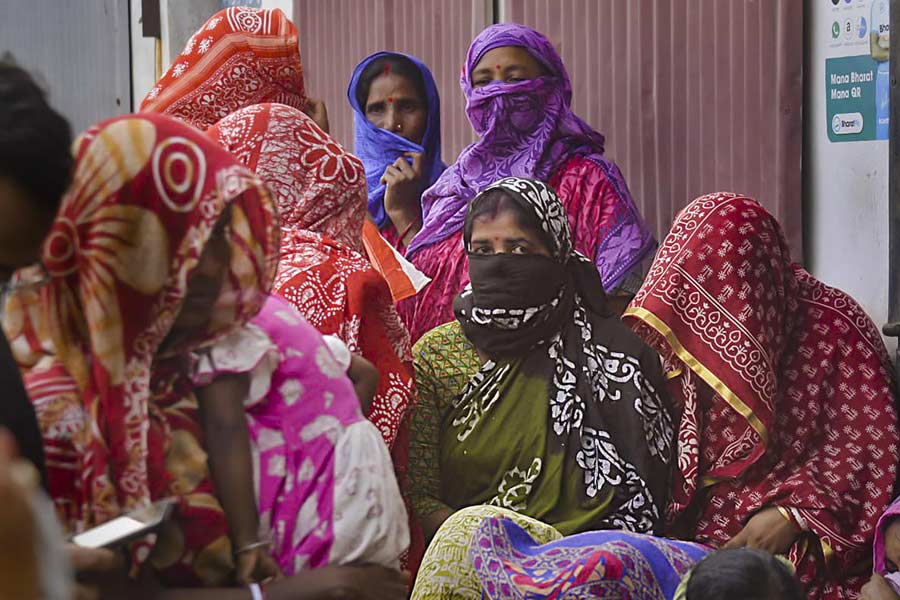
The CSE report acknowledges that the people of villages covered by the programme in Assam were happy to receive SHS as it eliminated their dependency on kerosene. Especially in flood-prone areas such as the chars, villagers can carry lighting systems when they shift houses due to inundation. But the report also highlights certain unpalatable truths. Like many other government-sponsored projects, there is no follow-up after the implementation of the RVEP, and the owners find it difficult to maintain their SHS because of non-availability of after-sales service.
But, according to the CSE report, the biggest problem that has affected the implementation of RVEP in the state is corruption, which can hardly evoke surprise, considering that Assam has been declared the most corrupt state in India. Apparently, in connivance with government agencies, people fudge documents to procure extra subsidised SHSs and then re-sell them at a higher price. But the most startling revelation in the CSE report is that some of the SHS units find their way to Bangladesh via the Brahmaputra to be sold at a premium in that country!
The Assam experiment should be an eye-opener if the RVEP is sought to be implemented in other states of the Northeast, for similar results are expected. It is a classic case of the people themselves conniving with government officials and agencies to frustrate the success of schemes meant to improve their quality of life!
Thus the stark reality is that currently there are neither on-grid nor off-grid solutions to the power crisis in this region, something that would impinge on normal life more starkly with the passage of time. So far the responses of state governments have been to make empty promises and offer vacuous excuses to hide the seriousness of the crisis. The latest assertion is that the power situation in Assam will now improve with completion by the Power Grid Corporation of India of the 400kV power transmission line from Silchar to Byrnihat, while completion of other ongoing transmission lines will improve the situation in other regions of the Northeast. However, the proof of the pudding is always in the eating, and the public will take such measures to light up the Northeast with the proverbial pinch of salt till they prove otherwise.
|