|
Krishnan Srinivasan’s “Image with no definition” (January 23, 2013) in The Telegraph chronicles incorrect facts and absurd assumptions. Having retired from the foreign service after 39 years, I respond now as a student of history who places a premium on empiricism and believes that facts should be allowed to speak for themselves.
Let me start with the title, which at best is a misnomer. A fundamental premise in physics states that the “image cannot be brighter than the object”. A multilateral setting is both challenging and exacting. Any speech by India’s delegate becomes available almost instantly. The least that a serious analyst should do is to consult the original document and/or statement. Basing analysis on make-believe or misleading headlines in agency reports, the contents of which are contrary to the headlines, is a recipe for disaster.
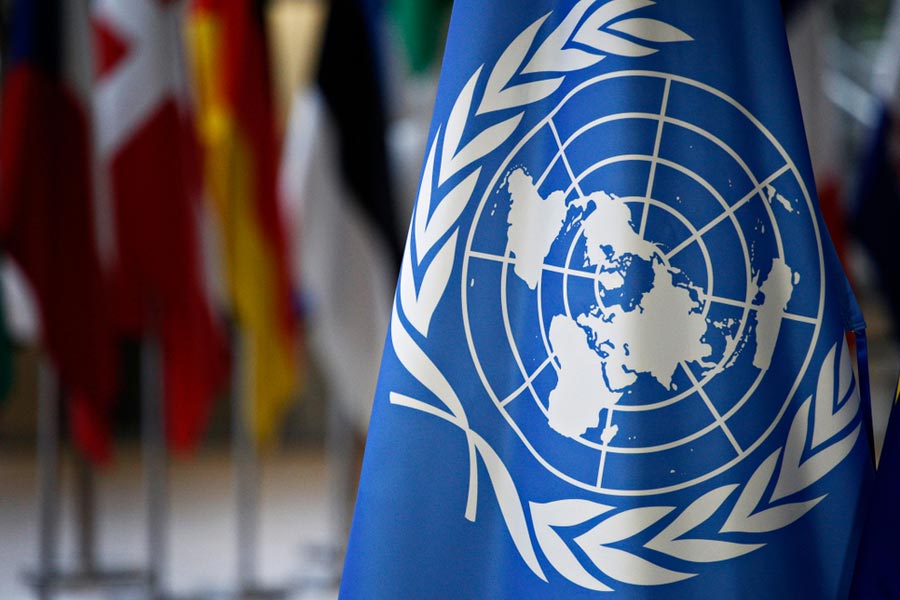
India has a good story to tell and our performance on the Security Council was, by any yardstick, exemplary. The former foreign secretary has lost it completely when he claims, we “regarded our term at the UN security council as a rehearsal for permanent membership,” and, therefore, “in seeking to win the confidence of the West”, we “compromised our position as a progressive free-thinking state” and that we “did not display the independence to carve out a distinctive made-in-India foreign policy”.
This is a patently absurd premise. I can understand ideologically motivated retired officers making such allegations, but coming from a retired foreign secretary, this takes the cake. Standing upto the Americans cannot be the sole objective of India’s foreign policy and yet when our interests so demand, we did so unhesitatingly. We were able to ward off the efforts of the United States of America, which was trying to get a comprehensive PRST on nuclear non-proliferation, based on the primacy of the non-proliferation treaty. It was because of India’s intervention that the PRST was restricted to nuclear security issues only. More importantly, we abstained on Resolution 1973 on Libya. Not only was our decision to abstain the right course of action but the Libya story, still unfolding, looks more and more like a policy induced fiasco by the West.
We were able to ensure that our interests were fully safeguarded in the Security Council’s consideration of issues in our neighbourhood, on Nepal, the Maldives, Afghanistan and Pakistan. We furthered our national interest and did not cede a single inch of strategic autonomy.
India, like all other self-respecting countries, makes a determination on how to vote on contentious resolutions based essentially on the resolution’s content, our established policies and principles and our national interest. It is entirely conceivable that a country will vote differently on different resolutions depending on the content. The Resolution of July 2012 was a final attempt by the Security Council to make the six points of Kofi Annan’s plan binding. Several retired colleagues, basing themselves on a misleading headline, “India votes for regime change”, bothered to read neither the news report nor the resolution itself. If they had done so, they would have spared themselves the embarrassment which deservedly is theirs.
Our policy on Syria is contained in the unanimous Security Council presidential statement of August 3, 2011 adopted under India’s presidency. Its thrust is that both sides should abjure violence and enter into a ceasefire and begin an inclusive process which will be Syria-led and allow the Syrian people to determine their own destiny as suggested by the prime minister’s statement in the UN general assembly in September 2011 “that societies cannot be reordered from the outside through using military force”. Mr Foreign Secretary [former], check your facts. We could not have supported Kofi Annan’s mission in March 2011 given that he was appointed a year later, in March 2012.
The Security Council is mandated by the charter to deal with issues of international peace and security. This notwithstanding, India organized thematic discussions on peace-keeping, piracy, women, peace and security, improvement in working methods of the Security Council apart from meetings on terrorist financing. In terms of both numbers and quality, this could be a record.
The author alleges that as chair of the CTC, we were not able to put pressure on Pakistan. As chair of the CTC, we succeeded in introducing the zero tolerance benchmark in the United Nations counter-terrorism lexicon. The Haqqani network was proscribed and several individuals with terrorist links were listed. We also ensured that there is no sunset clause for listed individuals/entities.
Security Council reform, endorsed by heads of states and governments in 2005 will come not from the endorsement of permanent members but from traction in the General Assembly. Inter-governmental negotiations, eight rounds of which have already been held, have now to be concluded. They will either result in an expansion of the Security Council or the negotiations will have to be wound up. For the negotiations to succeed, there has to be a text which will have to be put to vote. The former foreign secretary should call his successor in office now and seek a briefing on the state of play first rather than make irresponsible statements.
The author attributes to an Indian spokesman that India having entered the Security Council after 19 years we will never leave the Council again. What I actually said in response to a question on how we felt on returning to the Council was that “we have entered the Council after a very long period of 19 years and we have every intention of seeking more enduring presence”. I further explicitly clarified that this can be done in one of two ways. One, by seeking election as non-permanent member on a frequent basis, as Germany, Japan, South Africa and Brazil do, once in five years or so, or by seeking Security Council expansion, a separate issue better addressed elsewhere.
The author concludes with the disclaimer in the end: “The ministry of external affairs is not to blame. It receives eleventh hour instructions from multiple sources: the national security adviser, the prime minister's office and even 10 Janpath.” It is not clear whether he is recalling his own days as foreign secretary. If the reference is to the period of our seventh tenure on the Security Council, let me state for the record that I received instructions only from the foreign secretary. Any differences I might have had on the substance of our policy will see the light of day only when the papers of this period are declassified. |