TT Epaper
The Telegraph
 
IN TODAY'S PAPER
WEEKLY FEATURES
CITIES AND REGIONS
ARCHIVES
Since 1st March, 1999
 
THE TELEGRAPH
 
 
CIMA Gallary

Disappointment at health and education allocations

The allocations under various heads and reactions:

EDUCATION

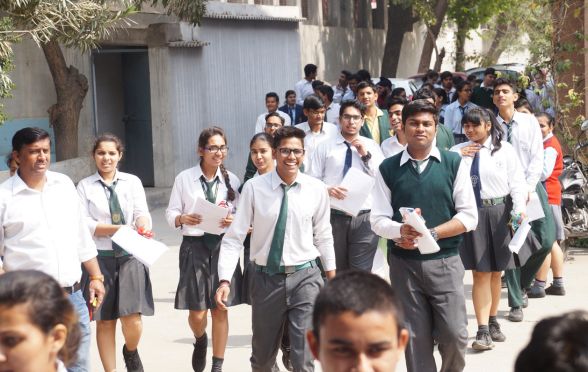
Human resource development minister M.M. Pallam Raju appeared unhappy on Thursday at the “little” increase in allocation and said he would seek more funds.

“I propose to allocate Rs 65,867 crore to the ministry of human resource development… which is an increase of 17 per cent over the revised estimate of the previous year,” finance minister P. Chidambaram said in his speech.

But the sum represents an actual rise of only 7 per cent over the last fiscal year’s allocation of Rs 61,427 crore.

“I think there has been a little bit of increase. But the important factor is that the deadline for implementing the Right to Education Act is coming up and subsequent to that, there will be a lot of demand from the states for money,” Raju said.

HEALTH CARE

A proposed 21 per cent increase in outlay (over last year’s spending) has triggered dismay among doctors and health analysts, surprised at the absence of anticipated initiatives towards free universal health care.

The budget sets aside Rs 37,000 crore for the health sector, including traditional systems of medicine and medical research.

“This is disappointing,” said Sakthivel Selvaraj, health economist at the Public Health Foundation of India, an academic and research institution in New Delhi. “This looks like business as usual — it seems the government is not in any hurry to do anything different in health.”

In the past year, the Centre had signalled an intention to introduce free universal health care, including free medicines. But, Selvaraj said, the budget proposals don’t contain elements that could push India towards free universal health care.

Analysts have also criticised the outlay of Rs 4,700 crore for medical education as inadequate.

“We need a much higher investment, given the large numbers of doctors and nurses India will require in the coming years,” said Charu Sehgal, senior director, consulting for strategy and operations, with Deloitte Touche Tohmatsu, a consultancy in New Delhi.

RURAL

Chidambaram has proposed around Rs 81,000 crore for rural development schemes, which is about 46 per cent higher than the revised expenditure estimates for 2012-13 but not even 10 per cent higher than last year’s budget allocation.

Rural development minister Jairam Ramesh admitted the failure of agencies to spend the entire allocated money. “I am not happy with the pace of expenditure,” Ramesh said.

He blamed the slow pace of implementing schemes in states such as Odisha, Bihar and Jharkhand and the complicated process of central approval of projects.

The allocation for the rural job guarantee scheme stays at Rs 33,000 crore, while Rs 21,700 crore has been set aside for the Pradhan Mantri Gram Sadak Yojana. The Indira Awas Yojana has been allocated Rs 15,184 crore.

FOOD SECURITY

An additional Rs 10,000 crore has been allocated to implement the proposed food security law. “I have set apart Rs 10,000 crore over and above the normal provision for food subsidy towards the incremental cost that is likely under the act,” Chidambaram said.

The annual subsidy borne by the government now to provide cheap food to the poor under the public distribution system is about Rs 67,000 crore.

DEFENCE

The defence ministry has received Rs 203,672 crore, marking a 14 per cent hike over last year’s revised allocation. The budget estimate last year was Rs 193,407 crore but it was later slashed by Rs 14,904 crore because of the strain on the economy.

This year’s allocation is about Rs 50,000 crore less than the ministry’s demand but defence minister A.K. Antony was satisfied. “Factoring in the current economic scenario, he (Chidambaram) has been fair to the defence sector by increasing the budget and giving an assurance that should there be any urgent need in future, the same would be provided,” he said.

The defence ministry has started modernising. Acquisitions in the pipeline include 126 multi-role combat aircraft, 22 Apache attack helicopters and 15 heavy-lift choppers. Infrastructure is being upgraded along the China border.

SUVs

The proposed three per cent hike in excise duty on sports utility vehicles is unlikely to curb the rapid growth in the sales of diesel-driven cars, environmental researchers have predicted.

Chidambaram said SUVs occupy “greater road and parking space and ought to bear a higher tax”, and proposed a rise in excise duty from 27 to 30 per cent.

“This is a step forward, but certainly not enough to contain the dieselisation of the car segment that is fouling up our air and our lungs,” said Anumita Roy Chowdhury, executive director, the Centre for Science and Environment (CSE), a Delhi NGO.

“Annual diesel car sales... are (soon) expected to exceed sales of petrol cars for the first time,” Roy Chowdhury told The Telegraph. “This can have a serious impact on public health and adverse economic consequences.”

CSE director-general Sunita Narain cited how the government had recently raised diesel prices by Rs 10 per litre for bulk users and by only 50 paise a litre for retail users.

“Public buses and railways used by the relatively poor are being targeted by this policy, while the cars of the relatively rich get off lightly,” Narain said. “This is not a policy against SUVs, only small talk and indifferent steps.”

BUSES

Close to 10,000 buses will be bought this financial year under the flagship urban renewal mission, Chidambaram announced on Thursday with an eye on hill towns that lack organised public transport.

“The 14,000 buses sanctioned during 2009 to 2012 have made a big contribution to urban transport. I propose to provide Rs 14,873 crore for (the mission)…. Of this, a significant portion will be used to support the purchase of up to 10,000 buses, especially by the hill states,” he said.

Apart from this, the urban development ministry has received an additional Rs 567 crore over last year’s Rs 7,729.38 crore.

MAOIST FIGHT

In keeping with the “two-pronged approach” he devised while tackling Maoists as home minister, Chidambaram has allocated funds for police action as well as development in rebel zones.

The CRPF has been allocated Rs 10,818.53 crore, up Rs 950.88 crore from last year’s revised estimates. The states will receive Rs 1,847 crore to modernise their police — an increase of Rs 1,500 crore over last year’s revised estimates.

As for development, Chidambaram has set aside Rs 1,000 crore for Maoist-hit areas over and above the Rs 11,500 crore allocated under the Backward Regions Grant Fund.

“I think he has equitably distributed funding for both security and development,” said a security official involved in planning the fight against Maoists.

TOURISM

The budget offered little to the tourism sector although the economic survey had given the industry a pat for its positive growth curve. The allocation has risen by just over seven per cent to Rs 1297.66 crore.

To make matters worse, every air-conditioned restaurant, whether it serves liquor or not, must pay service tax.

“The present service-tax level along with the high fuel prices will further push down the demand for Indian holidays. The inclusion of all AC restaurants and cafes of more than 2,000sqft area to pay service tax will add to the woes,” said Subhash Goyal, president of the Indian Association of Tour Operators.

A parliamentary committee on tourism had recently suggested giving Darjeeling, Jalpaiguri and Cooch Behar economic benefits on a par with the Northeast. But the budget was silent on this.

ROADS

Chidambaram has announced an independent road regulatory authority to address “challenges not envisaged earlier” at a time road construction has virtually come to a standstill. The new authority will facilitate private investment and ensure more amenities for road users.

The new challenges Chidambaram identified in his speech include “financial stress, enhanced construction risk and contract management issues that are best addressed by an independent authority”.

The regulatory body, proposed to be independent of the National Highways Authority of India (NHAI), will ensure that road contractors and developers maintain the standards agreed with the NHAI. The NHAI is the implementing agency but currently, it is also expected to double as the regulator.