|
New Delhi, Feb. 28: A three-letter acronym called CAD leaped from textbooks to drawing rooms this morning when finance minister P. Chidambaram’s budget flagged the growing chasm between imports and exports as a great worry.
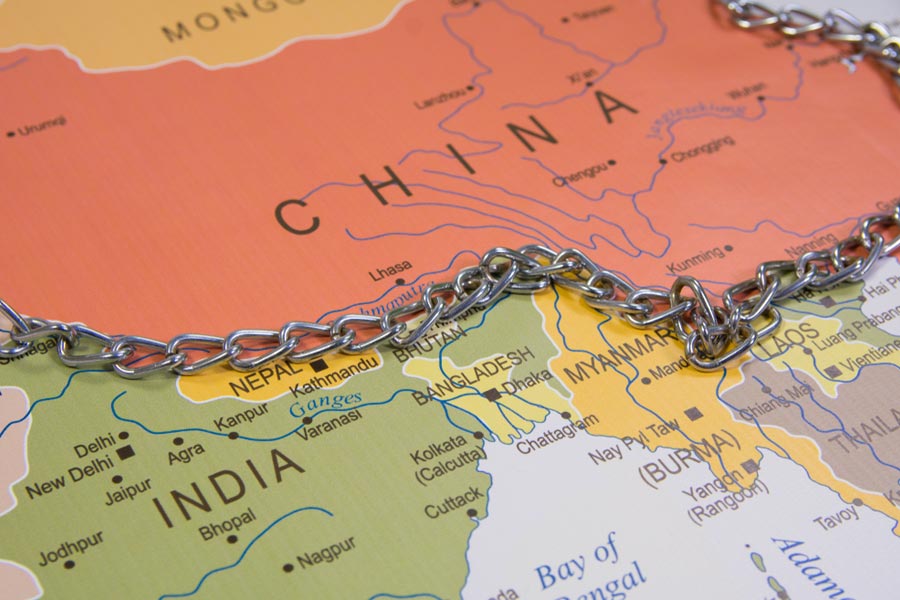
In a pre-election year budget that made the right political noises by taxing the super-rich but offered few adrenaline-pumping measures, Chidambaram appeared to focus on prudence to defuse a ticking bomb called current account deficit or CAD. CAD reflects the yawning gulf between dwindling exports and soaring oil-driven imports, which leaves the country a net debtor to the rest of the world.
“My greater worry is the current account deficit. The CAD continues to be high mainly because of our excessive dependence on oil imports, the high volume of coal imports, our passion for gold and the slowdown in exports,” the finance minister said in the budget for 2013-14.
“We have to find over $75 billion to finance the CAD,” Chidambaram added. This deficit is normally financed by foreign fund flows in the form of investments and overseas borrowings.
“I have been at pains to state over and over again that India, at the present juncture, does not have the choice between welcoming and spurning foreign investment. If I may be frank, foreign investment is an imperative,” the finance minister asserted, giving a peek into a key factor driving the budget.
He sought to address the concerns of foreign investors and rating agencies by focusing on fiscal prudence. The finance minister promised to cap the fiscal deficit at 4.8 per cent in 2013-14 after claiming he had wrestled it down to 5.2 per cent this year.
“I know there will be a lot of scepticism,” Chidambaram said, anticipating the disbelief that experts voiced throughout the day over his budget arithmetic and growth assumptions.
The budget did achieve Chidambaram’s immediate goal of staving off a credit rating downgrade, for now. Global agencies Standard & Poor’s (S&P) and Fitch said the budget would not affect their assessment of India’s creditworthiness, according to Reuters. Both had threatened to downgrade India’s sovereign rating to “junk” unless it gets its finances under control.
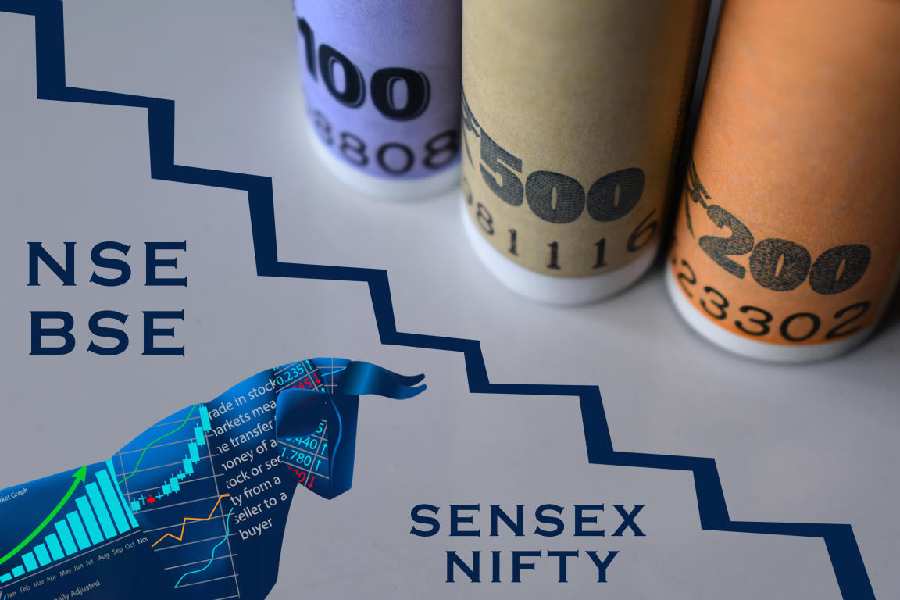
But Chidambaram failed to articulate a credible set of measures that would help ratchet up dollar inflows into the country. Investors dumped stocks in disappointment, sending the sensex sliding by over 290 points to 18861.54 at the end of a volatile session.
As long as foreign investments flow in, a crisis similar to that in 1991 when India was forced to pawn gold to fund imports is not expected to erupt. But the global economic upheaval and the Indian downturn have made matters uncertain.
India is projected to grow at just 5 per cent this year — far slower than the 8 to 9 per cent growth it has consistently achieved for most of the past decade. Late in the evening, the Central Statistical Organisation reported that GDP growth in the third quarter (October-December) was a dismal 4.5 per cent, deepening worries about the future of what was once touted as the world’s second-fastest growing economy.
The finance minister, whose government faces a general election next year, raised expenditure to a record Rs 16.65 lakh crore in 2013-14, a 16.5 per cent increase over the current year’s spending. Fresh tax proposals are expected to net Rs 18,000 crore.
Chidambaram appeared to have staked his budget on higher growth next year and some ambitious projections. But if that does not happen, his arithmetic will go awry.
There were two big surprises: the finance minister aims to slash the subsidy bill by 10 per cent to Rs 2.31 lakh crore from Rs 2.58 lakh crore in the revised estimates for 2012-13. The biggest axe is on petroleum subsidies that has been slashed by almost 33 per cent to Rs 65,000 crore.
At the same time, he has estimated divestment proceeds at Rs 55,814 crore, a sharp jump of 132 per cent over the revised estimate of Rs 24,000 crore in the year that ends on March 31. A closer look at the documents shows that the government intends to raise Rs 40,000 crore from the sale of its stake in state-owned companies, and another Rs 14,000 crore from the sale of holdings in non-government companies.
The budget slapped a 10 per cent surcharge on individuals with taxable incomes of more than Rs 1 crore a year and firms earning more than Rs 10 crore and gave taxpayers at the bottom of the pile a token relief of Rs 2,000 that didn’t win the UPA government any brownie points.
The taxes drew a stinging rebuke. “The damper is an effective increase in corporate tax rate from 32.5 per cent to 34 per cent (arising from the 10 per cent surcharge on the super-rich). The finance minister seems to have equated the tax on super-rich individuals with super-rich companies which is unfathomable as investment in risk capital to run businesses cannot be equated with income earned by individuals,” said Sudhir Kapadia, national tax leader at Ernst & Young.
The Centre has limited net market borrowings to Rs 4,84,000 crore — a mere 3.6 per cent growth over the revised estimate of Rs 4,67,384 crore — seemingly creating more space for the private sector to borrow more from banks at home.
Some economists felt that the budget was a good plan of action, given the circumstances in which it had been prepared. “He has tried to balance growth aspirations with populist pressures. He is also trying to woo foreign investors — not by doling out incentives but by suggesting that the government will behave. It will not overspend. It will fast-track investment and hand-hold you where needed,” said N.R. Bhanumurthy of the National Institute of Public Finance and Policy.
But there were many critics of Chidambaram’s eighth budget. “If the idea was to revive the investment climate and promote investment, nothing much has been done,” said U.R. Bhat, managing director of Dalton Capital Advisors (India).
Chidambaram tried to reprise the commodity transaction tax (CTT) that his predecessor dumped in 2009. The CTT — to be levied at 0.01 per cent — will be levied on sellers involved in trades in non-agriculture products. Perhaps fearing a repeat of the calls for a rollback, the finance ministry has not budgeted for any tax earnings from the CTT.
The budget is counting on a 19 per cent increase in gross tax revenues at Rs 12.36 lakh crore. But service tax is expected to show the sharpest rise of 35.7 per cent at Rs 180,141 crore, possibly on the back of a tax amnesty offer to 10 lakh tax dodgers. Calcutta will now become the fifth city to have a large taxpayers’ unit.
The government has set a target of raising Rs 40,000 crore from telecom spectrum auctions and one-time spectrum fee, an ambitious goal, considering that bidders have shunned the sale of pricey radiowaves this year.
|