TT Epaper
The Telegraph
 
IN TODAY'S PAPER
WEEKLY FEATURES
CITIES AND REGIONS
ARCHIVES
Since 1st March, 1999
 
THE TELEGRAPH
 
 
CIMA Gallary

Stepping stone to a bigger battle

Mon, Feb. 22: There’s a new spring in his step which takes in its stride even the seemingly derisive guffaw of his companion, who unabashedly reminds he had come a cropper twice.

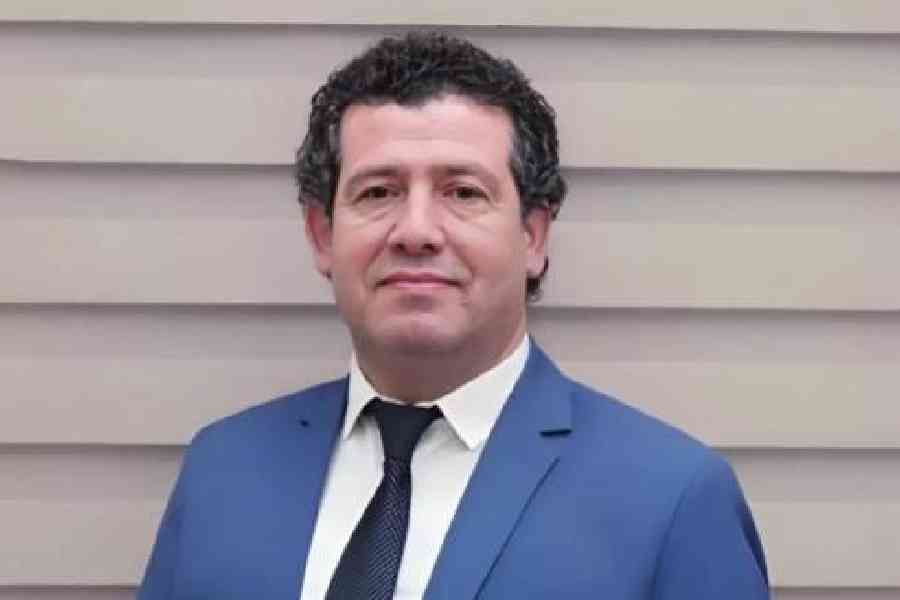
N. Thongwang, the Naga People’s Front (NPF) nominee for the Mon Town seat is more than confident he would be third time lucky, thanks to a division in the higher echelons of the Congress in Nagaland which has gifted him — and, of course, the NPF — a veteran politician like Chingwang Konyak on a platter.

The former president of Nagaland PCC, who hails from Mon district and has represented this constituency for the last two terms and is held in high esteem, is now campaigning for NPF in eastern Nagaland. He resigned from the Congress only recently.

Thongwang’s camp has no hesitation in admitting that Konyak is the man who can take him to Kohima. “If he can’t, well…” is the mood. As for Konyak, he is a man at peace with himself and doesn’t care for the turncoat tag he has picked up yet again.

“The Congress is a divided house. On the other hand, the NPF under chief minister Niephiu Rio has served the people well in its two terms in government. I am happy doing what I am doing,” he said.

NPF insiders point out, though, that even without Konyak on their side, the party had won six of the nine seats on offer in Mon district. “But, yes, he is certainly expected to add to the edge we have,” one of them said.

S. Khowang Wangsa

The district, along with Kiphire, Longleng and Tuensang, constitute eastern Nagaland and are said to be collectively the most backward region of Nagaland, which gave rise to demand for a separate state or “Frontier Nagaland” just over a couple of years ago.

The area — then only two districts of Mon and Tuensang — first took part in Assembly elections a decade after the rest of Nagaland had, in 1974. Apparently, the people were not ready for such an exercise till then. Then it was looked after by the Tuensang affairs department under a cabinet minister, who, from 1969 to 1971, was Konyak himself.

The four districts account for 20 of the 60 Assembly seats. Apart from the nine seats in Mon, there are seven in Tuensang (NPF 4, Congress 3), two in Kiphire (NPF, Independent), and two in Longleng (both NPF) that are up for grabs.

Parties are talking about the neglect meted out to the area and promising remedial measures but that has not yet convinced the sponsors of the movement. “We are allowing the elections to pass and then we will pick up from where we left,” said S. Khowang Wangsa, president of the Konyak Union, one of the six community representative groups in the movement led by Eastern Nagaland People’s Organisation (ENPO).

Chingwang Konyak

“We had once fought against the underground with weapons issued to us by the government, but today our youth join them because they don’t get jobs in the government, not even the educated ones. We have remained neglected and unheard for too long and now we want our own state,” Wangsa said. “We will wait and see what the new elected representatives from this region have to say.”

Not very long ago, Konyak, when he was still in the Congress, had said, “The problems faced by the people of ENPO areas are that administratively, we are more than 82 years behind and educationally more than 100 years behind the other advanced tribes, namely, Aos, Angamis, Lothas, and Semas.”

“They do not see better future by continuing in the present state of Nagaland. Unless these issues are genuinely addressed by the central and the state governments, they are likely to continue with their demand,” he had said.

Beyond the immediate battle of the ballot, a bigger battle awaits.


" "