TT Epaper
The Telegraph
 
IN TODAY'S PAPER
WEEKLY FEATURES
CITIES AND REGIONS
ARCHIVES
Since 1st March, 1999
 
THE TELEGRAPH
 
 
CIMA Gallary

Mike norm change: what lies ahead

The state environment department had on February 5 issued a notification modifying a decade-and-a-half-old norm on the use of loudspeakers during board exams, drawing charges of violation of court orders. Metro puts the issue under scanner.

What is the original court order?

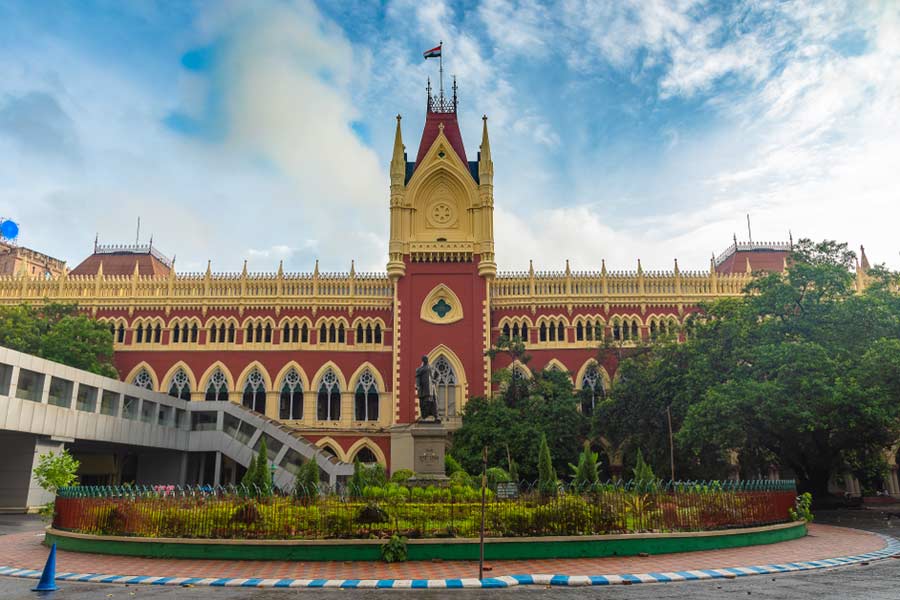
In 1996, Justice Bhagabati Prasad Banerjee of Calcutta High Court had observed that no one could be made a “captive listener” to noise. Subsequently, he ordered a ban on the use of microphones or loudspeakers in the open from a week before a board exam (classes X and XII) starts till the day it ends.

The bench later modified the order, stating that the ban would kick in three days before the start of a board exam.

Justice Banerjee told Metro that his order covers loudspeakers, soundboxes and even loud-hailers.

The ban was challenged unsuccessfully at least seven times in the high court and a number of times in the Supreme Court. The Centre framed its noise rules in 2000 based on Justice Banerjee’s order.

What was the norm till last year?

A blanket ban on the use of loudspeakers in the open, which used to remain in force from three days before the start of an exam till its completion.

What does the latest notification say?

The duration of the ban remains unchanged but its territorial reach has been reduced to “residential areas or where educational institutions are situated”. The notification states “use of such microphones or loudspeakers shall not be allowed that can substantially affect the examinees or the examinations”, but does not specify a minimum distance between a loudspeaker and the nearest house or educational institution.

What are the implications of the change in the norm?

Several, especially because, as an environment department official pointed out, the “order lends itself to multiple, even contradictory, interpretations”.

The absence of the expression “in the open” will allow the use of microphone in open public place, which politicians have always wanted. But the inclusion of the words “in residential areas or where educational institutions are situated” makes it a blanket ban as there are few areas that can be called non-residential.

“If one strictly goes by the book, the use of loudspeakers is banned even in an enclosed space, like community halls, thanks to the absence of the expression ‘in the open’,” said Biswajit Mukherjee, the former chief law officer of the state pollution control board.

The words “use of such microphone or loudspeakers shall not be allowed that can substantially affect the examinees or the examinations” are ambiguous, to say the least. The notification does not specify how to decide whether the effect of sound from a loudspeaker is “substantial” or not. And who will dare question the use of loudspeakers when it apparently enjoys legal sanctity.

What is the politics behind the move?

Politicians of all hues have always tried to dodge the norms, especially when an exam schedule coincides with an election. This year the board exams clash with the panchayat elections.

Late CPM leader Subhas Chakraborty had once famously asked: “I want to know who are affected by microphones during an examination?” Trinamul leader and MP Mukul Roy has unsuccessfully moved the central election commission and court, seeking relaxation of the norms.

Where should violation be reported?

Nearest police station. If that is not possible, then Lalbazar (22143230/3430) for those living in Calcutta or DG Control (033-22145486) for those in the rest of the state.

State pollution control board (033-23358212/18003453390).

Sabuj Mancha (033-24733244/ 9230568902).

What are the penal provisions?

A fine of up to Rs 1 lakh or/and imprisonment till five years, under the environment protection act. Police can start a separate case.

What is civil society saying?

“This is an illegal modification of the high court order and amounts to its violation,” said former Calcutta High Court judge Bhagabati Prasad Banerjee.

“I will move court if the decision is not reversed immediately,” said environment activist Subhas Datta. “Excess noise over a long period irritates the nervous system and can significantly hamper the concentration and efficiency of the students,” said Dulal Bose, physician and noise expert, and also a former sheriff of Calcutta.