|
New Delhi, Feb. 17: A bank of computers in Pune will soon host and serve images of the night sky and help astronomers search for undiscovered giant space rocks like the meteorite that shook Russia last week, or even bigger ones that could threaten Earth.
More than 660,000 images captured by two telescopes in America and one in Australia over the past eight years and recently hosted by the Inter-University Centre for Astronomy and Astrophysics, Pune, are expected to go online for the global astronomy community next month, scientists said.
The images come from an international astronomical exploration project called the Catalina Sky Survey-Catalina Real-Time Transient Survey that have already identified hundreds of asteroids that may approach close to Earth, or near-Earth asteroids (NEAs).
The survey looks for “transients”, or celestial objects that either change their positions or brightness.
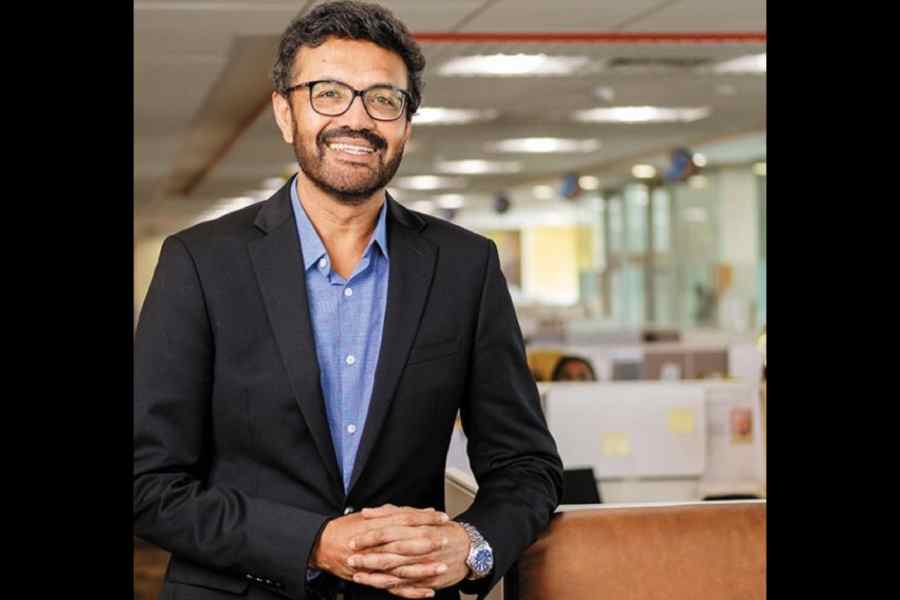
“The challenge is to find all NEAs that may pose a threat to Earth,” said Ashish Mahabal, a senior research scientist at the California Institute of Technology, who has been involved in analysing images to classify and conduct follow-up studies on transients.
“An asteroid would appear to be moving much faster than the background stars,” Mahabal told The Telegraph. “The survey captures four images, 10 minutes apart, and transmits them within minutes of the observations so that other astronomers can follow them up on their own.”
Scientists are hoping the host-and-serve role to be played by IUCAA would facilitate a vastly expanded and intensified effort at mining the existing data from the survey. The survey has adopted an “open-data philosophy” that will allow even amateur astronomers access to its images and resulting catalogues.
“We’re emerging a major data centre for large international astronomy projects,” Ajit Kembhavi, the director of IUCAA, told this newspaper. In addition to images and catalogues that emerge from the Catalina survey, the IUCAA will also maintain data from a proposed international search for elusive gravitational waves and data from a proposed telescope in Hawaii.
The Catalina survey and other asteroid-hunting programmes have already cumulatively catalogued more than 9,600 NEAs, including more than 800 asteroids that are larger than one kilometre in size. But astronomers believe several thousand others remain to be discovered.
Since 2004, the Catalina Sky Survey directed by Steve Larson at the Lunar Planetary Laboratory in Arizona, has discovered more than 4,200 NEAs, with 107 of them identified during 2013 alone.
The Catalina Real-Time Transient Survey, whose principal investigator is astronomer George Djorgovski at the California Institute of Technology, is also finding and cataloguing stars, supernovae, and the nuclei of galaxies.
The US National Aeronautics and Space Administration has said the size of the object that had entered the atmosphere and disintegrated in the skies over Chelyabinsk, Russia, on Friday was about 17 metres. Scientists estimate that its mass was about 10,000 tonnes.
The Russia meteor is the largest reported since 1908 when a meteor hit Tunguska, Siberia. “We would expect an event of this magnitude to occur once every 100 years on average,” Paul Chodas, a scientist at Nasa’s Jet Propulsion Laboratory in Pasadena, California, said in a media release.
In an independent research project, astronomers at the University of Hawaii are through a $5 million grant from Nasa developing a network of eight small telescopes that will scan the night sky for faint objects.
The Asteroid Terrestrial Impact Last Alert System, or ATLAS, which is expected to become operational by 2015 will look for smaller NEAs, and complement a current search for larger asteroids.
The University of Hawaii team predicts ATLAS will provide a one-week advance warning for an asteroid about 50 metres in size, and a three-week advance warning for an asteroid thrice bigger, the university said in a media release.
“That’s enough time to evacuate the area of people,” John Tonry, a team member at Hawaii, said in the statement.
|