ON THE FENCE
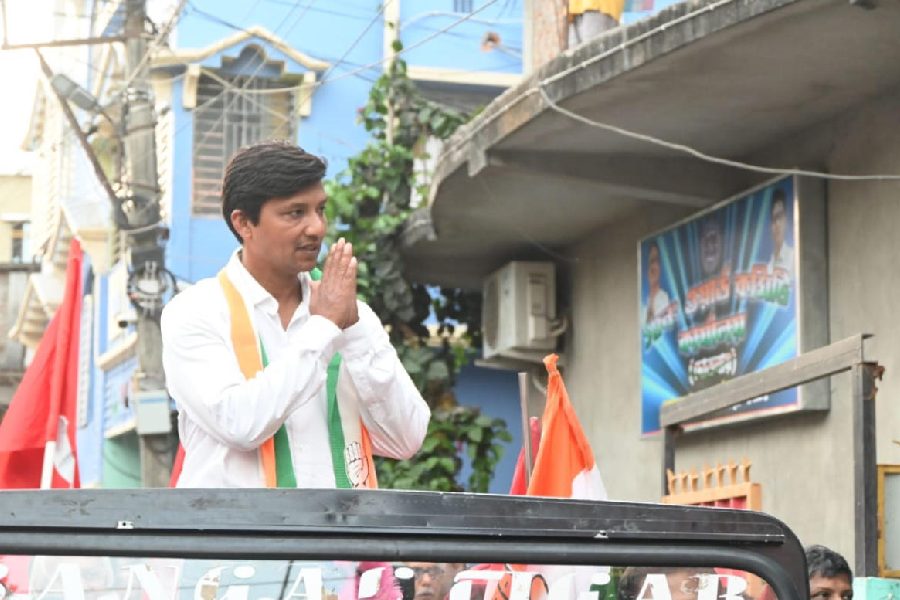
Farmers Shah Alam Mia, Khurshed Mia and Dulal Mia will vote in Sonamura constituency on Thursday, where Congress candidate Subal Bhowmick is pitted against the CPM’s Shyamal Chakraborty. There is nothing significant about these neighbours in Tarapokhar village, 87km from Agartala, except the fact that they live on the zero line between India and Bangladesh.
Of Tripura’s 856km international border, 833km have been fenced with barbed wires. But the Sonamura sector belongs to the 23km unfenced zone, because these villagers have refused to allow the fence to come up. The iron poles are used to put out their washing to dry!
Across the acres of arable land, we walk to the main border pillar (2088) and 2088 4A, BSF sentries in tow, just in case we make the 150-yard dash into Bangladesh. A freshly painted garish blue mosque stands pat in the middle of the zero line. Mohd Khalil and Tota Mia, who were born in this village, claim the mosque is 150 years old, though its brick and concrete façade tells a different tale. The imam, Mohd Abdul Hannan, has come from Assam’s Karimganj district and is possibly the only non-voter in their midst.
The sitting MLA belongs to the Opposition Congress, so there has been little development. The roads that run smoothly till Dhanpur, the chief minister’s constituency, barely 5km from Sonamura, are almost nonexistent here. The village has only one primary school; the older students have to trudge to Shantinagar or to the high school at Dhanpur. “We have pleaded for schools, but to no avail,” rues 65-year-old Abdul Rezzak.
According to BSF deputy inspector-general B.S. Rawat, nearly 82.33 per cent of the border of the state on its west has been fenced and 60 per cent of the border lights have been completed. “The problem areas are Sabroom subdivision in South Tripura and Sonamura, because the unfenced patches are exploited by Bangladeshis,” he says. This is corroborated by Sonamura villagers themselves. “Our relatives and in-laws live across that field, in Bangladesh. We come and go just as they do,” says Mohd Khalil.
Life in a cage
In Ramnagar, closer to Agartala, the Joynagar checkpost marks the dilemma of those who are Tripura voters but have been fenced out. Abdul Jalil, 70, has been living beyond the fence with his family for seven years. The huge iron gates are opened at 6am, when they can come out to the Indian side. On the day of polling, they will be among the first to go to the poll booth at Rajnagar School as soon as the gates open, says Kajal Begum. Of the 300 people living in this fenced cage, there are 265 voters.
First-time voter Niamul Haq wishes the gates remained open till 10pm. “The BSF closes the gates at 8 every night. If we are slightly late, we have to spend the night out, or appeal to villagers on this side to give us shelter. When someone falls sick, there is no option of hospitalising him,” he says.
The Congress’ Surajit Dutta is the sitting MLA in this constituency, while the CPM has fielded Ratan Das and the BJP Bidyut Ghosh. “There has been no campaign by any of the candidates here,” says Tanjubanessa.
When the Tripura border fencing project was undertaken, nearly 45,000 people belonging to 10,000 families were displaced, as their homes fell outside the fence. Each towering iron border gate is their window to the world, a surly BSF jawan their saviour. Others, like the inhabitants of the Sonamura sector, have compelled the government to keep the project in abeyance.
Chief minister Manik Sarkar is actively campaigning for more interaction between the two countries to boost Tripura’s economy. This is essential, given that the state is surrounded on three sides by Bangladesh. The capital city of Agartala is just 6km from the international border, the fence visible as soon as an aircraft takes off!
|