Between rhetoric and non-issues
 |
| ‘Senior journalist Monalisa Changkija finds the NPF manifesto very interesting and downright humorous, promising a better deal for women’ |
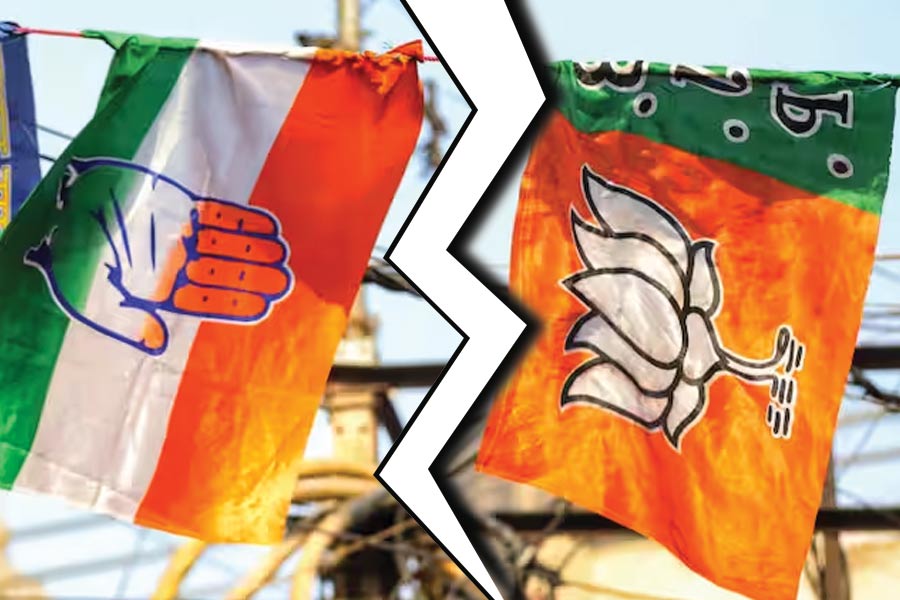
It is clear that the Congress is on its last legs in Nagaland. The resignation of a high profile Congressman recently and the complete disharmony within the Congress caused by a sense of desperation about not making a comeback, has all but decimated the party.
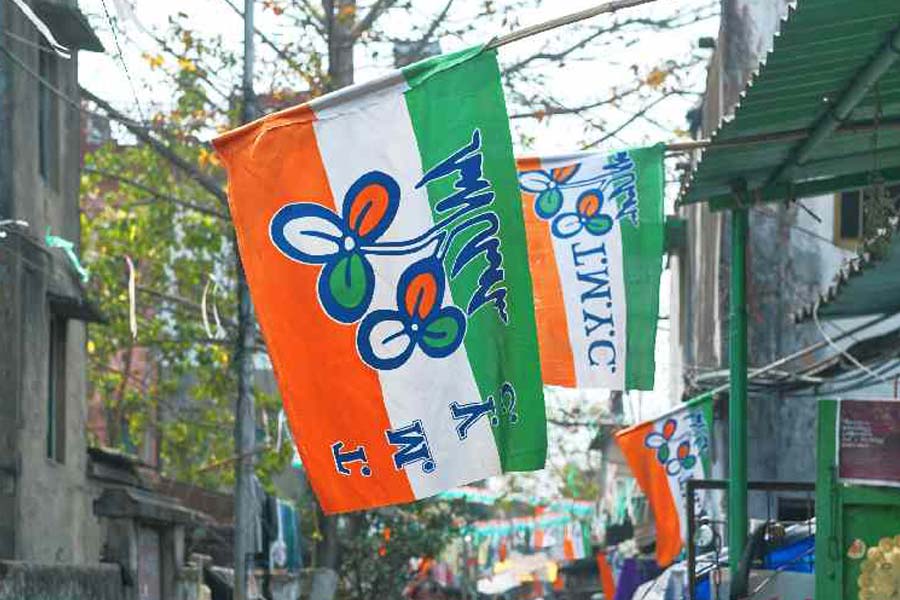
Former MP Chingwang Konyak, who has been in the Congress for over four decades, recently resigned and has now become the star campaigner for Neiphiu Rio (outgoing chief minister of Nagaland and perhaps the next one after February 28) and the Nagaland People’s Front (NPF). The fact of the matter is that the Congress in Nagaland is still identified with S.C. Jamir who is an anathema to National Socialist Council of Nagalim (Isak-Muivah) led by Isak Swu and Th Muivah. Political observers say that the Congress resembles a tired old man unable to come up with any new ideas. Konyak’s entry into the NPF is expected to boost the chances of the party in eastern Nagaland and make a significant difference to the politics of the state this time around.
As in Meghalaya and Tripura, the youth of Nagaland, too, have aspirations and want to know what the future would look like under the next government. They have all but given up hopes of the so-called settlement negotiated by the NSCN (I-M) and the Centre.
According to Monalisa Changkija, a senior journalist and editor of the Nagaland Page, the politicians of Nagaland now know they cannot fool people any longer with the promise of utopia. They had over-used and abused the issue of peace talks, the integration of the Naga-inhabited areas of Manipur as a political tool to brainwash an emotionally-fragile citizenry for several decades.
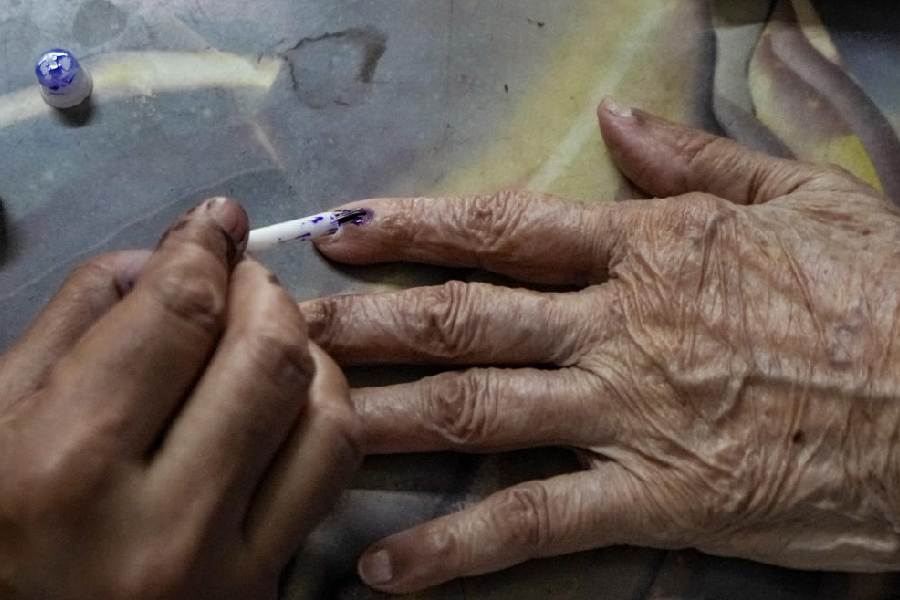
The youth are a huge chunk of the population of Nagaland and if they think that the Naga peace talks issue is today a non-issue, it will have to be that since they will be the deciding factor in the present election. Politicians are also mind-readers so they have dropped the integration issue out of their poll agenda, knowing that it no longer ignites the voters’ mind as it used to.
Facade
What Changkija finds very interesting and downright humorous is the NPF manifesto which promises a better deal for women. Coming from a party that actually strives to keep women chained to their traditional domestic roles and will not allow them any space for political participation this really is a bad joke and an insult, says Rosemary Dzuvichu, professor of Nagaland University and adviser to Naga Mothers’ Association (NMA).
It appears that the Rio-led Democratic Alliance of Nagaland (DAN) government had also set up a women’s development department but it remains a domain that perpetuates women’s traditional role in patriarchy, which is stitching, knitting, cooking and the like. The department also produced a book on Naga culinary skills, their food habits and tastes. It also distributes sewing machines which is a symbolic gesture of welfarism but also one that loudly speaks of how the government continues to see women’s role in society.
If anyone needs to understand gender equity, then Naga men surely do. A few handouts to women are not going to bring gender parity by any stretch of imagination. The women’s development department is basically meant to placate and co-opt a few women who are ready and willing to ride the bandwagon.
Moral fibre
Without the big issue of Naga settlement, politicians suddenly find themselves ill at ease. Hence, this election has been reduced to a bitching contest on very personal issues. Peoples’ issues in any case have never been uppermost in any contesting candidate’s mind. If a candidate were to have joined the fray to make a difference and to spell out a road map for Nagaland, why would he have to bribe people to vote for him? If in Meghalaya the least that a candidate has to spend is Rs 2 crore, in Nagaland it would have to be at least five times that amount.
Now where does that kind of money come from if not from development funds? And the list of candidates speaks for itself. There are retired bureaucrats, children of politicians and bureaucrats, sons of businessmen/women. The money power that each election demands is enough to deter any sensible person from contesting. Nagaland has its intelligentsia, its academics and social entrepreneurs but none of them would dare join politics and contest elections since they would not be able to amass that kind of money in their lifetime. You would have to be in the government to have that kind of a bank balance.
Mazie Nakhro, a non-resident Naga, writing in his blog says that elsewhere in the world people elect the kind of leaders they need. He said when China needed to develop rapidly, people elected technicians and engineers. In the West, where people are faced with increasing legal battles people elect lawyers as politicians. Nakhro asks what actually is Nagaland’s need and its biggest problem today. And he answers his own question citing disunity and moral corruption as two major issues. He suggests that Nagas should be electing politicians with the moral fibre to counter corruption and the stature to rise above community differences so that they can bring unity. It seems to me like a tall order in the Nagaland of today to be asking for such ideals.
But dreams do not die easy and for someone who lives abroad, I guess dreaming for a better homeland is also a pastime.
Lacunae
This time around, there are two women candidates in the fray — one from the BJP and the other an Independent. The Congress with its ostensibly heightened sense of gender equity and women’s empowerment has not fielded a single woman candidate. So much for Congress rhetoric! But that is not surprising. In Meghalaya, a matrilineal society, the Congress ended up fielding just five candidates and denying tickets to many others, including senior office-bearers of the party. If women have to make a dent in politics they might have to form their own party, or so it would seem in the present circumstances when male politicians are not ready to cede an inch of space.
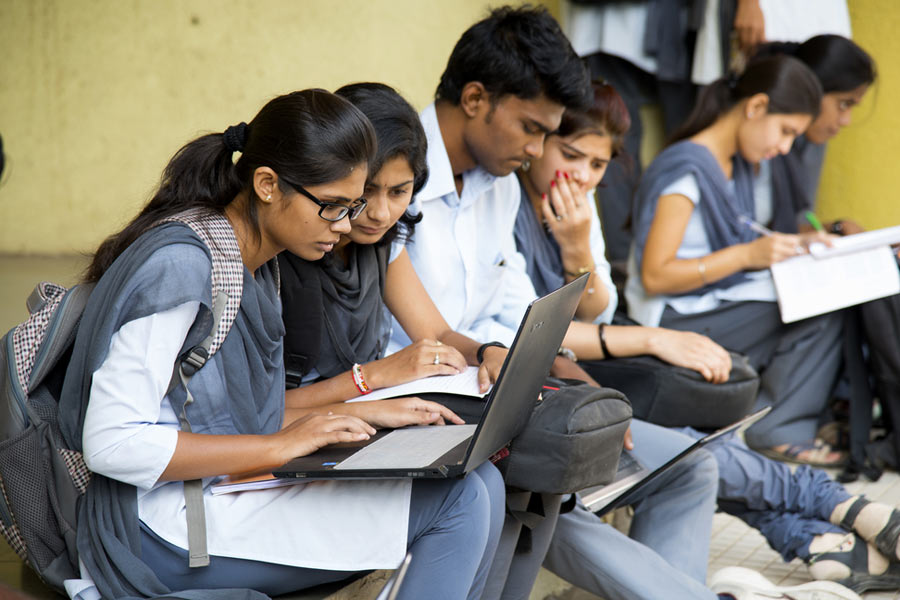
The Congress in Nagaland has chosen instead to dole out laptops to students of Classes XI and XII. Many find this ridiculous because electricity in the periphery of Nagaland plays truant for the better part of the day. Even in the state capital of Kohima and the commercial capital Dimapur, power supply is highly unstable. Chankija says what Nagaland needs is good quality education imparted by qualified and competent teachers. Better educational infrastructure with basic facilities such as toilets and drinking water is still a far cry. What will the students do with their laptops? It also appears that Congress has promised to give stipends to unemployed youths. Sounds like giving out fish to young people instead of teaching them to fish.
What is surprising is the complete silence of the Church in directing the conduct of elections in Nagaland and in bringing about behavioural change in voters. Unlike Mizoram where strictures have been laid down by the Church about curbing election expenditure and extravaganza, the Church in Nagaland, which otherwise takes an active role in political matters, has chosen to remain silent. Is this an acknowledgement of the failure of the Church to guide its flock on the right moral trajectory? Also is this not an admission that Sunday services have become a little social meet having little impact on the moral compass of its adherents? Politics sure trumps all moral values!
(The writer can be contacted at patricia17@rediffmail.com)
|