TT Epaper
The Telegraph
 
IN TODAY'S PAPER
WEEKLY FEATURES
CITIES AND REGIONS
ARCHIVES
Since 1st March, 1999
 
THE TELEGRAPH
 
 
CIMA Gallary

SC poser on taint immunity

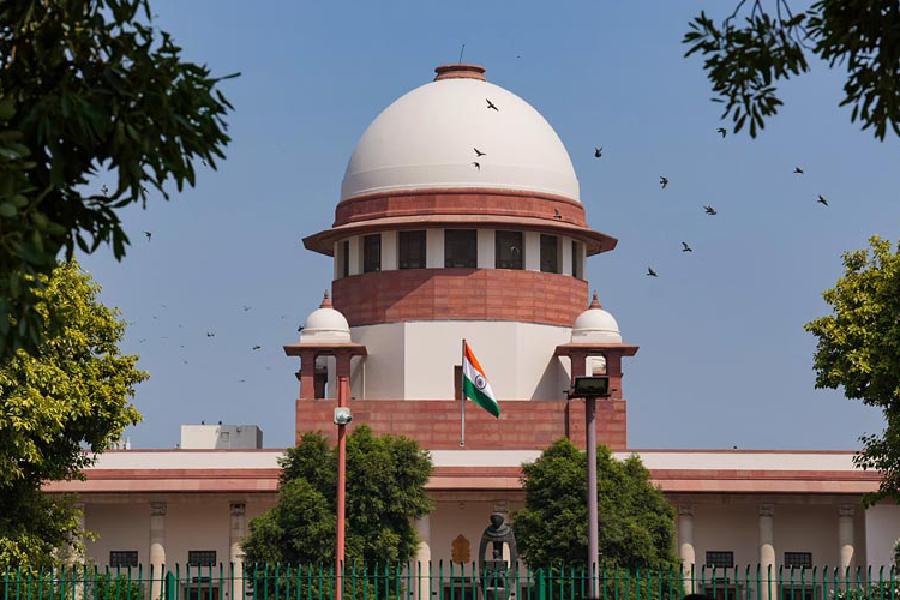
New Delhi, Jan. 10: The Supreme Court today directed the Centre to explain the constitutional validity of provisions in the Representation of Peoples Act that allow MPs and MLAs to continue as members while barring tainted ordinary citizens from contesting elections for six years.

“How do you carve out a separate law for an ordinary citizens and members? Can Parliament make one law for its own members and another for the ordinary citizen?” Justices A.K. Patnaik and Gyan Sudha Mishra asked additional solicitor-general Paras Kuhad, representing the government.

The bench wondered whether Parliament can make laws that discriminate between legislators and ordinary citizens as they would violate Article 14 (equality before law) of the Constitution.

“We can understand if Parliament makes a law for the functioning of its own members. But de hors (beyond the purview of the act), can Parliament have one law for the common citizen and another for members (lawmakers),” the judges asked. Kuhad was told to file an affidavit explaining the Centre’s stance within four weeks. The matter will be come up next on February 12.

The court was hearing a PIL filed in 2005 seeking quashing of the provisions that grant such immunity to the elected members.

Lily Thomas, an 85-year-old woman advocate who filed the plea, contended that Section 8 of the act also violated Article 326 of the Constitution, which bars those with criminal backgrounds or guilty of corrupt practices from contesting elections.

“The scheme of Article 326 is to set up a stable, efficient and corruption-free administration… which cannot be achieved if legislative institutions are influenced by the presence of members tainted by corruption and crime,” the petition said.

Noted lawyer Fali Nariman, appearing for the petitioner, drew attention to Section 8(3) of the act. According to it, a person convicted of any offence and sentenced to not less than two years stands disqualified from the conviction date and remains so for a further six years.

Then Nariman pointed out that the subsequent clause, Section 8(4), makes an exception for legislators and members of Parliament.

It says that “notwithstanding anything in Section 8(3), the disqualification shall not take effect if a person is a member of Parliament or the legislature of a state” on the date of the conviction, and if an appeal is brought within three months. The immunity will hold till the appeal is disposed of.

Nariman said the provisions ought to be quashed. If the government wants to provide such an immunity, he argued, it should bring an amendment, as was done while exempting ministers and some others from the “office of profit” rules..“