|
Washington, Oct. 30: Chincoteague is where I run away to when I want to escape the “blessings” of urban sprawl. Its adjacent twin island of Assateague is where wild ponies roam free and rare birds halt during seasonal migration.
Assateague’s sea stars are a treat for children who become wide-eyed when they watch these marine animals on a calm seabed pull apart clams and mussels using their tube feet that work as nature’s suction cups. Like our civilisation’s silver cutlery.
Chincoteague island got its name from native Americans, the original people there who predated white settlers from Europe: the name means “beautiful land across the water”.
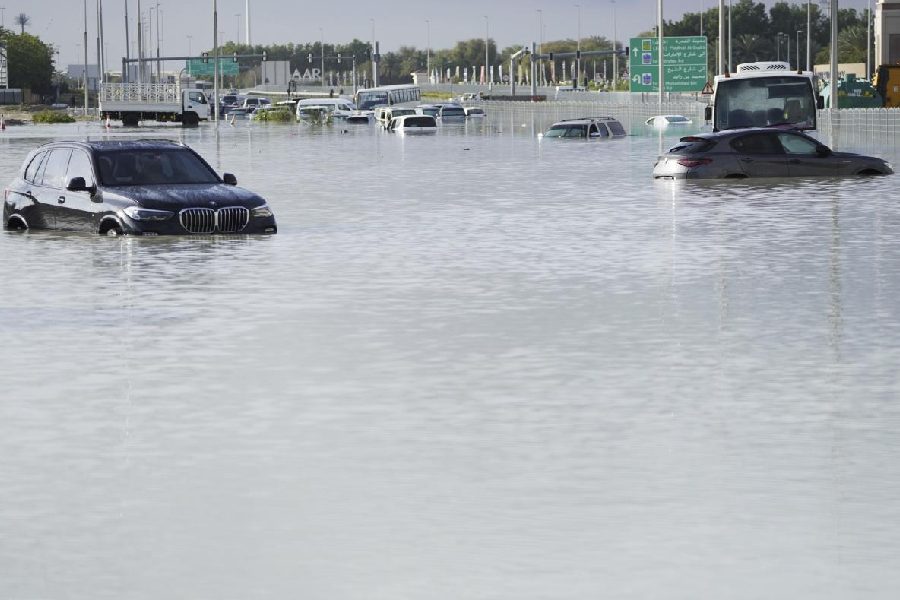
Chincoteague and Assateague in Virginia may never be the same after Superstorm Sandy wreaked havoc yesterday, burying the islands under water.
When calls poured into what passes for Chincoteague’s civil defence unit yesterday, the enquiries were not about the welfare of the island’s 3,500 people who refused to leave this picture postcard spot on America’s eastern shore. They were all about the wild ponies.
Birdwatchers and wildlife enthusiasts have memories of a storm of huge proportions which ravaged the twin islands back in 1962. Although animals have instincts that sense danger and they typically move to higher ground when flooding and storm surge are imminent, 50 years ago, it did not help Assateague’s pony herds. They were nearly wiped out.
Planning and conservation by the US National Park Service and the National Fish and Wildlife Service revived the natural habitat of the ponies, which now number about 150 in Assateague.
It may be several days before the fate of these ponies can be assessed once storm conditions subside and fallen trees are cleared for rangers to go back to the island. Chincoteague island’s people are safe, although many of them had to clamber on to their rooftops and upper floors or be rescued.
The fate of Chincoteague brought back memories of another place at another time. Chidiya Tapu in the Andamans, the bird island, as its name suggests. The tsunami on Boxing Day in 2004 devastated Chidiya Tapu, which is probably the best-kept secret for those want to snorkel in absolute peace and solitude.
In every corner of the globe, television news led with Hurricane Sandy in the last 24 hours.
The storm killed at least 17 people in New York, 33 in all of the US till Tuesday afternoon local time. It is a depressing thought that when the hurricane took a toll of 52 people in impoverished Haiti before it made landfall in the US, hardly anyone took notice. Except to speculate if it would cause disruptions in the US northeast if the storm advanced.
Nor did the world pause to think of 145,000 damaged homes that were in the storm’s path in Cuba where another 11 persons died. In all, 69 people died in the Caribbean from this hurricane. Are American lives more precious than those in poorer countries like Haiti, Cuba, Jamaica and the Dominican Republic that mankind’s attention is grabbed only when lives are lost in the US?
Perhaps yes. In 2002, nine coal miners became trapped in Somerset County in Pennsylvania and were promptly rescued in 77 hours. The rescue got round-the-clock television coverage even in Australia on the other side of the globe, at least two movies were produced about the accident and the heroism of the miners was immortalised in several songs.
When hundreds of miners are trapped in China or Chile and scores are killed in Africa, their similar heroism gets scant attention from mankind. That, sadly, has become of the world we live in largely because of the distortions in 24-hour news and in the social media.
The world’s attention has been on the Big Apple, how Manhattan looks like a ghost town, its roads almost empty, its watering holes shut, the bustling metropolis bereft of public transport of any kind.
Of course, New York City’s plight deserves attention, if only because it was something that was dreaded for decades, if not longer, since Manhattan is an island and could potentially be cut off by a natural disaster of the kind that it faced this week.
But the plight of Americans in Sandy’s path elsewhere is much worse. In the shadow of the Big Apple’s travails, these people are the forgotten victims of this week’s “Frankenstorm”.
Paw Paw is a town of just 524 people in West Virginia, a state whose pervasive poverty stands in stark contrast to its mesmerising natural beauty. The town takes its name from the little known pawpaw fruit: Thomas Jefferson, the third US President, is said to have shipped pawpaw seeds to France as an example of the exotic vegetation in the “new world”.
When waterways were the lifeline of commerce, the nearly 1,000 metre-long Paw Paw Tunnel on the Chesapeake and Ohio Canal brought prosperity to this settlement but the town is now a ghost of its distant fame and importance.
I went to Paw Paw to explore the now disused, utterly dark tunnel by flashlight because it is one of the longest canal tunnels in the world and is still considered a feat of engineering. If the Potomac River rises above 25ft, Paw Paw will be flooded.
At the time of writing, the prediction is the Potomac will rise to 30.8ft at Paw Paw tonight. Only once, in 1996, has the river reached that height. Where will the people of Paw Paw go? Unlike in wealthier states like New York and New Jersey which have counties with large resources, the local government in Paw Paw does not even have emergency shelters.
West Virginia’s Governor Earl Ray Tomblin has declared an emergency in the state. Its plight is compounded by a threat of unseasonal snowfall in the mountainous ridges in addition to the potential for flooding.
Another imponderable in the aftermath of the hurricane is the outcome of the November 6 presidential election. Nearly 7.5 million people in the vast US east are already without electricity and power companies are not holding out any assurances of when electricity will be restored.
If normality is not back by polling day on Tuesday next week, voting will be low and no one is hazarding guesses on who will vote. States affected by the hurricane such as Connecticut, New York, New Jersey, Maryland, Delaware and Massachusetts are all solidly for Obama. But if the verdict from the eastern states is distorted by the current disaster, nature may well decide that Mitt Romney will be the next President of the US.
|