|
|
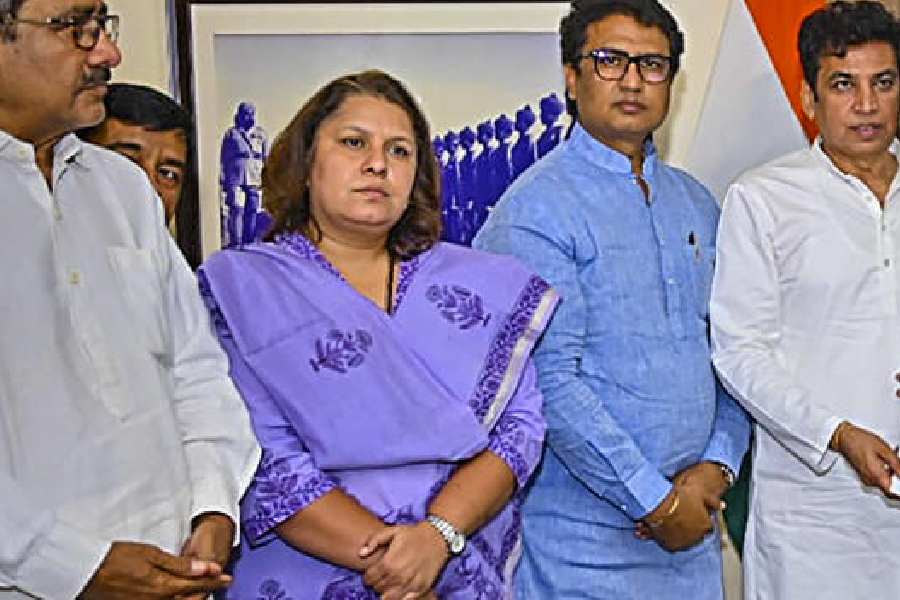
Core committee members of Panchayat Mahila Shashaktikaran Abhiyan and state officials at the meet in Ranchi on Friday. Picture by Prashant Mitra
|
Ranchi, Oct. 7: The husband holding fast to the strings of power is a living reality for many women panchayat leaders in Jharkhand, but wives are seething, not simpering.
Neither rubber-stamp rural leaders, nor puppets on the panchayat power seat. Elected women representatives of rural Jharkhand are working hard and vocally to change the perception of being patriarchy’s pawns before deputy chief minister Sudesh Mahto, who also holds the panchayati raj portfolio, secretary Rajiv Arun Ekka and director Ganesh Prasad as well as in their own villages.
“A good many husbands insist on attending official meetings. Husbands are first barrier to women’s empowerment,” feisty Sumitra Das, Dhanbad Zilla Parishad member and “a postgraduate”, told The Telegraph on the sidelines of the daylong state workshop held last week in the capital to empower elected women panchayat representatives.
She is a part of the 45-member Panchayat Mahila Shashaktikaran Abhiyan core committee handpicked by the panchayati raj department. The committee members, who articulated at the high-profile Ranchi meet on October 5 on how they dealt with political and administrative responsibilities in places where women were neither supposed to be seen nor heard, will now head to villages in divisional meetings.
Jharkhand held its first panchayat polls in 2010-end, where 53,207 representatives were elected, of which around 30,700 were women. But once results came out, reality set in. In most cases, homemakers-turned-leaders were supposed to do what they had done all their married lives — look up to their husbands.
“I have college degrees and I assert myself. But, many women representatives, particularly those not very educated, hand over official powers to husbands. Husbands lord it up. They sit on official chairs meant for their wives,” she laughed.
Sumedha Rajlaxmi Devi, also from Dhanbad Zilla Parishad, seconded her. “I am a widow so I don’t have to face this situation. But we do tell women not to bring their husbands along to meetings and even if they do, not let them run the show. We tell them to take panchayat decisions independently,” said Sumedha.
Holding the reins of power is tricky sometimes, as many village women have no experience of handling money, documents or government officials and willingly turn to husbands for practical help.
Some want to learn, but are dissuaded by husbands and village elders. Others, who manage their work well, worry that husbands will feel threatened by their efficiency.
A woman calling the shots makes a man jittery, more so in villages, they say.
The exception was in some tribal pockets without dominant patriarchal influences.
“In the case of most of our female colleagues, husbands support us. They allow us to exercise our powers and duties and do not try to dominate us,” said Navamita Soren, the pramukh (panchayat samiti chairman) of Jarmundi Panchayat Samiti in Dumka.
Deputy chief minister told the women at the workshop to get conscious about their rights and duties for political empowerment and take administrative decisions on their own. “That’s the aim of this workshop, to help our elected women representatives empower themselves politically,” Sudesh said.
The women hoped their husbands back home got the message without throwing tantrums.
|