TT Epaper
The Telegraph
 
  This website is ACAP-enabled
IN TODAY'S PAPER
WEEKLY FEATURES
CITIES AND REGIONS
ARCHIVES
Since 1st March, 1999
 
THE TELEGRAPH
 
Calcutta Weather
WeatherTemperature
Min : 27.10°C (+2)
Max : 35.10°C (+2)
Rainfall : 0.40 mm
Relative Humidity:
Max : 94.00% Min : 60.00%
Sunrise : 6:17 AM
Sunset : 5:5 PM
Today
Rain or thundershower may occur in some areas. Maximum temperature likely to be around 34°C.
 
CIMA Gallary
Advertisement

Munda unsure of road ahead, Mamata begins national streetfight spectacle
No FDI, but no fresh idea either

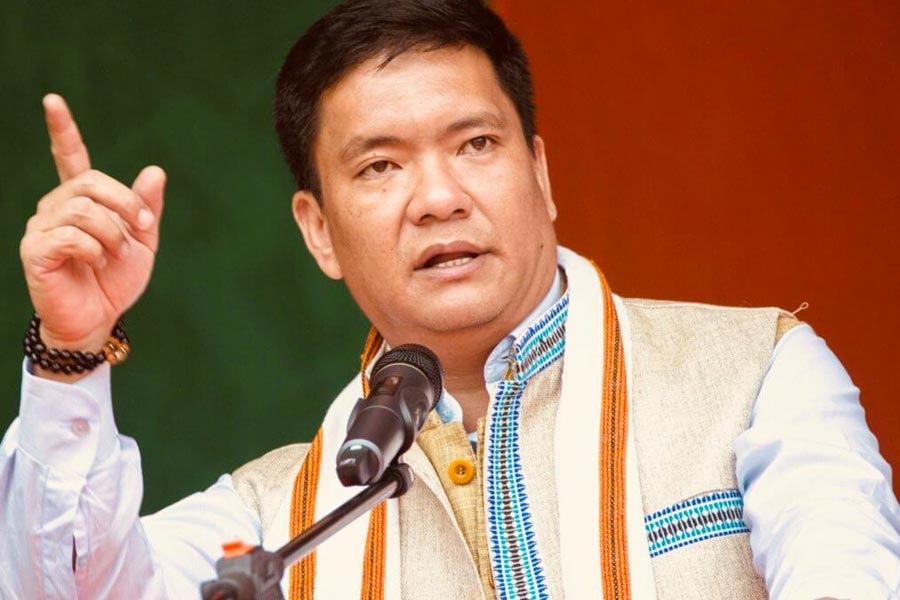
Ranchi, Oct. 1: Chief minister Arjun Munda may have said he will not allow FDI in multi-brand retail in Jharkhand, but he is yet to spell out how he will meet the market challenges that are bound to appear once other states allow foreign investments.

Munda’s contention is that the liberalised Indian economy has failed to find the balance between productivity and human resources and the concept of allowing FDI in retail is still in a very nascent stage.

“The main aim of economic reforms was to improve production and generate more employment opportunities. But, has there been any authentic survey on what the country gained ultimately? Unemployment is one of the biggest problems in our country. But, can any government or even the Centre ensure regular jobs for all?” he argued while talking exclusively to The Telegraph.

Citing an example close to home, he said he had been trying to convince para-teachers that it was not possible for him to regularise their jobs, but to no avail. “The para-teachers have been appointed under Sarva Shiksha Abhiyan. It’s a literacy mission being carried out with financial assistance from the World Bank. Can any state government bear the huge annual non-plan expense after regularising the services of nearly 80,000 para-teachers? The average monthly salary of a regular teacher is around Rs 25,000,” he added.

Stressing on the need for efficient fiscal management, the chief minister said concrete long term and short-term strategies were needed to bail out the common man. Since the policies of different state governments also depended greatly on central policies, the Centre’s role was crucial. “But, here, the Centre will raise prices of diesel and LPG and expect the state governments to grant more subsidies,” he ridiculed.

Munda, however, remained quiet when reminded that he had strongly advocated reforms in every sector through liberalisation and most of the new schemes being launched by his government were on public-private partnership mode. Further, once FDI in retail was adopted by other states, the price of commodities in Jharkhand would spiral, weakening the state economy.

“The concept of FDI in retail is new to the Indian economy. The Union ministry of commerce and industry, through its advertisements, has been claiming that several nations across the world have benefited greatly by FDI in retail. If that is so, why has it allowed state governments the option of not allowing FDI,” the chief minister countered after some time.

Sources close to Munda, however, claimed that with BJP opposing FDI in retail, there was little the chief minister could do. “The BJP had also strongly opposed economic reforms initiated during the P.V. Narsimha Rao regime. But, when Atal Bihari Vajpayee became Prime Minister, he too followed the path shown by his predecessor,” said a senior member of the chief minister’s secretariat.


 More stories in Front Page

  • Munda unsure of road ahead, Mamata begins national streetfight spectacle
  • Drug haul reveals coordination flaws
  • Non-cap gas price: Rs 913
  • Bluestar general knifed in London
  • CM waves no-trust axe
  • Musical route to national harmony
  • Buddha points to Singur shoshan, Didi takes the idea to Delhi and afar
  • Ashram stampede under DIG scanner