|
|
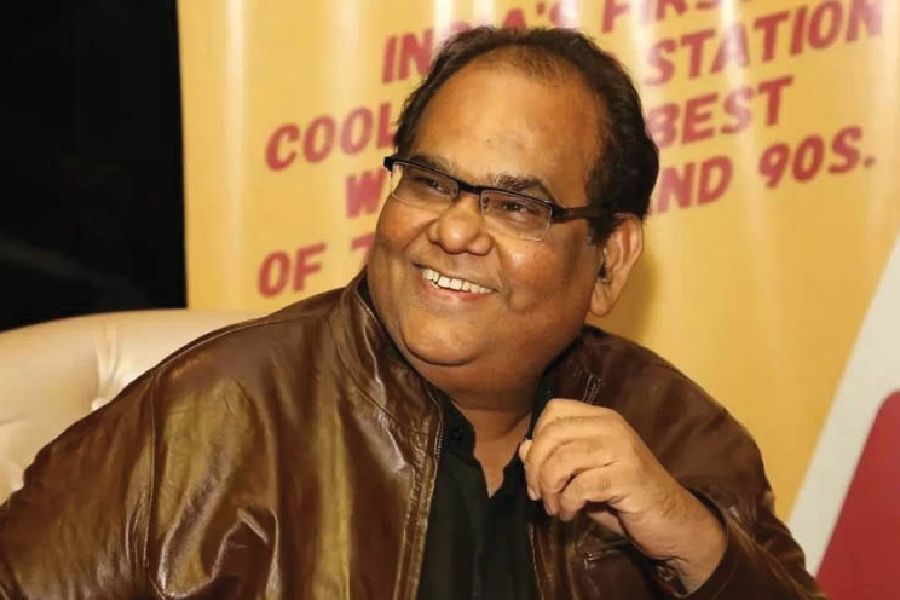
The smile of communications minister Kapil Sibal, whose 2G zero-loss theory had set off a storm, during a media conference in New Delhi on Thursday. Sibal confined himself to saying “the Supreme Court has now sent a message” and, despite repeated questions, added that “we don’t want to gloat”. Picture by Ramakant Kushwaha
|
Your questions on what is being seen as the most important Supreme Court decision in recent years.
Why is the Supreme Court’s opinion so important?
The court has injected clarity into a policy domain that was crippled by scandal after scandal. Every decision of the executive was being viewed as corruption-tainted, following which the government withdrew into a shell and washed its hands of decision-making.
Old habits in the government are unlikely to die hard. But the court’s opinion coincides with a streak of aggressive strides by Prime Minister Manmohan Singh. What the soft-spoken Singh and his cautious or discredited colleagues could not articulate the court has done from the high pedestal of impartiality.
What has the court said that the government could not get across?
The court said an auction is just one of several price discovery mechanisms. Depending on the objective, it is the government’s right to decide what route it should choose.
The court explained why it was saying so. Auctions may be the best way of maximising revenue but revenue maximisation may not always be the best way to subserve the public good, the court said.
It added that the “common good” is the sole guiding factor under Article 39(b) — which deals with ownership and control of material resources of the community — for distribution of such resources. “It is the touchstone of testing whether any policy subserves the common good and, if it does, irrespective of the means adopted, it is clearly in accordance with the principle enshrined in Article 39(b).”
The court elaborated: “The manner in which the common good is best subserved is not a matter that can be measured by an constitutional yardstick — it would depend on the economic and political philosophy of the government.”
Revenue maximisation is not the only way in which the common good can be subserved, the court added.
This is where the government’s role comes in. It is up to the executive to decide its objective. If the aim is to increase revenue, auction is the “preferable” method. Where revenue maximisation is not the objective — such as setting up a power plant — “the question of auction would not arise”, the court said. “Revenue consideration may assume secondary consideration to developmental considerations,” the “main opinion” by the four judges said.
The court added that the submission that any allocation of natural resources for commercial use must be for revenue maximisation, and thus by auction, was based neither on law nor on logic.
The court also said something the government had failed to articulate forcefully. “Economic logic establishes that alienation/allocation of natural resources to the highest bidder may... at times run counter to public good”.
What is the big deal?
These are the lines the government has been badly muffing. The government could not convince the people that 2G licences were granted on a first-come-first-served basis to break the stranglehold of the established players and bring down tariff (which actually happened). If the principle of “common good” is applied, alternatives to auction — where players with deep pockets have an inherent advantage — can hold their ground.
One of the government’s contentions while defending its policy of not auctioning natural resources was that a public bidding process would make the end-product or service very expensive for the consumer.
Besides, this principle renders redundant the CAG figures of presumptive loss with countless zeroes. The CAG has been using auctions as the benchmark to arrive at losses such as Rs 1.76 lakh crore and Rs 1.86 lakh crore in 2G and coal allocations. Such mind-boggling figures had raised exponentially the profile of the scandals.
Does it mean the 2G process was squeaky clean?
Not at all. What the government was challenging was the contention that the policy of 2G spectrum allocation itself was wrong. Allegations surrounding the implementation of the 2G allocation policy are in another court, which will decide if a crime was committed and, if so, who should be held accountable. In fact, the Supreme Court opinion does not mean that the government has got a clean chit in the 2G case.
Why is that?
The court spelt out in detail the circumstances where it can intervene (see chart on left). The court has not abdicated its right and duty on this count at all.
Then why is the government so relieved?
The court has upheld what the government has been saying all along. The allocation of natural resources is a policy decision, and the means adopted for it are thus executive prerogatives, the court said.
The apex court said the earlier 2G ruling had not laid down any law that made auction mandatory for all resources.
Does this mean the government can give away natural resources at will?
Not at all. The court has reserved its right to intervene at every stage of implementation on a case-by-case basis if foul play is suspected. Nor does the government dispute this right of the judiciary.
Justice Khehar has specifically said in his concurring separate opinion that “no part of the natural resource can be dissipated as a matter of largesse, charity, donation or endowment, for private exploitation. Each bit of natural resource expended must bring back a reciprocal consideration”.
Revenue maximisation may not always be the best way to subserve public good
The Supreme Court on Thursday concluded that auctions are not the sole method for allocating natural resources to private enterprises.
It also held that revenue maximisation may not always be the best way to subserve the public good.
The opinion, delivered by a
five-judge bench headed by
Chief Justice of India S.H. Kapadia, is one of the most far-reaching
clarifications in recent memory.
It is also the most topical —
coming against a backdrop of
corruption scandals that have buried governance in an avalanche of mind-boggling figures collated on the basis of presumptions.
The opinion has sent a wave
of relief across the crisis-ridden UPA — law minister Salman Khurshid said the government would have been “roasted alive” had the court
ruled otherwise.
The government is still answerable to charges of individual culpability and is not out of the doghouse. But the court’s opinion has given the UPA a convincing case — something that was so far missing in its half-hearted attempts to defend its own decisions.
The Telegraph lists the key
questions involved and the
opinion of the court.
THE PRESIDENT’S QUESTIONS AND THE COURT’S ANSWERS
The Supreme Court delivered the opinion in response to a set of eight questions raised by the then President (Pratibha Patil). The President had referred the questions to the Supreme Court after a two-judge bench cancelled 122 licences for 2G spectrum.
The two-judge bench of Justices A.K. Ganguly (now Bengal human rights commission chief) and G.S. Singhvi had mentioned that an “auction conducted fairly and impartially is perhaps the best method for” allocating “natural resources like spectrum etc.... In other words, while transferring or alienating the natural resources, the state is duty-bound to adopt the method of auction....”
On Thursday, the bench of Justices Kapadia, D.K. Jain, Dipak Misra, Ranjan Gogoi and Jagdish Singh Khehar delivered the court’s opinion on these questions.
The opinion was given in two parts — the “main opinion” by four judges, including the Chief Justice who is retiring this week, and a concurring separate one by Justice Khehar. The separate opinion did not mean disagreement but was a clarification of “other nuances on the subject”.
The following questions and answers are paraphrased, not reproduced verbatim. The court did not list a specific answer to each question but summarised its conclusion. The answers given below are culled from the summary and the text of the 208-page opinion.
President: Are auctions the only permissible method to dispose of all natural resources?
Court: Auction, despite being a more preferable method, cannot be held to be a constitutional requirement. Auction is just one of the several price discovery mechanisms. Justice Khehar noted that this should not be understood to mean that auctions can never be a valid method.
President: Doesn’t the auctions-alone proposition run contrary to other judgments of the court?
Court: The government has repeatedly deviated from the course of auction and this court has repeatedly upheld such actions.
The methodology pertaining to disposal of natural resources is clearly
an economic policy. It entails intricate economic choices and the court lacks the necessary expertise to make them. As has been repeatedly said, it cannot, and shall not, be the endeavour of this court to evaluate the efficacy of auctions vis-à-vis other methods of disposal of natural resources. The court cannot mandate one method to be followed in all facts and circumstances.... Every method other than auctions cannot be struck down.
President: Does the enunciation of a broad principle amount to formulation of a policy and does it unsettle policy decisions taken by successive governments?
Court: Alienation of natural resources is a policy decision. And the means adopted for the same are thus executive prerogatives.
President: When can courts interfere with policy-making? Is the court not obliged to take into account investments made by foreign investors under the policy through multilateral agreements?
Court: If a policy or law is patently unfair to the extent it falls foul of the fairness requirement of Article 14 of the Constitution (equality before law), the court would not hesitate in striking it down.
Besides, when such a policy decision is not backed by a social or welfare purpose and natural resources are alienated for commercial pursuits of profit-maximising private entrepreneurs, adoption of means other than those that are competitive and can maximise revenue may be arbitrary and face the wrath of Article 14.
Hence, rather than prescribing or proscribing a method, we believe a judicial scrutiny of methods of disposal of natural resources should depend on the facts and circumstances of each case, in
consonance with the principles mentioned above. Failing which, the court shall term the executive action as arbitrary, unfair, unreasonable and capricious due to its antinomy with Article 14.
President: Questions 6 to 8 relate to specific issues on 2G allocation and the impact of the cancellation of licences on 3G allocation.
Court: We feel the answers to these questions would have a direct bearing on the mode of alienation of spectrum and, therefore, in light of the statement of the attorney-general that the government is not questioning the correctness of the judgment in the 2G case, we respectfully decline to answer these questions.
|