TT Epaper
The Telegraph
 
  This website is ACAP-enabled
IN TODAY'S PAPER
WEEKLY FEATURES
CITIES AND REGIONS
ARCHIVES
Since 1st March, 1999
 
THE TELEGRAPH
 
Calcutta Weather
WeatherTemperature
Min : 27.30°C (+1)
Max : 34.00°C (+1)
Rainfall : 1.60 mm
Relative Humidity:
Max : 94.00% Min : 67.00%
Sunrise : 5:26 AM
Sunset : 5:34 PM
Today
Partly cloudy sky. Maximum temperature likely to be around 33°C.
 
CIMA Gallary
Advertisement

Circus over, work begins
Freed PM tells it as it is: No easy options

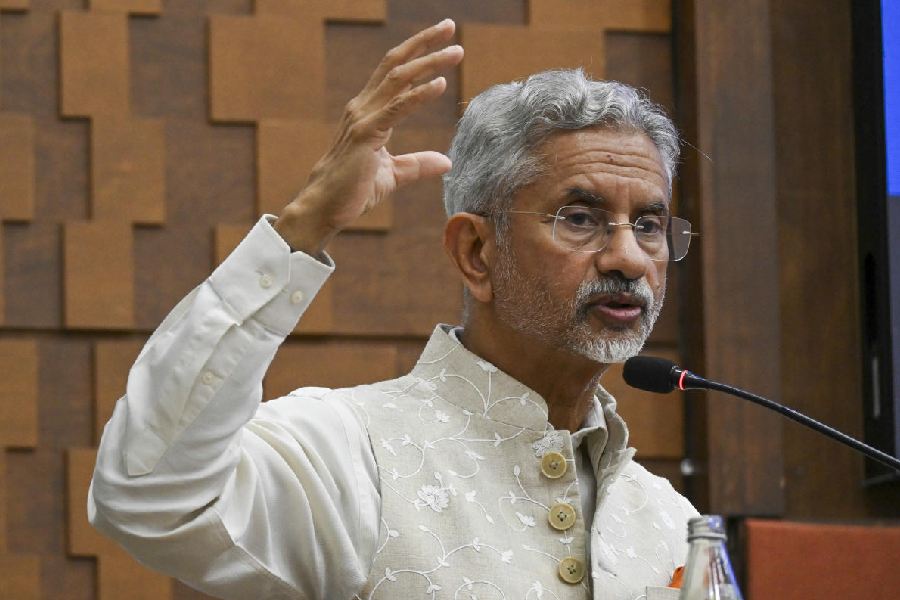
New Delhi, Sept. 21: This was a crisis-rampart speech he omitted to make from Red Fort just over a month ago. Tonight, firmly rid of an ally that had left policy chained, Prime Minister Manmohan Singh freed his arms and let the blows fall.

His political adversaries he called a bunch whose attempts to “confuse and mislead” he intended to defeat. The nation itself he coldly cautioned against being seduced into “softness”; these are tough times and they will have to be met by tough decisions.

Tonight was as close as you’d probably get to witnessing a political economist kitted out in election mode, fighting pugnaciously off the ring.

“There are no easy options,” Singh said in his core message during a televised address tonight.

“At times, we need to say ‘No’ to the easy option and say ‘Yes’ to the more difficult one. This happens to be one such occasion. The time has come for hard decisions. For this I need your trust, your understanding and your co-operation. Please do not be misled by those who want to confuse you by spreading fear and false information. The same tactics were adopted in 1991. They did not succeed then. They will not succeed now.”

He went squarely to the issues that have reduced his coalition to a minority on the Lok Sabha floor without so much as addressing the issue of how his government may make up the numbers. That job he has clearly left to party and government managers. Tonight he was going directly to the people with an explanation of the whys and wherefores of the palpably unpopular decisions he has had to take.

No tears shed for the loss of Mamata Banerjee. Instead, a robust exhort to be prepared for toil and sweat. “No government likes to impose burdens on the common man. Our government has been voted to office twice to protect the interests of the aam aadmi,” the Prime Minister said, “But we have much to do to protect the interests of our nation and we must do it now. I promise you that I will do everything necessary to put our country back on the path of high and inclusive growth. But I need your support. I have full faith in the wisdom of the people of India.”

The hike in diesel prices was nothing to avoid, he made it plain. “We import 80 per cent of our oil, international prices have rapidly risen and we have not passed on the entire burden to you. But money doesn’t grow on trees, the subsidy last year was Rs 14,000 crore, it would have become Rs 20,000 crore. We needed to raise diesel prices by Rs 17, we have raised it by Rs 5, we needed to take tough decisions, nobody helps those who don’t help themselves.”

Diesel, he made to rationalise, is mostly used by “big cars and SUVs owned by the rich and by factories and businesses. Should the government run large fiscal deficits to subsidise them?”

He then spoke of the reduction of petrol prices by Rs 5 a litre to score an aam aadmi point: “We did this so that the crores of middle class people who drive scooters and motorcycles are not hit further.” And kerosene, he said, as if to drive his point of being sensitive to the poor, had seen no increase at all.

On the new subsidy cap on LPG cylinders, the Prime Minister was blunt. “We put a cap of six subsidised cylinders per year. Almost half of our people, who need our help the most, actually use only six cylinders or less. We have ensured they are not affected. Others will still get six subsidised cylinders, but they must pay a higher price for more.”

Take it or leave it, fuel and LPG in India still comes cheapest on the sub-continent.

He fought the campaign against FDI in multi-brand retail stoutly, arguing its opponents had deliberately created misgivings.

“Organised, modern retailing is already present in our country and is growing,” the Prime Minister said. “All our major cities have large retail chains. Our national capital, Delhi, has many new shopping centres. But it has also seen a three-fold increase in small shops in recent years. In a growing economy, there is enough space for big and small to grow. The fear that small retailers will be wiped out is completely baseless.”

He conceded there still remained opposition and said state governments had been given the choice on FDI precisely to accommodate their reservations on the issue.

His government, though, was convinced the move was for the larger good, including, most of all, for the farm sector. “According to the regulations we have introduced, those who bring FDI have to invest 50 per cent of their money in building new warehouses, cold storages, and modern transport systems. This will help to ensure that a third of our fruits and vegetables, which at present are wasted because of storage and transit losses, actually reach the consumer. Wastage will go down; prices paid to farmers will go up; and prices paid by consumers will go down. The growth of organised retail will also create millions of good quality new jobs,” the Prime Minister said.

Rapid economic growth, he said, was imperative and the measures his government had taken were necessary to sustain that. “We are at a point where we can reverse the slowdown in our growth. We need a revival in investor confidence domestically and globally. The decisions we have taken recently are necessary for this purpose…. Rapid growth is also necessary to raise the revenues we need to finance our programmes in education, health care, housing and rural employment.”

The Prime Minister referred twice to his 1991 inauguration of economic reforms and efforts to defame and defeat it. “Nobody was willing to lend us even small amounts of money then. We came out of that crisis by taking strong, resolute steps. You can see the positive results of those steps. We are not in that situation today, but we must act before people lose confidence in our economy. I know what happened in 1991 and I would be failing in my duty as Prime Minister of this great country if I did not take strong preventive action,” he said.

Unwilling to accept the charge his government had strayed from its fundamental commitment to the concerns of the aam aadmi, Singh said: “We have ensured that poverty has declined much faster, agriculture has grown faster, and rural consumption per person has also grown faster. We need to do more and we will do more. But to achieve inclusiveness we need more growth.”

And his government will need convincing enough allies so it can keep afloat.