|
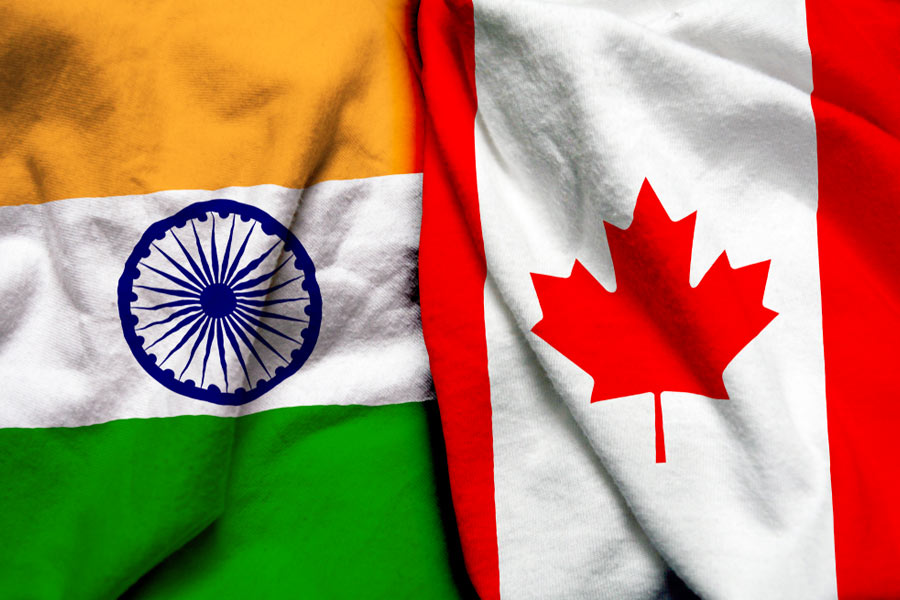
During his recent visit to India, the Chinese defence minister, General Liang Guanglie, gifted Rs 1 lakh in cash to the two air force pilots who flew him. This should not shock the Indian establishment. It should be prepared for more ‘unusual’ moves such as this; the Chinese have traditionally believed in achieving dominance through psychological warfare. They were perhaps testing waters to see how Indians in powerful positions dealt with money that was unaccounted for; India’s position on the corruption index is dismal, and the international perception of India as a corrupt nation is getting stronger everyday. Moreover, some senior members of the Indian armed forces have recently been embroiled in corruption scandals.
Chinese attempts to portray India in a poor light are not new. In 1991, the former Chinese prime minister, Li Peng, handed an envelope containing Rs 500 to an Indian intelligence bureau official who was his liaison officer. India returned the ‘gift money’ to the Chinese embassy. But in 2012 — when India is an aspiring superpower — it did not repeat its exemplary act from 21 years ago. Instead, it sheepishly said that, owing to “sensitivities involved”, the money could not be returned. One could not fathom whether the “sensitivities” in question belonged to India or to China or to both. India had come out looking like an appeaser. A glance at history will reveal the fate of habitual appeasers.
China today is more prosperous than ever before. With its military strength, it can initiate psychological war followed by coercive diplomacy. With the help of globalization, liberalization and privatization, China has has both politically manipulated and commercially weakened India. Indian policy-makers at the highest levels have failed thus far to address China’s rapid one-way accumulation of profit and India’s losses from trade between the two countries. The policy-making bodies of the Indian establishment are now mired in confusion and contradictions. They are finding it very difficult to deal with Sino-Indian bilateral issues. The Chinese have effectively penetrated the Indian psyche; India’s policies are too weak-kneed to combat this.
No good
This leads one to look at the Chinese emphasis on possessing ‘advance knowledge’ on the enemy’s position. The Chinese delegation, led by Liang, showed what it takes to acquire such knowledge with clinical efficiency and ruthless precision. Most Chinese people in India seem to be their country’s unofficial ambassadors here; they are out to protect China’s national interests, however difficult the task may be. The Chinese have traditionally dealt with their enemies in certain ways — they have believed in getting to know their adversaries first. Then — as Liang’s recent action showed — they have tried to tempt their enemies with profits. Historically, local and internal spies have been recruited in this manner. China’s brand of psychological warfare has succeeded in demoralizing the enemy and throwing its processes of thinking and planning into disarray.
The deafening silence of the Indian establishment and the indifference in response to the audacious ‘gift’ of cash made by the Chinese to Indian officials are difficult to comprehend. One wonders how China would have reacted if, upon landing in Beijing, the Indian defence minister, A.K. Antony, had presented packets containing several thousand yuan to the Chinese pilots who flew him. The Indian government’s failure to take a courageous and honourable stand on the matter has not done any good either to its reputation or to India’s position in the international diplomacy circles. India may aspire to be a superpower, but its weak-kneed international policies will not bring it any success.
|