|
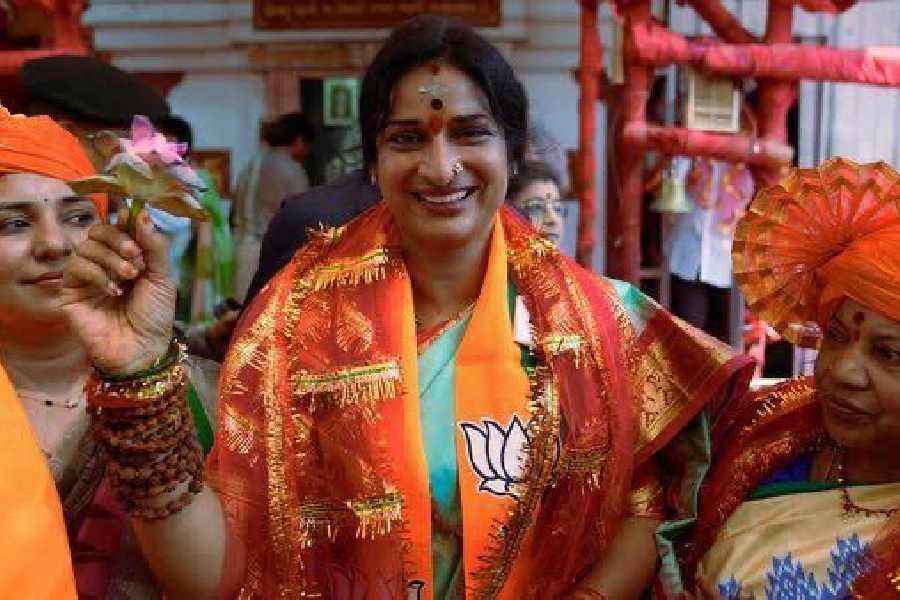
Calcutta, Sept. 19: Bus operators have suspended their strike for 10 days in response to Bengal transport minister Madan Mitra’s carrot-and-stick policy: hint of a possible fare hike and threat of stern action if they join Thursday’s bandh.
If the proposal to raise fares indeed crosses the Great Anti-Hike Wall in Bengal, it will be a milestone for Mamata Banerjee who has built a political career out of blocking increases in user charges.
“We decided to respond to the transport minister’s appeal for 10 days following some definite indications from the government that it was considering a fare hike for buses,” said Tapan Bandopadhyay, the joint secretary of the Joint Council of Bus Syndicate.
Minibus operators, who had planned to go on a strike from tomorrow, have also called off their indefinite strike, seeing a ray of hope. Taxi operators are expected to follow suit after a meeting with Mitra tomorrow afternoon and call off their 72-hour strike scheduled to begin in the morning.
The transport minister skirted questions on how the government put its seal of approval on a hike in bus fares after fiercely resisting it for the past 15 months. He also refused to answer whether the government was considering a fare hike.
Sources in the transport department said that during the closed-door meeting with bus unions, Mitra categorically said they would have to bring out their buses tomorrow as the government’s priority was to foil the disruptive politics of the CPM.
Realising that pressure tactics alone would not help, Mitra also dangled a carrot by promising the operators that he would forcefully argue their case with the chief minister.
“The possibility of a fare hike was enough for the bus operators to call off their strike. They, however, made it clear that they cannot wait indefinitely,” said a transport department official.
Going by the economic logic, the demand for a hike in bus fares — after a gap of almost three years — is legitimate as the price of diesel has gone up by Rs 15 a litre in the intervening period. Other components of the operating cost — maintenance, salary, insurance premium and rate of interest on loans — have also moved up, shrinking the profit margins of bus operators.
Such economic reasoning has failed to cut ice with Mamata, who, in her populist streak, has swatted away the Centre’s arguments behind cutting the LPG subsidy and raising the price of diesel.
“The mass transport sector in the state is heavily dependent on the private sector and if the Trinamul government continues to ignore the basic economics of running a bus, the state is headed for a mess in the medium term,” said a senior official.
According to him, Bengal is a unique case. The government has a limited operational role in mass transport — over 72 per cent of the buses are privately owned — but it has retained control over the determination of fares.
In contrast, an autonomous state undertaking — the Bombay Electric Supply & Transport Undertaking (BEST) — manages the suburban bus transport in Mumbai with a fleet of 3,380 buses to ferry 45 lakh commuters on 335 routes across the city. A 16–member BEST committee takes all decisions, including fare hikes, based on the economic situation.
“The state government’s transport department can make suggestions, but the final decision lies with the undertaking,” said a BEST official.
According to him, the fares are linked to cost structure and revised regularly following recommendations of the planning and control wing of the corporation. The standard fare in an ordinary BEST bus for a 10km ride is Rs 15, whereas in Calcutta the corresponding fare is Rs 6.
Although bus operators in Calcutta have been trying to highlight this anomaly, the government told them only today to prepare a white paper highlighting the income and expenditure of operators in the sector.
“This is welcome step… but it has to be followed up with proper action, like setting up of an independent bus fare regulatory commission to rid the fare determination process of political control,” said Asish Verma, in-charge, urban planning, Indian Institute of Science, Bangalore.
Power tariff is set using a similar approach. The Central Electricity Regulatory Commission (CERC) decides the tariff structure based on models that look into both fixed and variable costs.
“There is no point in setting up another commission…. A group of ministers, including the finance minister and the industry minister, will look into the white paper and decide whether to raise fares,” said Mitra.
Besides ruling out a standard model to revive the ailing transport sector, which includes a loss-making state transport corporations, the government is also considering reviving a failed indirect subsidy model that the Left government had tried in 2009 to give bus operators relief from diesel price hike.
“We were told that the government may forego a part of Rs 9.45 that it collects as tax from diesel. The Left government had proposed a subsidy of Rs 2 per litre of diesel but the move flopped after a few months when none of the owners started receiving the subsidy. We won’t agree to a similar model,” said a bus operator.
|