TT Epaper
The Telegraph
 
IN TODAY'S PAPER
WEEKLY FEATURES
CITIES AND REGIONS
ARCHIVES
Since 1st March, 1999
 
THE TELEGRAPH
 
 
CIMA Gallary

COLD SWEAT

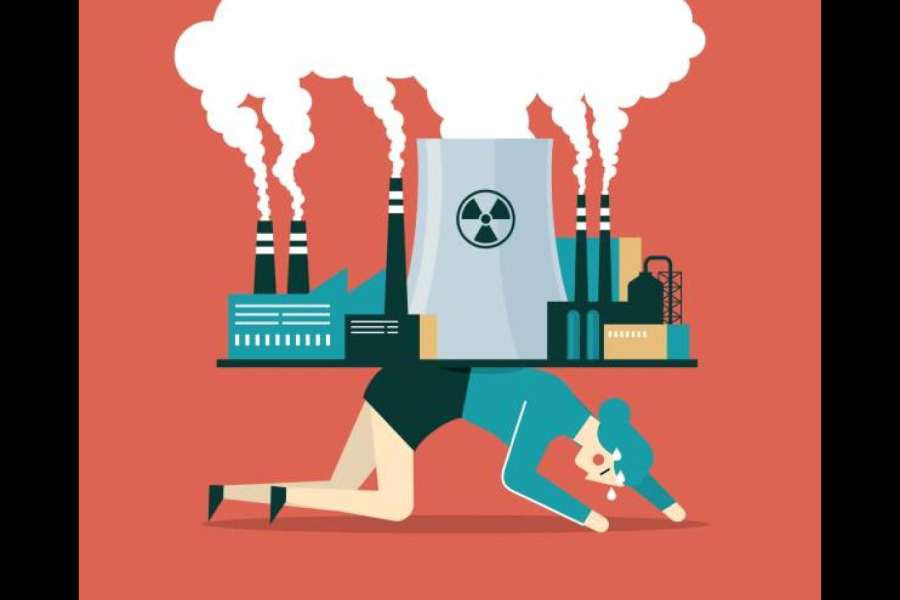
It’s no surprise that we will have a record minimum of ice-cover in the Arctic Ocean at the end of this summer melt season. It’s already down to around four million square kilometres, but this is what you might call a “known unknown.” Scientists knew we were losing the ice-cover fast; they just didn’t know how fast. I’m no fan of Don Rumsfeld, who helped to lead the United States of America into the disastrous invasion of Iraq when he was George W. Bush’s defence secretary. But I never had a problem with the distinction he made between “known unknowns” and “unknown unknowns” when discussing intelligence data. He was brutally mocked in the media for using such jargon, but there really is a difference.

A “known unknown,” in the case of the Arctic Ocean, is how long it will be before the entire sea is ice-free at the end of each summer. The report of the Intergovernmental Panel on Climate Change, published in 2007, talked about that happening some time in the second half of this century, but it couldn’t be more specific. The IPCC usually underestimates the rate of climatic change. But even the pessimists didn’t think we’d get there before the 2030s. A “known unknown,” in other words.

As for the impact that an ice-free Arctic Ocean might have on climates elsewhere, it would obviously accelerate the global warming trend, but beyond that there wasn’t much to go on. This was the territory of the “unknown unknowns”: big things might happen to the complex atmospheric system of the planet when a major chunk of it suddenly changes, but nobody knew what.

More to come

Now we begin to see the consequences. The polar jet stream, an air current that circles the globe in the higher northern latitudes and separates cold, wet weather to the north from warmer, drier weather to the south, is changing its behaviour. In a paper in Geophysical Letters last March entitled “Evidence linking Arctic amplification to extreme weather in mid-latitudes,” Jennifer Francis of Rutgers University and Stephen Vavrus of the University of Wisconsin-Madison offered a hypothesis that may explain why world grain prices have risen 30 per cent in the past four months (and are still going up).

First, a warmer Arctic reduces the temperature gradient between the temperate and polar zones. That, in turn, slows the wind speeds in the zone between the two and increases the “wave amplitude” of the jet stream. The jet stream flows around the planet in great swooping curves, like a river crossing a flat plain, and those curves — Rossby waves, in scientific language — are getting bigger and slower. This is a recipe for extreme weather. In the old days, the Rossby waves went past fast, bringing the alternation of rainy and sunny weather that characterized the mid-latitude climate. Now they hang around much longer and generate more extreme weather events. The temperate zone has been seeing a lot of that sort of thing in the past couple of years — much more than usual. It’s cutting deeply into food production in the major breadbaskets of the planet, which is why food prices are going up so fast. And this was an “unknown unknown”: nobody saw it coming.

All the scenarios that the military of various countries were working with assumed that climate change would hit food production very hard in the tropical and sub-tropical parts of the world, and that is still true. But the scenarios also assumed that the temperate regions of the planet would still be able to feed themselves well (and even have a surplus left over to export) for many decades to come.

If Francis and Vavrus are right, that may not be the case. It’s a most unwelcome surprise — and it may be the first of many.


" "