|
|
RBI governor D. Subbarao with SBI chairman Pratip Chaudhuri in Mumbai on Tuesday. (PTI)
|
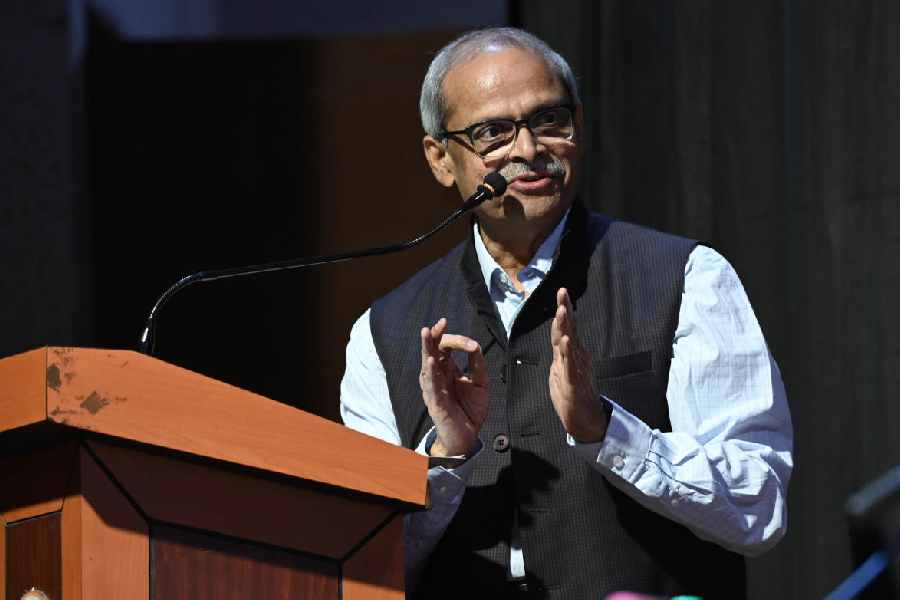
Mumbai, Sept. 4: Reserve Bank of India (RBI) governor Duvvuri Subbarao today said the Centre could slash the amount of money it needs to pump into public sector banks by about 24 per cent to Rs 69,000 crore over the next five years to help them comply with the looming Basel III capitalisation rules if it agrees to cap its stake in public sector banks at 51 per cent.
Otherwise, the government will have to fork out as much as Rs 91,000 crore.
The transition to Basel III will involve a huge recapitalisation expense because of a risk-mitigating capital conservation buffer and other features that are designed to fix the “gaps and the lacunae” in Basel II, which was guilty of ignoring systemic risks which, many believe, precipitated the world economic crisis of 2008.
The central bank has set a deadline of March 31, 2018 by which domestic banks will have to conform to the Basel III requirements.
Basel III is a global regulatory standard which focusses on improving a bank’s ability to absorb shocks from financial and economic stress by augmenting the level and quality of capital that a lender must deploy.
As the norms require higher capital, banks will have to raise huge sums of money over the next few years.
According to the RBI governor, both public and private banks together need an additional capital of Rs 5 trillion (Rs 5 lakh crore) to comply with the Basel III regulations. Of this, the equity component stands at Rs 1.75 trillion, and non-equity capital requirement is estimated at Rs 3.25 trillion.
Since the Centre is the largest stakeholder in the nationalised banks, it will have to capitalise these banks by bringing in more money. However, there are fiscal constraints that such an infusion poses.
Delivering the inaugural address at the Ficci-IBA Banking Conference here today, Subbarao said the government had two options: either to maintain its shareholding at the current level or bring down its shareholding at 51 per cent in all the banks across the board — with the attendant burden of recapitalising state-run banks.
The RBI governor said of the Rs 1.75 trillion that has to be raised via equity, the amount the markets need to provide will depend on how much of the recapitalisation burden of the PSBs (public sector banks) the government will meet.
According to the central bank’s estimates, the amount the market will have to provide will be in the range of Rs 70,000 crore to Rs 1 lakh crore depending on how much the government will provide.
Banks have over the last five years, raised equity capital by Rs 52,000 crore through the primary markets.
“Raising an additional Rs 70,000 crore to Rs 1 lakh crore over the next five years from the market should therefore not be an insurmountable problem,” Subbarao said.
“But will the government sacrifice its majority shareholding responsibility, rights and obligations or will it amend the statutes such that even if their shareholding comes below 51 per cent, it continues to enjoy the privileges of a majority shareholder,” Subbarao asked.
At present, the government holds a 61.58 per cent in the State Bank of India, 54.31 per cent in the Bank of Baroda, 62.72 per cent in the Bank of India, 56.10 per cent in Punjab National Bank and 55.24 per cent in Allahabad Bank.
It has comparatively higher stake of 81.56 per cent in the United Bank of India, 79.15 per cent in the Central Bank of India and over 78 per cent in the Punjab & Sind Bank.
Any move to cap the government’s stake at 51 per cent in these banks is certain to spark outrage among political rivals and bank employees.
|