TT Epaper
The Telegraph
 
IN TODAY'S PAPER
WEEKLY FEATURES
CITIES AND REGIONS
ARCHIVES
Since 1st March, 1999
 
THE TELEGRAPH
 
 
CIMA Gallary

Health alarm in medical audit

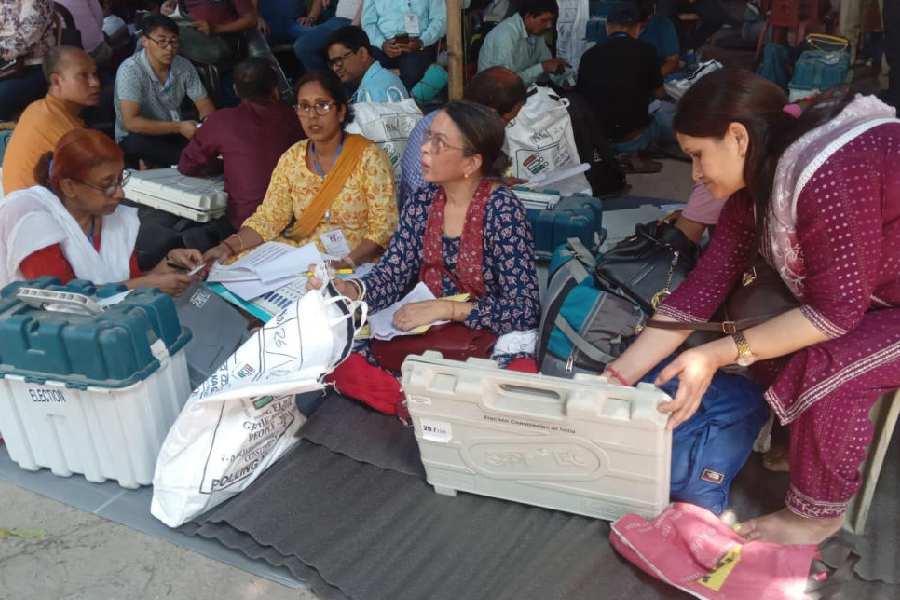
Patna, Sept. 3: A prescription audit commissioned by the Bihar State Health Society (BSHS) has exposed the poor standard of services offered to patients in government hospitals.

Sample this: doctors in government hospitals in the state barely spend three minutes on examining and counselling a patient in the outpatient department, or OPD.

There is more. Over 76 per cent of the medicines prescribed to patients are antibiotics — indicating the misuse of such drugs that have long-term implications like giving rise to drug-resistant germs.

The findings of the audit, conducted by the Delhi Society for Promotion of Rational Use of Drugs, also highlight that 50 per cent of key drugs in the essential drug list — prepared by the health department — are out of stock all through the year.

The audit report was submitted to BSHS recently.

The report, which was aided by UK’s Department for International Development, was carried out on 1,540 prescriptions given to patients in two medical colleges of the state — Patna Medical College Hospital (PMCH) and Darbhanga Medical College and Hospital, four district/sub-divisional hospitals, eight primary health centres (PHCs) and eight additional PHCs between January and June this year.

“Despite all the efforts being taken by the central and state governments, the availability of drugs at public health facilities has not reached the desired level in terms of quantity and quality of medicines to the general population,” says the report.

Several medical professionals said findings of the study were worrying. “In a general OPD, a doctor should take at least 10 minutes to examine a patient. Three minutes is too little time to properly examine anybody,” said Dr Amulya Kumar Singh, a Patna-based medical practitioner.

The audit also noted that common medicines like Albendazole syrup, cough syrup, paracetamol syrup and tablets such as Diclofenac, Amlodipine 5mg, antacids, and calcium 500mg were out of stock at government hospitals.

Another worrying fact highlighted in the report was that practice of writing diagnosis or provisional diagnosis on the prescription was non-existent at any of the facilities.

Even basic paediatric formulations like paracetamol syrup was unavailable at most of the facilities.

PMCH, the state’s premier health hub, cuts a sorry figure on several parameters. While 89 per cent of the drugs are prescribed by generic names in the state on an average, PMCH, at 57.19 per cent, emerged the biggest violator of a norm that mandates government doctors to prescribe drugs by generic names. Also, only about 14 drugs from the essential drug list were found available at the centre on any given day.

Alarmed at the findings, BSHS and the health department have started taking several measures to set things right.

“The most worrying part of the report is the short interaction between doctors and patients and high prevalence of antibiotics prescribed by doctors. Though we understand that more and more patients are coming to government hospitals and, therefore, the time given per patient has decreased, 188 seconds per patient is way too little. Every patient has the right to know what she or he is suffering from. We have written to superintendents of all medical colleges and civil surgeons to ask doctors to write down the symptoms and the related drug prescribed,” Sanjay Kumar, executive director, BSHS, told The Telegraph.

He added that the government was contemplating forming an antibiotics policy to promote the rational usage of such drugs, as suggested by the report.

The Bihar chapter of Indian Medical Association (IMA), however, defended the doctors, saying the government or the people should not be “too judgmental based on one such report”.

“Doctors prescribe antibiotics if there is a need for it. Fingers should not be pointed at them before probing individual cases. We also have reservations about several other findings of the report,” said Dr A.K. Thakur, the state IMA president.

violations

Average counselling time per patient in govt hospitals merely 188 seconds

Practice of writing diagnosis or provisional diagnosis on prescription non-existent

Several medicines not on essential drug list prescribed & dispensed

Average number of drugs prescribed 2.58 per patient l50% of essential drugs out of stock in govt hospitals round the year

Poor availability of paediatric formulations like paracetamol syrup

Poor availability of drugs at top centres like PMCH


 More stories in Bihar

  • Medics queue up for VRS
  • Health alarm in medical audit
  • Cell shock for veterans
  • Water sports hit infrastructure iceberg
  • Zoo cubs lose fight to roar
  • Tips for future leaders
  • December date for new grid
  • Age no bar for active senior citizens
  • Nitish hopes for deadlock end
  • Women fury singes Nitish's durbar
  • FIR respite for hassled trader
  • Poor vision drains funds