|
Indian governments do not periodically amend or change laws, rules, institutions, procedures and so on, responding to changes in the operating environment. This has made our governance dependent on old and creaky foundations.
India has at least four reports by law commissions recommending the repeal of outdated laws passed before 1947 on subjects now under the Central, state or concurrent lists of the Constitution. However, many of the recommendations were not implemented, leaving many ‘dead’ laws in the statute books. Laws passed after 1947 have been rarely touched. (The notorious police inspector, Vasant Dhoble, in Mumbai implementing forgotten laws has dismayed citizens and the state government.)
The administrative reforms commission periodically reviews administrative structure, procedures and the internal processes of government. Many of the recommendations remain unimplemented. Similar reviews of the police, the armed forces, catastrophes like terrorist acts and so on are meticulously reviewed but the recommendations remain largely on paper. Bibek Debroy, in the first-ever study of laws as they apply to commerce and the economy, had suggested changes but many of his suggestions remain unimplemented.
A dynamic government system would periodically review its laws, government practices, procedures and policies. It must review the government bodies that should execute them, and the capability and training of its staff. This would optimize the effectiveness of the government, improve coordination and be in keeping with the changes in environment. An important reason for the continuous deterioration in the effectiveness of Indian governments (at the Centre and in the states) is this absence of periodic review and repeal or change.
Some examples of the structure of political governance in the Centre and the states illustrate this growing weakness. Education is a concurrent subject. Both Central and state governments have jurisdiction. Almost every state has separate ministries (with the paraphernalia of ministers, secretaries and lower level bureaucrats) for primary education, secondary education, higher education, technical education, medical education and so on. At the Centre it is part of the ministry of human resource development. Since most educational institutions are under the purview of state governments, coordination in education policies is a casualty. Not surprisingly, our educational institutions are of low quality. Even the best do not stand comparison with those in other countries.
Energy is under five ministries — power, coal, oil and gas, renewable energy, and atomic energy. Of these, power and renewable energy are concurrent subjects. State governments have full control over electricity distribution as well as generation and transmission within the state. There is poor coordination between the fuel ministries and power. Atomic energy is separate and does not even come under the Central Electricity Regulatory Commission. To make it worse, almost 90 per cent of electricity assets are owned and managed by the government through procedure-oriented bureaucrats, not professional managers. The state electricity boards lose vast sums, reimbursed by state governments. Managers are not accountable for losses. Thus we remain very short of power. No government in 25 years has been able to solve the problem.
This multiplicity of government ministers and departments — with each protecting his or its own turf — and little coordination are at the root of many problems. It gets worse when individual ministers and bureaucrats exercise great discretionary powers and at times siphon off government money by giving away national resources to private parties (as with land, fuels, telecom spectrum, iron ore and so on). The government is unable to offer a coordinated set of policies cutting across ministries. Policy formulation is within one ministry even when the policy affects many others.
For instance, high inflation, especially of food articles, has persisted for two years. The Reserve Bank of India has unsuccessfully tried to moderate it by controlling money supply and raising interest rates. So long as there are large government deficits, monetary policy will have little effect. But there are many other policies that must change together, affecting the ministries of food, agriculture, civil supplies, trade and finance.
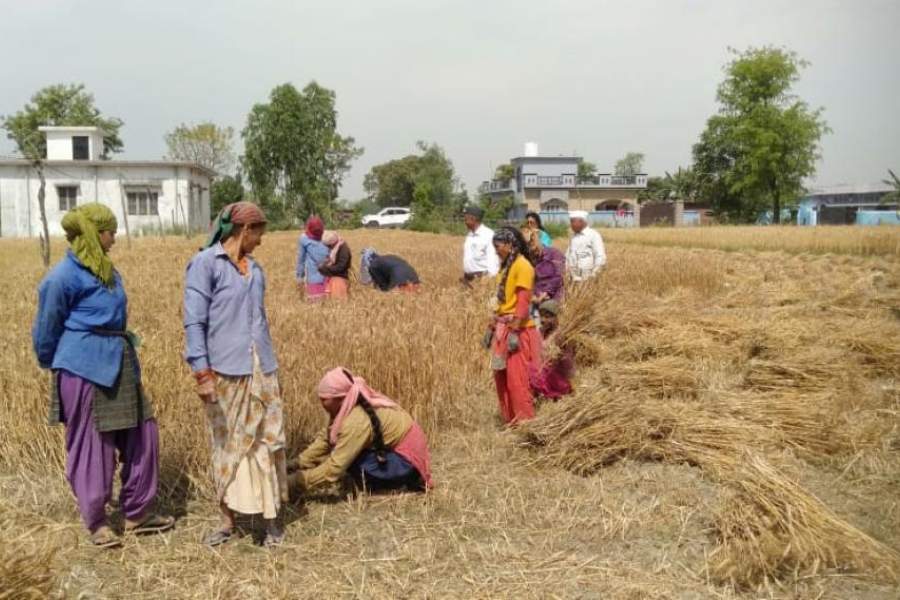
Two decades of high economic growth have brought many people out of poverty. Their consumption standards have improved and many have switched over to some extent to vegetables, fruits, meats, eggs and so on. However, the government has continued with the policy of minimum support prices introduced in the 1960s to encourage production of food such as rice, wheat, and so on). Minimum support prices of rice and wheat have been raised by 70 per cent in five years and have led to overproduction. At the same time, the government has been procuring these grains for distributing to the poor through the public distribution system.
Instead of procuring grains at prices somewhat below the market, the government has procured them at the rising MSPs. This has led to a huge glut of stocks with the government. With at least a third of the procured grains stored in the open, wastage on this account is enormous. This grain is partly used to feed those who are below the poverty line. But it is done physically. There is massive handling, transportation, storage and distribution. Ration cards have to be issued to the deserving, and grains delivered to retailers. Each step in the process has massive leakages and theft.
The PDS was introduced after the Bengal famine and during World War II. After Independence, it was to act as a safety net for the poor. But it covers many more ‘above the poverty line’ than below it. Many really poor do not get cheap grains at all. There are millions of bogus ration cards. Alternatives to physical handling have been worked out but vested interests in the government prevent any change. Further, the PDS prices are well below the rising MSPs. The government has to shell out increasing amounts on account of these “food subsidies”, a good part of which supports the undeserving. The rise in the MSP of wheat and rice in the last five years resulted in a subsidy burden of over Rs 50,000 crore. The government is reviewing the Central issue price of food grains supplied to 13.26 crore people from APL families. The last review was in July 2002.
The problem does not stop there. Since the MSP and the PDS were introduced, the world and India have moved to liberalized trade regimes. This has meant that export and import of food articles is globally big business. International prices are many times at levels above the domestic MSP. The Indian farmer loses on that account since he does not get the benefit of high export prices. Yet when exports by traders take place, they are at the subsidized Indian prices and to a great extent used for animal feed in foreign countries. Farmers get fertilizers at subsidized prices and their overuse or improper use has led to considerable damage to soils. Agricultural markets are distorted by government controls and prices are not a result of free market interplays.
This mix of populist PDS prices, poor targeting of households that are poor, producer support through MSP, disparities with international prices, massive leakages of government funds in the process of procurement and distribution, artificially induced overproduction of rice and wheat in relation to demand, and export curbs are ineffective and inefficient. These must be defused by separating various strands. Controlled prices for the poor must be differentiated from the prices for the farmer. We must substitute physical distribution in PDS with alternatives such as cash/bank transfers for targeted poor households. They must have easily operated bank accounts. We must allow agricultural markets to function without government interference so that market determined prices are available to farmers.
Agriculture and foodgrains comprise just one example of the confusion in which the government has landed itself because of continuing with outdated policies, systems, procedure and institutions. They make Indian governance increasingly inefficient and unable to deliver to citizens, and waste money.
The author is former director general, National Council for Applied Economic Research
|