|
“The limits of my language are the limits of my world.”
Ludwig Wittgenstein
“The ball is there to be hit.”
Virender Sehwag
Don’t tell them, not that they would care to understand, but Najafgarh is the habitation of interpreters of Wittgenstein. It’s all down to the philosopher’s arcane maxim, they do it how they speak it — plainly, brusquely and in whole measure. It may not count to much on a given day, but that’s the only way they know: the ball is there to be hit, the discus plate is a thing to fling, the opponents loins are there to be grabbed and grounded.
You must have caught the exhort booming off the coach-pen by the ringside as Sushil Kumar battled Tatsuhiro Yonemitsu vainly for Olympic gold this evening: “Pakad, pakad, pachhaad de, pachhaad!” — grab him, grab him, put him down. Those are the limits of the language they speak in Najafgarh, they serve well enough to describe the limits of their world.
What could Sushil Kumar have wanted more than “pakad” and “pachhaad”? That would have got him gold. He got silver because he didn’t get the words — he couldn’t “pakad”, he couldn’t “pachhaad”.
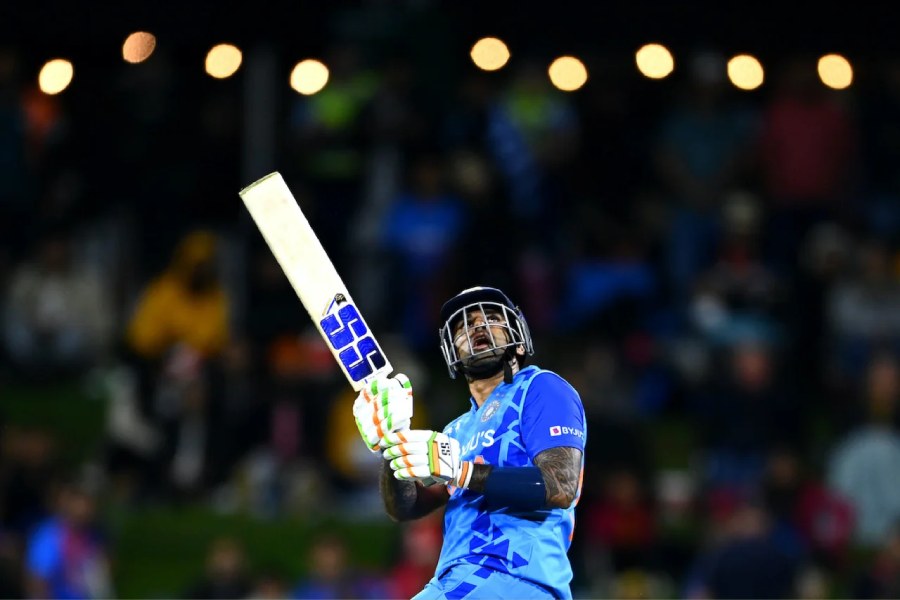
No great mystery to it. When Virender Sehwag gets out essaying a six at zero or at 99, it’s simply because he couldn’t hit the ball right. That wouldn’t send him to the coaching manuals, that would only make him hit the ball when it’s thrown at him the next time. The ball’s there to be hit, remember, that’s the limit of Sehwag’s language and his world.
He was once asked by a gushing commentator how he managed to hit every bad ball beyond the boundary. Sehwag looked quizzically at him and said: “Why bad balls, I hit good balls also, balls are there to be hit.”
When commuter buses arrive in Najafgarh, often wearied from long journeys for it scrapes the bereft western edges of Delhi, a frenzied para-urban warren where it isn’t unusual to park your muddied sedan next to your freshly washed buffalo, two words, no more, ring out above the cacophony: chadh ja or utar, get on or get off.
Should there be a melee, which is often the case, there may be another two spat: hat pare, buzz off. They tend to be blunt, and brief with it. Like Sehwag when he has hit the ball to the square fence. He doesn’t wait on posture for photographers, he’s already waiting for the next ball.
When father comes across son or husband meets wife, or when you arrive at the grocer’s or at the ticket window of the Najafgarh bus depot, the same two words may be employed should the occasion for conversation arise: ke hai, what is it? The answers could be as cryptic as darjan ande (a dozen eggs) or Kanaat Place, meaning a ticket to Connaught Place, with due apologies to Mani Shankar Aiyar who’d have it called Rajiv Chowk, but he can be sure they won’t bother obliging in Najafgarh.
Or it could be a litany such as wives are unfairly credited to specialise in. If it’s that, there is the likelihood it will elicit three words instead of two: hua ke hai, what on earth has happened? That’s expected to seal the conversation.
Try asking Sehwag to explain the manner of his exit from the crease. He isn’t likely to go much beyond saying the ball was there to be hit, he just didn’t hit it properly. End of matter. Nothing’s complicated. If it is, it is probably not worth getting into. It’s like when Sehwag hits the ball and when he misses. What lies between thunder and whimper is hitting or missing, not much else.
When a CD gets stuck in the car stereo, my driver gives the machine a fistful to see if it will yield; the eject button isn’t working so no use giving electronics the kid-glove. When the milkman doesn’t arrive with his pail, he offers no apologies the following morning. He puts it on his cow. “Janawar hai, nahin diya doodh.” (It’s an animal, it didn’t give.)
Both come from Najafgarh or thereabouts, which is the bristly hinterland to the fussy real estates which have been implanted on Gurgaon and the slightly less fussy precinct that I have inhabited for two and a half decades now.
Both are ready roughnecks — though it doesn’t necessarily make ruffians of them — and it isn’t far to seek why: they come from rough country. Haryana is a parched run. Left to itself, the earth only gives keekar and babool , both prickly, gaunt shrubs that offer little other than twigs to put polish on teeth.
Water is forever far to fetch. Summers blister, winters chill. Survival is a coaxed thing. It takes the hardened to endure and probably Jats to dominate. Too often, the Jat is made easy metaphor for coarseness. The abrasive cop, the loutish politico, the boorish land-shark, the stereotypes abound. But it’s the gift of the same coarseness that we have come to rain kisses on and embrace with beating hearts.
Sehwag, Sushil Kumar, Krishna Poonia, they couldn’t have sprung from the padded indoors of Gurgaon, they could only have tumbled off the rough of Najafgarh. Rubbed, ready to rub, children of a he-wins-you-lose world.
It’s a world flirting with transition, no doubt. Flat acres have turned three dimensional with high-rises. Manicured golf courses have crept up the flanks of the arid Aravalli.
Speedways zip along the midriffs of malls. Multinationals and call-centres have conjured a cosmopolitan 24/7 hive, days that hum on the work floors, nights that rave on in bars and discotheques. It has turned too heady too soon, it often trips its consumers, most of them newly rich from having sold their acres to developers with all the time to gape, even grope if the chance comes by. There’s cash and there’s crime, there’s revelry and there’s also rape.
Gurgaon is a tizzy that is beginning to tempt its rugged backyard with sophistication and sophistry, but only just. They haven’t figured to hover on motion-sensitive sensors to part glass doors, they’d rather push and walk through.
In Najafgarh, still 20 or so kilometres adrift of Gurgaon’s expanding excess, they don’t use glass for doors at all; they use timber, the thicker the better. Doors are things to shut and protect, glass won’t last a blow, timber will. It’s simple. A latter-day cheese farmer unpacked his wares in these parts recently. With the Jerseys and the Holsteins arrived a trailer-load of electric milking machines and they exclaimed whatever for! Haath kisliye hain ? What are hands for? Go straight for the udders — like Krishna Poonia did all her life in her father’s cattle-sheds in rural Hissar before she got hold of the discus — why go for the switchboard? What’s to tell whether there will be power churn the machines, anyhow?
Keep it simple and down to yourself, apna haath, jagannath, your power in your own hands.
Till, tonk, grab, ground, do whatever it is you do, and if you can’t , put no analysis on it. The limit of your language is the limit of your world. But don’t tell that to Najafgarh’s interpreters of Wittgenstein. Don’t tell Wittgenstein either, for he may take a turn.
|