|
|
Power without responsibility |
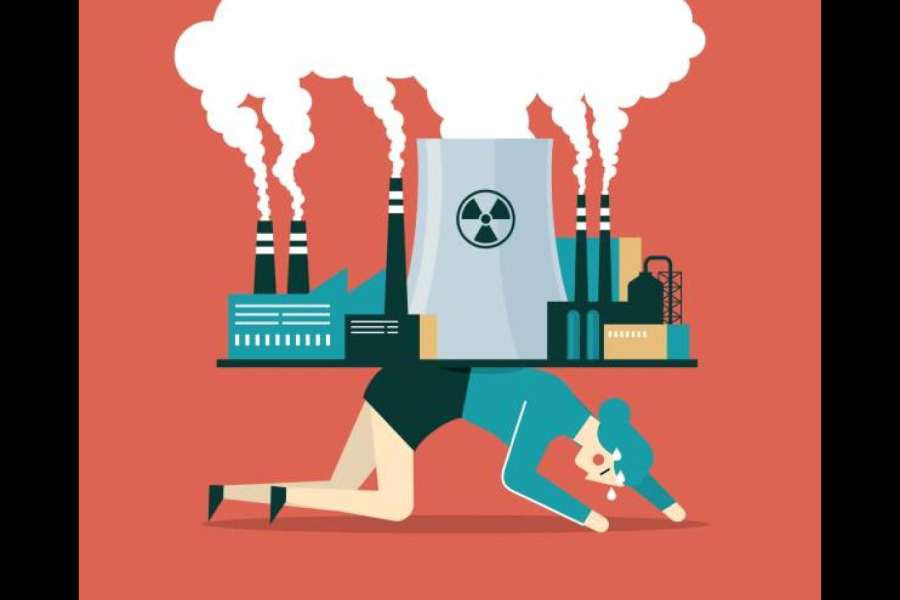
Energy availability at affordable prices is a key element for economic growth and development. In India, the government dominates all forms of and institutions for energy — electricity-generation using coal or gas, hydroelectric or nuclear power, coal-mining, petroleum and natural gas fields, electricity transmission, electricity distribution, pipelines for oil and gas. This is a legacy of independence in 1947, at which time only the government had, or could raise, the large resources needed for investment in them. Government ownership and control have led to populist pricing at the cost of profit and hence, to declining resources for investment in energy.
In the early years, India did not have much professional management, and civil servants took charge of many of the new government enterprises. India claimed to be a “socialist” economy. This translated into government ownership and, certainly, control over all resources, including manufacturing. This socialist ideology is deeply embedded in the minds of most Indian academics and policy-makers, even businessmen, especially those over 45 years of age. There has been little clamour for a diminished government role. Vested interests, mainly in government and politics, also prefer government ownership and control.
Since Independence, the private sector has grown and can access whatever funds are required. While the government has opened many energy sectors to private investment directly or indirectly, government dominance continues. The rules are set by ruling politicians and bureaucrats. The organizations in many of these sectors follow government procedures, and do not act as enterprises. Accountability at the individual level is scarce. Productivity is low, project execution is slow, and many times, tariffs do not reflect costs and an adequate return for further investment.
The last time the northern electricity grid collapsed, it was the mid-winter of 2001. I called an emergency hearing of the Central Electricity Regulatory Commission. We found that demand was lower than expected, the Uttar Pradesh transmission lines were poorly maintained and were unable to carry the load on them, which overloaded lines in other parts of the region, and that substantial power was being generated by the National Thermal Power Corporation and pushed into the system. We warned all concerned that since this was the first such episode after our commission was formed, the next time we would throw the book at whoever was responsible for damaging the grid through indiscipline.
In 2001, the UP lines should have been better maintained. When demand was low, NTPC and other suppliers should have backed down. But NTPC was earning substantial incentives and did not want to lose that income. The respective state load dispatch centres and the regional load dispatch centre should have taken corrective action and disconnected some generators. They did not do so, and the frequency shot up, ultimately leading to the collapse of the northern grid.
Fortunately, at that time, the different regional grids were not interconnected sufficiently (as they are now, except temporarily for the South), and so there was no cascading effect on other grids, as it happened this time. It is vital that the national grid code (the traffic rules for electricity flowing through the wires) laid down by the CERC is strictly followed and obeyed. The load dispatch centres in the states are the first point at which action has to be taken. They are well-equipped and have excellent computerization so that they have minute-to-minute information about who is drawing how much from, and supplying how much electricity to, the grid. They are expected to act immediately (disconnect an over-user, urge generators to use up more capacity), to protect the integrity of the grid without any fear. However, they are under the state electricity boards. They are not independent. Nor are the SEBs. They are wholly owned by state governments and respond to instructions from politicians and their bureaucrats. State governments could have played politics and instructed their state load dispatch centre not to disconnect or penalize wrong-doers. Till recently, they did not interfere with the grid traffic rules or the policing by SLDCs. They may have done so now.
Under my supervision, the commission introduced a national grid code, which has since been made more comprehensive. We changed incentives to generating companies to earn only on achieving more realistic targets. Thus NTPC, for example, would no longer be able to earn on targets well below its actual performance. The companies had no temptation any more to keep pushing power into the grid when it was not required, as they did when the grid failed in 2001. We brought in forecasts a day ahead at 15 minute intervals (with flexibility for changes at 2 hours notice) for all generators and users. Deviations from forecasts that affected grid frequencies were penalized.
For 11 years after the northern grid collapsed in 2001 there was no grid failure. The frequency in the grid came much closer to the desired level. This was because violations were punished. Violators paid the fines. No government interfered to seek exemption from penalty if it drew more than what was forecasted and affected the grid frequency.
It is clear that the SLDCs and the regional load dispatch centre in north India could have quickly brought the grid frequency to acceptable levels by disconnecting large users who exceeded forecasts, and even the whole of the state that did so. By matching demand with supply, the frequency and the grid could have been safeguarded. The grid could collapse only when the frequency went far below the norm, and/or some generator suddenly produced far below forecast.
Did the load dispatch centres take any action? We do not know but the grid collapse suggests that they did not. If they did not, it could only be because they were told not to take action. The regional load dispatch centres come under the Power Grid Corporation of India, which is the central transmission utility and owned by the Central government. The outgoing minister for power, Sushil Kumar Shinde, suggested that this was under instructions from the prime minister’s office. If this is true, it is the beginning of the end for an India where essential measures for discipline can be over-ruled. The truth must be established quickly and action taken against those that violated the rules.
Another important action that is urgently needed is to introduce penal measures that apply to individuals so that the lack of accountability is identified and punished. Punishments to individuals and companies should be much more severe, and proven mistakes that cause grid collapse, for example, should even attract imprisonment.
Electricity undertakings should operate as enterprises with professional managers, not bureaucrats. The latter are itinerant managers who move on to another posting. Managers in electricity undertakings should have a career within the institution. All government concerns should be headed by professional managers, with agreed targets and rewards or penalties based on performance.
All energy ventures should be run by private companies under strict but fair and independent regulators. Leasing of coal mines, oil or gas fields, licences for pipelines, transmission lines and power-generation and so on should be allocated in a transparent process, with no discretionary authority invested in ministers or bureaucrats. The government should move from running energy companies and leave them to the private sector. This must apply as much to nuclear generation as to the others. Today nuclear power is a monopoly of the Central government. It is accused of lack of transparency on safety issues and of hiding real costs. If nuclear capacity is to increase quickly, private entry under strict regulation is necessary.
Politics bedevils the energy sector in India. The result is poor availability, low productivity, losses and adverse effects on economic growth.
The author is former director general, National Council for Applied Economic Research |