TT Epaper
The Telegraph
TT Photogallery
 
IN TODAY'S PAPER
WEEKLY FEATURES
CITIES AND REGIONS
ARCHIVES
Since 1st March, 1999
 
THE TELEGRAPH
 
 
CIMA Gallary

Status quo hint in RBI text

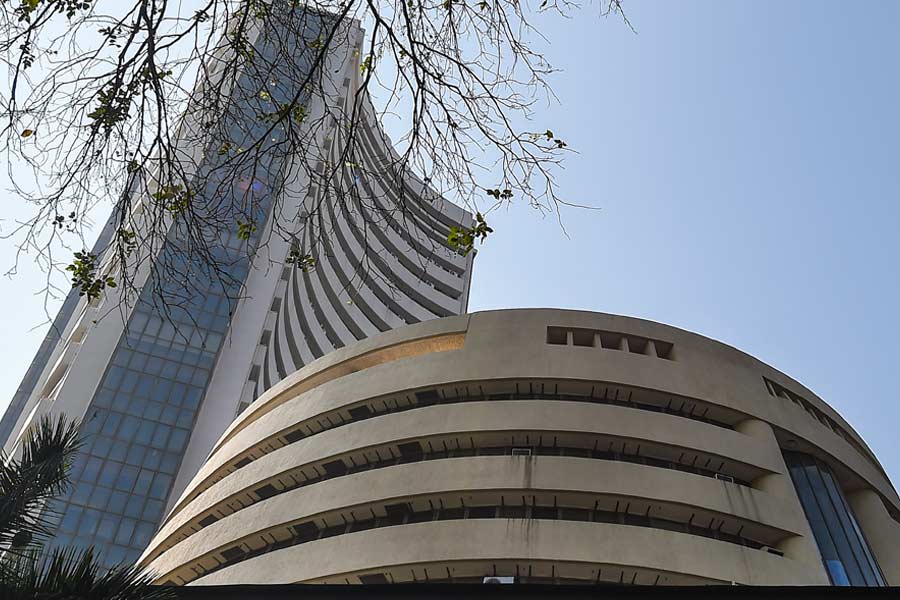
Mumbai, July 30: The Reserve Bank of India has signalled very clearly that the onus of reviving the stuttering economy rests with the government — and will critically depend on its ability to spend its way out of the crisis.

The bald message in its report on Macroeconomic and Monetary Developments — traditionally released a day before the central bank’s policymakers hunker down for a quarterly review of the monetary policy — was this: let the government take care of growth, the RBI will continue to grapple with the spectre of inflation.

“Speeding up fiscal consolidation by putting in place an investment stimulus through large capital spending by the government but offsetting it by curtailing revenue spending by revamping the subsidy schemes could go a long way in reviving growth,” the RBI said.

In an unequivocal message to Prime Minister Manmohan Singh, who now looks after the finance ministry, the RBI said the fiscal deficit target for 2012-13 was at a risk of being breached because of likely overshooting of subsidies and a shortfall in receipts. The central bank, therefore, asked the Centre to concentrate on setting its fiscal house in order by curtailing subsidies and significantly boosting government capital expenditure to provide an investment stimulus to the economy, which would help crowd-in private investment.

The RBI has in the past maintained that policy rates alone is not responsible for the economic slowdown, an indication that policy actions by the government on various fronts could also reignite strong growth.

India reported its slowest pace of growth in 29 quarters in the January-March quarter at 5.6 per cent, triggering a clamour for a concerted policy action by the government and the central bank to jump-start the economy.

The RBI admitted that several stakeholders had trimmed their growth forecasts for the year and that newer risks to growth have arisen from slowing global trade, domestic supply constraints, bottlenecks of industrial inputs, particularly with regard to coal and electricity, and less-than-satisfactory monsoon so far.

However, the central bank did not see this as a huge cause for worry. It once again peddled the line that a little bit of growth could be sacrificed to rein in inflation.

Though the central bank admitted that growth outlook for the Indian economy remained weak, it continued to adopt a hawkish stance vis-à-vis inflation.

With inflation still hovering above 7 per cent, there is no headroom for monetary policy action to revive the stalling economy, the RBI said.

The report states that CPI (consumer price index) inflation in the US, Britain and China has fallen and is currently below 3 per cent, thus providing monetary space there to address growth risks. India doesn’t enjoy such a comfortable situation on the inflation front, and the RBI signalled the need for a greater vigil against its biggest bugbear.

According to the RBI, inflationary pressures persist in India. Food inflation, for instance, has risen with high prices seen in vegetables, pulses, edible oils, cereals and protein-rich items such as milk, eggs, fish and meat.

“There could be further build-up of food inflationary pressures during 2012-13. The slow progress of the south-west monsoon so far and the uncertainty about its quantum as well as spatial and temporal distribution has emerged as a major risk to food inflation in the near-term,” it said, adding that the increases in minimum support prices and wage levels could further exert pressure on overall inflation.

The comments from the central bank on inflation were more hawkish compared with its previous macroeconomic report released in April. Banking circles said if one were to go by its report today, a reduction in either the repo rate or the cash reserve ratio was unlikely at tomorrow’s meeting.


" "
" "