|
|
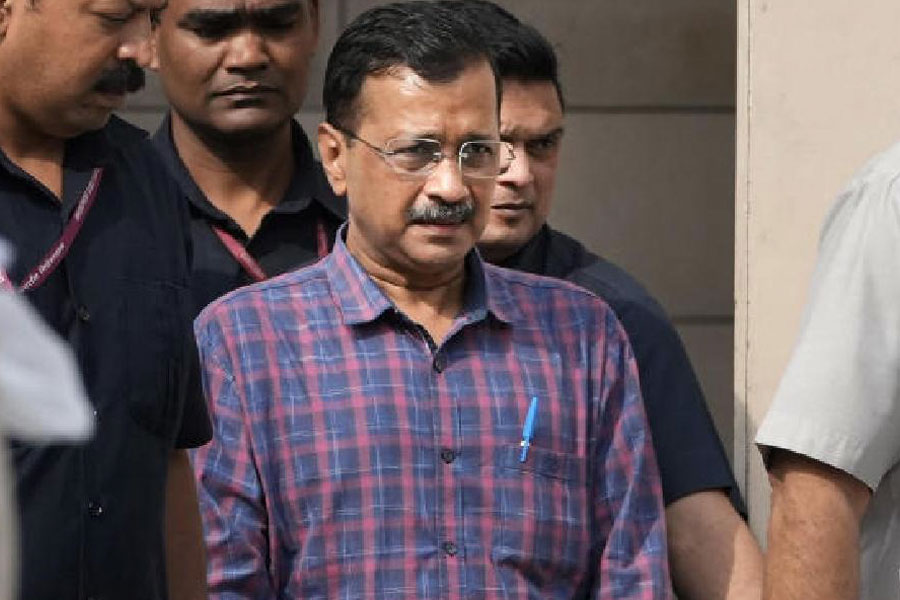
Rohit Shekhar outside Delhi High Court on Friday. (PTI)
|
New Delhi, July 27: The Karnas of India now have a legal recourse.
Delhi High Court today made public the result of a DNA test that said veteran politician “N.D. Tiwari is reported to be the biological father of Rohit Shekhar and Ujjwala Sharma is reported to be the biological mother”.
What this means is a drop of Tiwari’s blood has the potential of spawning a new generation of paternity laws and opening the floodgates on such legal claims in India.
This is the first time in India that the result of a DNA paternity test has been made public in a court after a ward moved a petition to establish his parentage. Till now, it was more common for partners and spouses to file suits to establish the paternity of their children. Cases in which men suspect the fidelity of the wife and insist on a DNA test are also not unknown.
But a child insisting that a father admit to his paternity — as Rohit has done — is a first in India. The country does not have a law under which a child could get a declaration that a particular person is the father.
Rohit’s case — the verdict has not been delivered; the key DNA evidence was made public today — has set a precedent. In the absence of a specific law, the courts — Tiwari had moved seven appeals in the Supreme Court and the high court — could have refused to entertain Rohit’s petition.
During the trial, judges maintained that the best interests of the child are paramount and supreme and go beyond the interests of the parents.
But the judges relied on Article 7 of the United Nations Convention on the Rights of the Child that states “the child shall be registered immediately after birth and shall have the right from birth to a name, the right to acquire a nationality and, as far as possible, the right to know and be cared for by his or her parents”.
Down the ages, illegitimate children have always been given the short shrift in India — a trend immortalised in the manner in which the Mahabharata’s Karna got a raw deal.
|
| ND Tiwari in 1988.
File picture |
In Britain, a child could under the UK Family Act, 1986, seek a declaration from a court that a particular person was his parent or that he was a legitimate child of his parents. If a child is aged below 18, he or she can file a paternity action suit through a “next friend”.
The US law conceives of more than one scenario. Under the US system, a man can acknowledge that he was the parent and pay parental support. He could also deny parentage, forcing the courts to direct a DNA test.
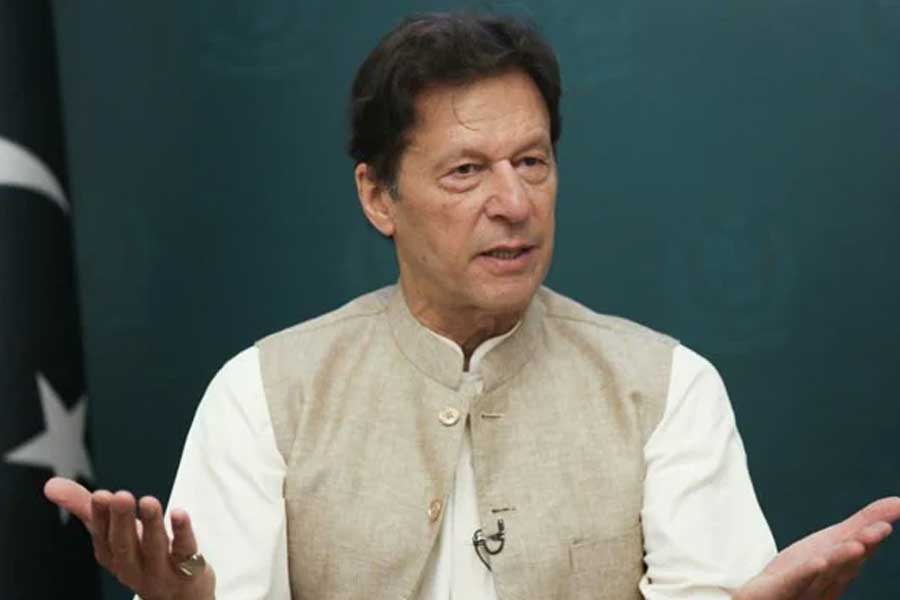
If a person were to refuse, both in the UK and the US judicial systems, the courts can draw an adverse reference and declare him a father in absentia. Pakistani cricketer Imran Khan was declared father in absentia of US heiress Sita White’s child.
In the US, there have been instances where the courts have declared as father both the biological and the adoptive fathers.
A noted instance is that of Indian model Padma Lakshmi. She wanted her child from Adam Dell to be the child of her lover Ted Forstmann.
Dell went to court and sued her. The court established that he was indeed the biological parent of Padma Lakshmi’s daughter and granted him visitation and other parental rights. But this in no way detracted from the parental rights of billionaire Forstmann, who left a huge trust fund for the daughter before he died of cancer.
The hearing into Rohit’s petition assumes significance on another count. In India, if a child feels that any injustice was done, courts have to be moved within three years of him or her turning 18 or a major.
That is the limitation period within which a child can challenge any decision that has affected his rights such as inheritance or any injury, though paternity is not specifically covered.
Tiwari has invoked this rule to challenge the paternity suit as it was filed in 2007, nine years after Rohit turned 18. Tiwari has also sought to invoke the presumption of legitimacy of a child born of wedlock, taking advantage of the fact that Shekhar’s mother Ujjwala Sharma was still living with her husband B.P. Sharma when Shekhar was conceived. She divorced Sharma much later.
The court is yet to examine these aspects. But the DNA test and the disclosure of the report are milestones in themselves.
|