|
The most serious threat to our democracy today is not the policy paralysis in the government — which will pass — but the decline of the Indian Parliament as an institution of accountability and oversight. This malaise is not unique to India. However, in our country, the decline of Parliament has reached such alarming proportions that the very fabric of our democratic system could become seriously strained. In our system of Parliamentary democracy, the sovereignty of the people is exercised through Parliament. While it is the responsibility of the government to formulate and implement policy to give effect to the political, social and economic objectives of the State, it is the responsibility of the legislature to exercise control over the executive, specially over its finances, and approve legislation. Therefore, parliamentary performance is a key indicator of the state of our democracy. Unfortunately, Parliament today appears enervated and effete and its gradual decline over the last four decades has been accompanied by a corresponding increase in the power of the other two organs of the State, namely the executive and the judiciary. Surprisingly, the honourable members of parliament do not seem to be very concerned about the threats confronting this institution.
The decline of our Parliament started in the 1970s. While Parliament’s powers to amend the Constitution were sought to be circumscribed in 1973 by the Supreme Court, the first direct challenge to the authority of Parliament came from the executive with the declaration of Emergency in 1975. This was followed by the 39th and the 42nd amendments to the Constitution. Parliament bumbled through the post-Emergency era with some defensive action but it could not recover what Jawaharlal Nehru (following Bagehot) had called its “majesty”. Parliament continued to decline in the 1980s and thereafter. In my view, this has happened because of three factors. Firstly, the traditional mechanisms of holding the executive to account — such as questions, motions, discussion and the instruments of budgetary oversight — have been found to be ineffective. Secondly, the committee system has failed to secure the substantive accountability of the executive. The compulsions of coalition politics and extreme partisanship have weakened the system lately. Thirdly, the change in the composition of Parliament because of regional, caste and religious factors has fuelled confrontations between coalitions in Parliament and reduced the institutional cohesion that is so necessary for institutional integrity.
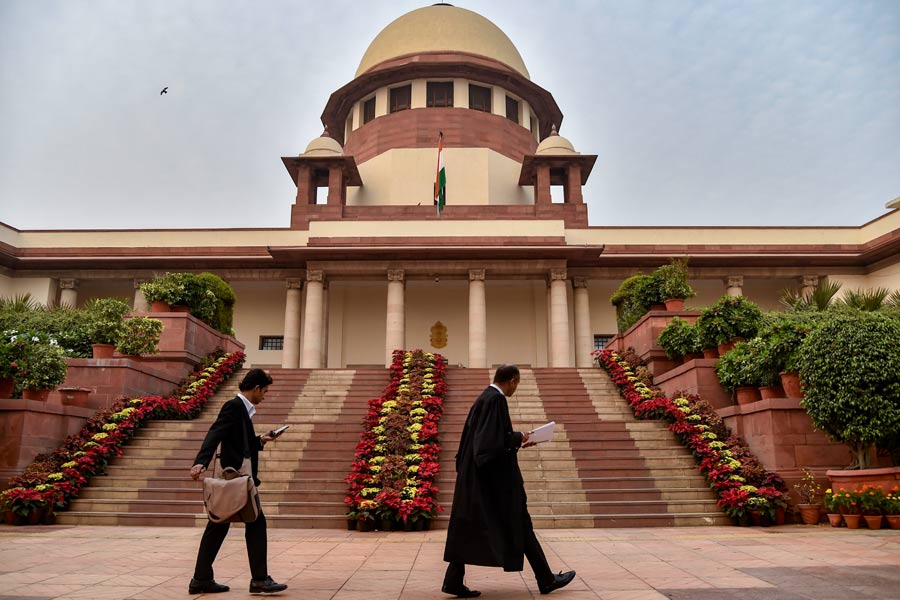
The judiciary has also become increasingly assertive after the Emergency and this has led to a whittling down of parliamentary power. Judicial assertion was evident soon after the Emergency in the Minerva Mills case (1981) in limiting the powers of Parliament to amend the Constitution and in upholding the basic structure doctrine earlier propagated by the Supreme Court in 1973. This was accompanied by the creation of Public Interest Litigation jurisprudence in exercise of the Supreme Court’s powers of judicial review. Parliament did not react with any seriousness to the implied reduction of its legislative powers. Experience has shown that in our constitutional system of checks and balances, power is a zero sum game. If one organ of the State accumulates it, others have to part with it. Parliament allowed such accumulation by acquiescing to the conversion of an essentially proscriptive mandate of judicial review into a prescriptive power.
The Parliament’s ability to function as an accountability and oversight institution has also been eroded on account of factors not related to our constitutional scheme. First, the era of fractured mandates and coalitions has resulted in a proliferation of political parties in Parliament based on personal, caste or regional loyalties, and not on clearly defined ideologies. This has made consensus on any issue except the most trivial ones a distant dream. Second, the legislative business of the Parliament has grown in volume and complexity. Most MPs find it difficult to cope with the sheer volume and complexity of legislation. Third, the growing influence of organized interests and pressure groups like industry associations, trade unions, activist groups and non-government bodies has had a negative impact on the initiative of parliamentarians. Such pressure groups primarily promote group interest, not public interest. They are not only consulted but often co-opted by the government and even allowed to initiate and determine the shape of laws or policies. Fourth, globalization of trade and financial markets has curtailed the ability of national parliaments to control events. Economic decision-making is now increasingly governed by international treaties and commitments to multilateral organizations. Fifth, the creation of a host of sectoral regulators with overlapping statutory powers has diluted parliamentary control over the determination and resolution of problems relating to consumer interest. Sixth, Parliament’s power has also declined on account of the growing reach of the media, particularly the electronic media. Sensational reporting of discussions in parliamentary committees coupled with intrusive and over-simplified analysis of policy in its formative stages with participation of ministers and MPs on TV has reduced the significance of parliamentary debate. I am not saying that this is necessarily bad, because media scrutiny is democratic and justified. But over-simplification and, sometimes, tendentious reporting on legislative matters detract from the importance of parliamentary discussion. Finally, democracy is all about communication and negotiation. The government’s own record of communication and negotiation with Parliament has been dismal, particularly in an era of coalitions.
The solution to the problem lies in improving institutional cohesion in Parliament, at least for responding to constitutional challenges; improving the existing mechanisms of accountability and oversight; reviewing, collaboratively with the government, the other areas mentioned above. In my view, the time has come to consider if it would be advisable to set up a group of eminent experts to make specific suggestions for strengthening the Parliament so that it can hold the government to account in a more effective manner.
|