|
 |
 |
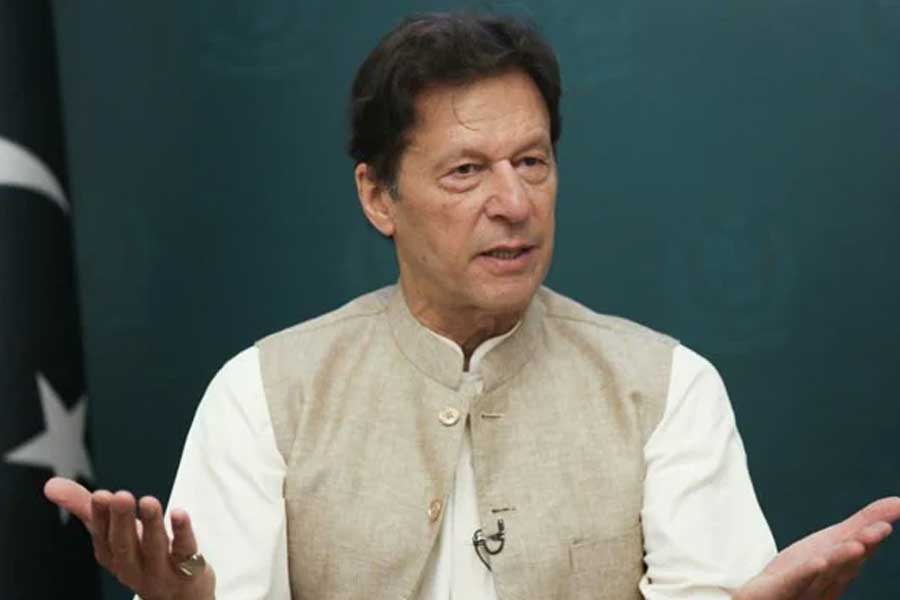
| (From top) Gilani, Chaudhry and Zardari |
Islamabad, June 19: Pakistan’s Supreme Court today disqualified Prime Minister Yousuf Raza Gilani as member of parliament, leaving little option for him but to step down.
The order escalates a confrontation between the government and the judiciary and plunges the political system into turmoil. The Prime Minister, who had been convicted of contempt of court in April for refusing to order the re-opening of corruption cases against President Asif Zardari, will cease to hold his office.
“Syed Yousuf Raza Gilani has become disqualified from being the member of parliament on and from date of the pronouncement of judgment in contempt case dated April 26,” Chief Justice Iftikhar Muhammad Chaudhry said in his order. “He (Gilani) is also ceased to be the Prime Minister and office of the Prime Minister shall be deemed to be vacant accordingly,” Justice Chaudhry added.
The chief justice declared that Gilani’s office had been effectively vacant since April 26 when the court convicted him on contempt charges because he refused to pursue a corruption case against Zardari.
The ruling calls into question the validity of all executive decisions made since April 26, including the passing of the federal budget. One commentator said it “opened a massive legal can of worms”.
Although the decision is unlikely to topple the government, many viewed it as the product of a grudge-driven tussle between Zardari and Justice Chaudhry, with the Prime Minister caught in the middle. “The court has been gunning for the Prime Minister for a long time,” said Najam Sethi, a veteran political analyst. “Clearly there is a lot of politics in this.”
The order left Pakistan in a state of constitutional uncertainty, with the cabinet effectively dismissed. The court instructed Zardari to “ensure continuation of the democratic process” — words widely interpreted as an order to arrange the election of a new Prime Minister.
Legal experts said Gilani could not appeal the decision but that he may continue in an interim role until a successor is chosen. In dismissing Gilani, the court chose the strongest option. It could have referred Gilani’s case to the Election Commission of Pakistan, which could have taken up to three months to adjudicate the case.
It comes at the end of a tumultuous week for the court itself. Last week, a billionaire businessman made explosive accusations in court and in the media that he had given $3.7 million in kickbacks to Justice Chaudhry’s son in order to swing several cases his way. The furore over those accusations, cantered on the judge’s son, Arsalan Iftikhar, is now likely to fade as the country grapples with its latest political crisis.
President Zardari chaired a meeting of senior ruling PPP leaders, including Gilani, to chalk out future strategy. An insider told The Telegraph that the PPP appeared willing to accept the verdict.
“But you cannot rule out surprises,” a source in the government said. Information minister Qamar Zaman Kaira said the PPP had reservations about the judgment but would take the final decision after consulting coalition partners.
Among the names being considered to replace Gilani are that of former finance minister Makhdoom Shahabuddin, education and religious affairs minister and Zardari’s close associate Syed Khurshid Shah and water and power minister Chaudhry Ahmad Mukhtar. Some mentioned the name of foreign minister, Hina Rabbani Khar.
Any candidate, however, will need the approval of the PPP’s coalition partners — smaller, ethnically centred parties based in Karachi, Lahore and Peshawar, who are likely to seek fresh concessions from Zardari in exchange for their votes in parliament.
The court decision advanced the likelihood that general elections, scheduled to take place by next spring, could be brought forward.
Equally, however, Zardari may wish to first resolve some of the governance failures that have marred his government’s reputation, notably widespread power outages and system failures that have continued for years. The court decision coincided with street agitation in Punjab, the country’s most populous province, where rioters burned buildings and clashed with police in several cities on Monday and today to protest power outages.
Justice Chaudhry headed a three-judge panel which heard several identical petitions including those from the Pakistan Muslim League (N).
The petitions challenged the ruling of the National Assembly Speaker who had bailed out Gilani by saying that no violation or contempt took place as he did not ridicule the judiciary.
“What will happen to independence of judiciary if the Speaker or parliament tries to scrutinise judicial rulings?” Justice Chaudhry asked. “No one can undo a court verdict except a court of appeals.”
In a five-page ruling, Speaker Fehmida Mirza, who also belongs to the PPP, had said on May 25 that the question of Gilani’s disqualification did not arise as he did not ridicule or defame the judiciary. Under Article 63 (1)(g) of Pakistan’s Constitution, anyone convicted of defaming or ridiculing the judiciary and the armed forces is barred from being an MP.
Known as “Mr Ten Percent” for his involvement in corruption cases, Zardari was among over 8,000 politicians and bureaucrats who got amnesty from graft charges under the National Reconciliation Ordinance (NRO).
But Gilani, who became Prime Minister after the PPP came to power in March 2008, had refused to write a letter to the Swiss authorities to re-open a dormant corruption investigation into Zardari’s finances.
The Supreme Court had ordered the re-opening of all corruption cases under a December 2009 judgment that scrapped the NRO. It was promulgated by former President Musharraf in 2007 as part of a power-sharing deal with Opposition leader Benazir Bhutto, who was assassinated the same year, paving way for her husband to become the head of state after parliamentary elections.
Bhutto and Zardari allegedly used Swiss bank accounts to launder about $12 million in bribes.
|