TT Epaper
The Telegraph
TT Photogallery
 
IN TODAY'S PAPER
WEEKLY FEATURES
CITIES AND REGIONS
ARCHIVES
Since 1st March, 1999
 
THE TELEGRAPH
 
Calcutta Weather
WeatherTemperature
Min : 19.7°C (+1)
Max : 28.6°C (-1)
Relative Humidity:
Max : 96% Min : 52%
Sunrise : 5:59 AM
Sunset : 4:47 PM
Today
Mainly clear sky. Mist in the morning.
 
CIMA Gallary
Email This Page
Vector shift stings city

Calcutta has topped the chikungunya charts in Bengal this year, surprising virologists who had so far treated the vector-borne disease as mainly a rural scourge.

According to health department data, the city accounted for 173 of the 248 chikungunya cases reported in Bengal since January. Doctors say the final figure could swell with patients suffering from fever and severe joint pain — the most common symptoms of chikungunya — flooding hospitals and clinics across town.

“The incidence of chikungunya in the city this year is around 25 per cent more than in 2010,” a senior health department official said. “The National Institute of Virology in Pune has found 60 per cent of the blood samples sent from the city positive for the virus. ”

Tests on around 20 per cent of the samples have been inconclusive, although the patients have had some or all the symptoms of chikungunya. “These samples will be put under the microscope again,” the official said.

A.C. Mishra, the director of the Pune institute, confirmed the demographic shift. “Going by our test reports, chikungunya is more of an urban disease now,” he told Metro over the phone.

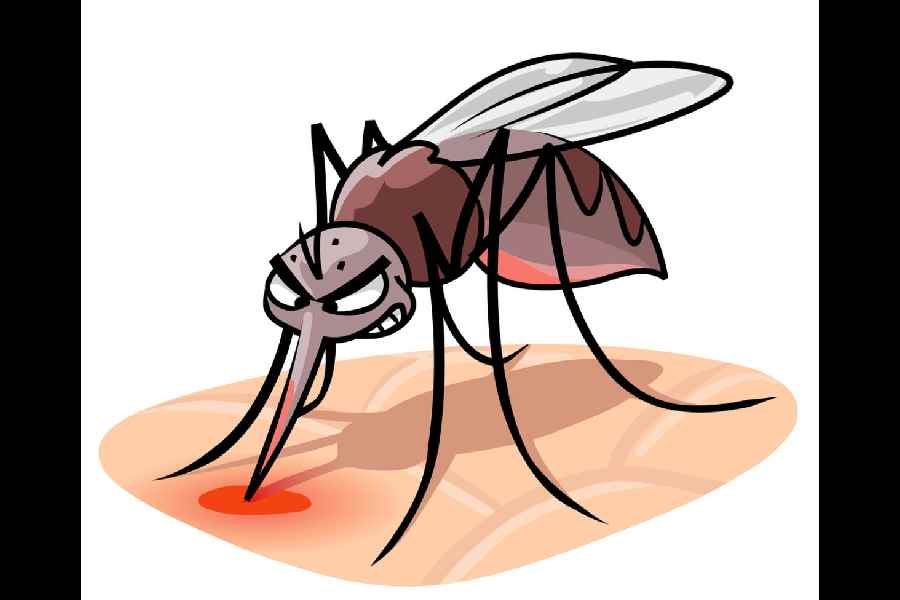
Chikungunya is an alpha virus of the family Togaviridae, carried by the aedes aegypti mosquito (also called yellow fever mosquito). The name chikungunya derives from a root verb in the East African Makonde language, meaning “to become contorted” because of severe joint pain.

The first outbreak of the disease was in southern Tanzania in 1952 and it quickly spread to Asia, including India’s rural belt.

So why is Calcutta witnessing a chikungunya outbreak while the disease seems to have ebbed in the rural belt?

“The majority of the rural population has developed antibodies that combat the virus; urban residents don’t have this immunity. The weather in Calcutta this year has also played a part in the outbreak of the disease,” said Amitabha Nandy, clinical microbiologist at the Centre for Tropical Medicine and Parasitology.

Vector-borne diseases usually strike between the end of monsoon and the advent of winter. “The prolonged spell of humid weather this season has aided the growth of the mosquito population,” Nandy said.

The aedes aegypti mosquito breeds the fastest in stagnant water. Flower vases, uncovered barrels, buckets and discarded tyres where water accumulates are danger spots, as are toilet tanks. Such conditions are also ideal for mosquitoes carrying the dengue virus.

The strange thing is that while the incidence of dengue has increased — the city accounts for 124 out of the around 240 cases detected in Bengal — malaria hasn’t been as rampant.

A virology expert attributed this to a natural cycle. “The annual incidence of malaria gradually increases and reaches a peak every seven to nine years, after which the rate of infection gradually declines. When people in an area start losing immunity again, the infection returns to begin another cycle,” he said.

Doctors fear chikungunya might become the new malaria if the disease spreads as fast as it did this year. “A detailed epidemiological study is required to know the exact reason for the urbanisation of chikungunya,” said Shekhar Chakraborty, the director-in-charge of Niced-ICMR, Calcutta.

Sometimes lab tests don’t reveal the virus and that is the biggest challenge for doctors. Homemaker Minu Khosla, a resident of Ballygunge Circular Road, recovered from fever and rashes after a few days, but the “crippling pain” in her joints has continued for more than a fortnight.

“Fever is usually mild-grade in chikungunya, but the pain in the joints is severe. In some cases, we have to administer steroids to ease the pain,” said critical care expert Subrata Maitra.

Top
Email This Page