|
| Bush with his wife Laura (first from left) and Obama with wife Michelle at the New York ceremony on Sunday. (AFP) |
Sept. 11: Annette Vukosa took a few weeks to finally break it to her elder son, Austin, that his father would not be coming home, and for a long time after that, the two spoke only sparingly about him.
A few months after September 11, Austin, all of 7, went up to his mother in their apartment in Kensington, Brooklyn, and announced: I have a plan.
We can be together with Daddy when we die, he said. If we cut our wrists, well die and well all be with Daddy again.
How Austin grew from being a bereft little boy to a hyperambitious beanpole of a 17-year-old is a story of stand-ins and mentors, therapy and special camps, and a universal desire by everyone close to him to ensure that September 11 would neither destroy nor define his life. Most of all, it is a story of a child who grew up fast and focused, picking himself up, realising early on that the boy truly is the father to the man.
He is among some 3,000 children under 18 who lost not only a parent in the attacks, but also their very sense of security. Some, like Austin, were old enough to know — but not fully comprehend — the depth of their loss. Those sobering insights came later, as they became prematurely independent or even prematurely serious, sometimes taking it upon themselves to shoulder more responsibilities.
Austin speaks of his life with a sense of duty that goes beyond honouring a memory. He talks matter-of-factly about having to rely on his own wits and work to get ahead, unlike some children who think school is a joke, since, he said, their fathers will set them up in their family business.
I push myself to do what I do, from running to taking all these Advanced Placement classes, he said. I dont have anything to fall back on. I have to do this by my own hands.
His 12-year-old brother, Adam, does not remember their father, and constantly asks relatives for information about him: how he spoke or what sports he liked. Austin, by contrast, has memories, but keeps them close and quiet.
Sometimes, it is impossible. In a city like New York, where the broken skyline attests to the staggering losses of that day, there are a decades worth of reminders. Even the park where he used to play catch with his father has been renamed in honour of another 9/11 victim.
Would this have been easier for me had his death not been so public? Austin asked, then answered, as if observing himself through a window: Most people lose a parent, and its private. Everybody knows it happened and people talk about it all the time. Its so much more difficult because it was so public.
Alfred and Annette Vukosas paths crossed — and parted — in Lower Manhattan.
Annette Lalman had grown up in Guyana. Alfred Vukosa was born in Croatia, then part of Yugoslavia. In November 1967, his family dashed across the border into Italy, spending a year in a refugee camp before settling in Brooklyn.
Alfred and Annette met in the late 1980s on the floor of the New York Mercantile Exchange, where both worked in trading operations. They married in 1992. Austin was born in 1994, and Adam five years later.
Alfred loved his job — information technology specialist at Cantor Fitzgerald — and they began looking to buy their own home. They fell in love with a two-family brick house.
That was about a week before September 11.
Annette heard the noise from the first planes impact; her job, evaluating corporate bonds, was a couple of blocks away. For a few weeks, the family searched hospitals and pored over lists. A few weeks later, Annette had the sit-down with Austin she had been dreading.
I explained to him, the building came down, she recalled. Daddy was in the building. We went to look for him and we cant find him. I dont remember if I even said the words Hes dead.
Tall and slender, with close-cropped hair, Austin looks like anyone else on the track team at Xavier High School in Manhattan. He has an easy smile, softening his edge of quiet intensity.
A classmate and good friend, Anthony Pucik, said it was not until a year after they met that he learned what had happened to Austins father. Austin had been like that since grammar school, keeping his fathers memory to himself, as much for privacy as for not wanting to be framed solely by the tragedy that befell him.
If you knew, you knew, he said. But if you didnt, I wasnt going to explain it.
Their paternal grandfather, Sam, tried to be a father to the boys. He took them to basketball games and the movies. But at home, he often broke down in tears thinking how he — a man who had survived the Nazis and escaped communism — lost his son in the land that gave him refuge. He died six years later.
About the same time, Brian Malone, a young banker who had lost family friends on September 11, became Austins mentor. Malone goes bowling and sailing with him, teaching him how to tie a tie and shave.
One thing that he needed little help with was school, never having to be cajoled into doing his homework. I owed it to myself, and my family, Austin said. For my dad. He was always big on school and making sure I studied.
He received a scholarship to Xavier, a Jesuit high school in Chelsea whose traditions date to the mid-19th century. It is a school that understands loss — 10 alumni died in the attacks.
At Xavier he has taken the hardest courses he could, and though he did not make the basketball team, he joined the track team, where he has been a sprinter.
Im not the fastest guy, he said. But tracks about the mental toughness. Once the pain sets in, you want to finish. It definitely shows you how strong you are.
The news about Osama bin Ladens death came while Austin was studying on a Sunday night.
That night, his mother could hear him crying in his room. Over the years he never talked much about his fathers death, she said. I used to wonder, what was he thinking. But that night, oh, he cried and cried.
Reverend Ralph Rivera said Austin was among the best students in his class. He is clearly still in pain, but he is also seeking answers. As long as he seeks answers, there is hope.
Austin has now thrown himself into researching and applying to colleges.
Where he once refused to let his life be defined by the tragedy that changed his world, he now accepts it as part of who he is. It is a legacy.
Im still dealing with this. I dont think itll ever go away. And I dont think thats necessarily a bad thing. Its good to remember, he said.
‘WE WILL NOT FEAR’
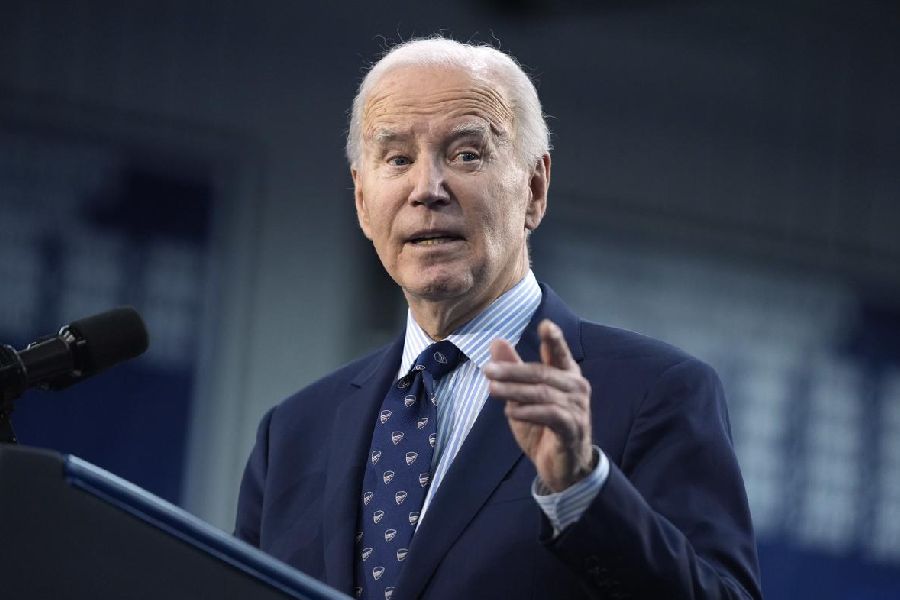
President Barack Obama and former President George W. Bush stood in silence and a bell rang twice on the precise moment 10 years after the first hijacked jetliner struck the World Trade Center.
Obama, standing behind bulletproof glass and before the white oak trees of the memorial, read a Bible passage after a moment of silence at 8.46am.
The President chose Psalm 46 that reminds the faithful that God is a refuge and strength that dwells in his city.
He also invoked the presence of God as an inspiration to endure. Therefore, we will not fear, even though the earth be removed, and though the mountains be carried into the midst of the sea.
Bush read a Civil War letter from President Abraham Lincoln to a mother who lost all five of her sons.
As cellist Yo Yo Ma played a mournful background, relatives of the 9/11 victims began entering a transformed ground zero, the centerpiece of a day of remembrance around the US and world to mark 10 years since the worst terrorist attack on American soil.
The memorial opens to the public on Monday. It sits next to a construction project where office towers, a transportation hub and a cultural center are taking shape. The signature skyscraper, One World Trade Center, is rising quickly and will be the tallest in the country when completed.
One by one, the reading of the names of the 2,977 killed in New York, at the Pentagon and in rural Pennsylvania, began. Some of the names were called out by children barely old enough to remember their fallen mothers and fathers. (AP report)
|