TT Epaper
The Telegraph
 
  This website is ACAP-enabled
IN TODAY'S PAPER
WEEKLY FEATURES
CITIES AND REGIONS
SEARCH
 
ARCHIVES
Since 1st March, 1999
 
THE TELEGRAPH
 
Calcutta Weather
WeatherTemperature
Min : 21.9°C (+0)
Max : 34.2°C (+0)
Relative Humidity:
Max : 93% Min : 34%
Sunrise : 5:47 AM
Sunset : 5:42 PM
Today
Partly cloudy sky. Maximum temperature likely to be
 
CIMA Gallary
Email This Page
Back home with Japan lessons
- Indians recall how people worked calmly amid quake devastation

New Delhi, March 17: Indian expatriates arriving from Japan following the earthquake and tsunami say that amid all the devastation, they have learnt a lesson from the Japanese: how not to panic but to go on working.

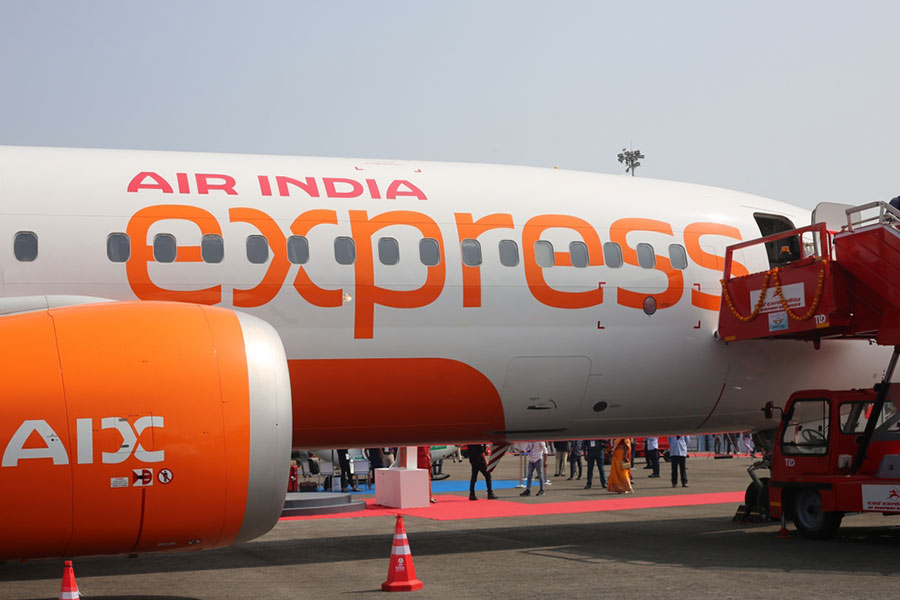
Air India and Japan Airlines have begun ferrying scores of Indians along with a few Japanese tourists. The national carrier’s flight AI 307 arrived with 309 passengers in Delhi last night.

Most looked a bit shaken but were full of praise for the resilient Japanese who took the tragedy in their stride and worked at clockwork precision to get their lives back on track.

Two young IT professionals working in Tokyo, who gave their names only as Rohit and Vishal, said they saw no chaos on the streets. Zubair, who too works in Tokyo, said it was mostly the foreigners who panicked.

“I was in office when the quake struck. Everyone walked down the 34 flights of stairs in an orderly manner, said Rohit. Vishal said most offices reopened the next day.

Orthopaedist Abhishek Kaushik of Delhi’s St Stephens Hospital, who had been in Japan since February 26 to do a course in spinal surgery, was helping with an operation at the Nishitaga Hospital in Sendai, the city closest to the epicentre, when “suddenly, everything started shaking”.

“We couldn’t stand. The false ceiling and windows broke. This went on for about five minutes. We saved ourselves by hiding under the table,” Kaushik said.

Luckily, the patient was strapped to the table and nothing fell on him, either. “The operation was successful. None of the critical patients died as the backup generator could run the ventilators,” he said.

“A second quake of a lower intensity hit us a while later. The tsunami struck after an hour, but our hospital was on a hill and we were safe. The tremors kept returning every 45 minutes.”

The hospital shifted to a temporary shelter for three days. The water supply was cut. Rice and water from the hospital’s stocks were served in little bowls twice or thrice a day. Sometimes, the employees and doctors were given a toffee for energy.

“Their first priority was the patients, then their own staff and finally us — a Myanmarese doctor and myself,” Kaushik said.

He described the three days as the hardest. Power and communications were cut and there was no transport to Tokyo. After power was restored on March 14, he told the Indian embassy to inform his family that he was fine.

He then stepped out for the first time. “The people on the streets of Sendai were in deep shock, yet there was no chaos. People were patient all through the mile-long queues to department stores. The traffic signals were not working, but there were no jams.”

Even in the face of adversity, the Japanese wouldn’t bend the law. Kaushik and the Myanmarese doctor, both of whom had come to Japan for training, were allowed to arrange blankets and other supplies but not to provide medical assistance. “Only licensed physicians can practise,” they were told.

Most of the Indians have come home at the behest of their families but, inspired by what they saw in Japan, want to go back within a week to rejoin their offices, universities or schools.

Four-and-a-half-year old Arul said his teacher took his class to the playground when the quake struck. “We went in and out of the school six times. We then gathered some food.”

Arul is happy that his school reopened in a day. Six-year-old Yash said: “I like Delhi airport but I want to go back to school.”

M.W. Akhtar, a PhD student from Tokyo’s Keio University, said he witnessed no disorder even among the Japanese who were fleeing radiation.

A group of about 20 such Japanese had arrived with the Indians. One of them, an elderly man named Taguchi, managed to explain in broken English: “Japan big problem. Me no hurt. But now bad time, so we tourist India.”

Air India and Japan Airlines operate daily flights between the two countries. Air India will operate a 430-seater Boeing 747 for the next four days.

Top
Email This Page