|
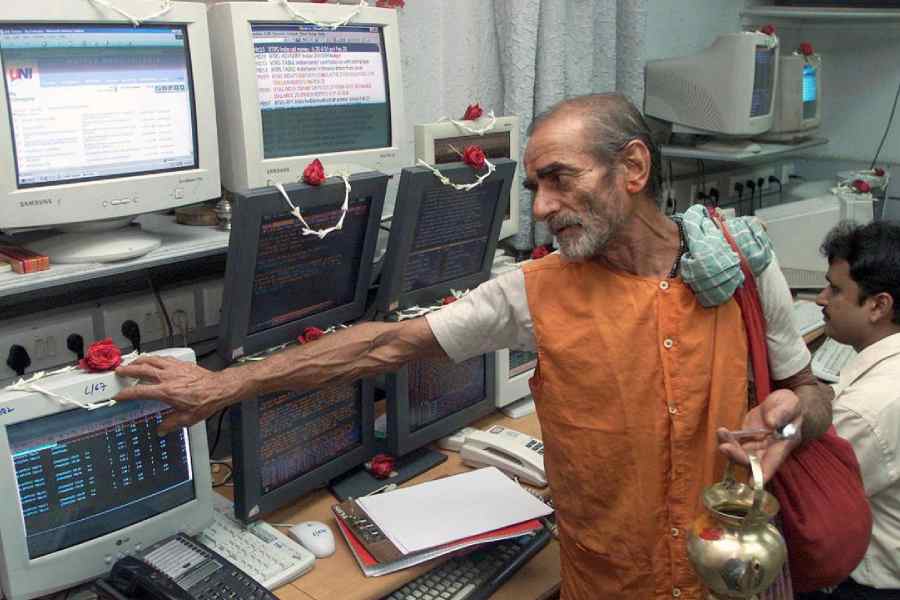
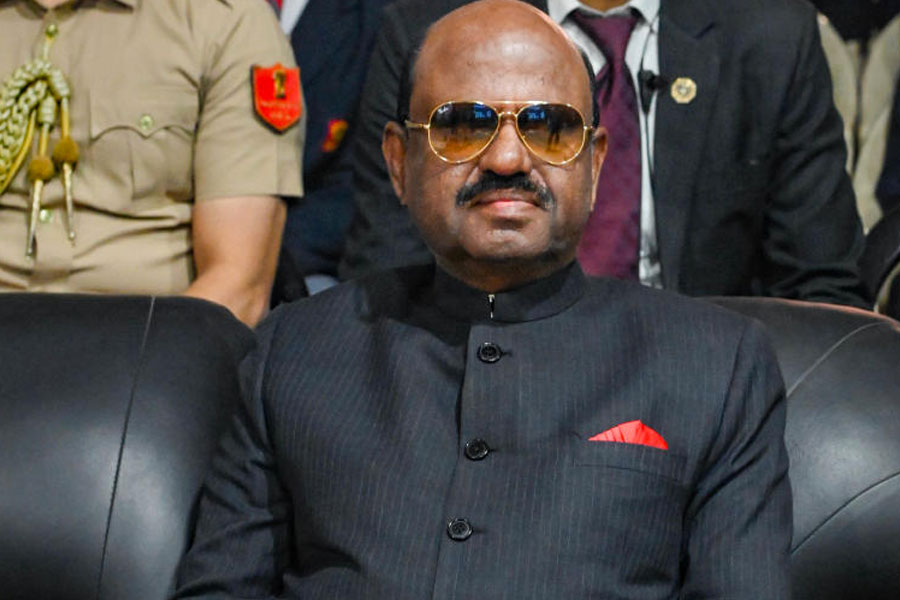
The Supreme Court has found a politician from Kerala, a member of the Congress, guilty on charges of corruption while minister for electricity in the state (picture), and has sentenced him to one year’s rigorous imprisonment. The judgment of the nation’s highest judiciary is final and cannot be appealed against. The individual is therefore a convicted felon. Within 24 hours of the announcement of the Supreme Court decision, this felon was accorded a public reception by local Congressmen in Thiruvananthapuram as if he were a conquering hero.
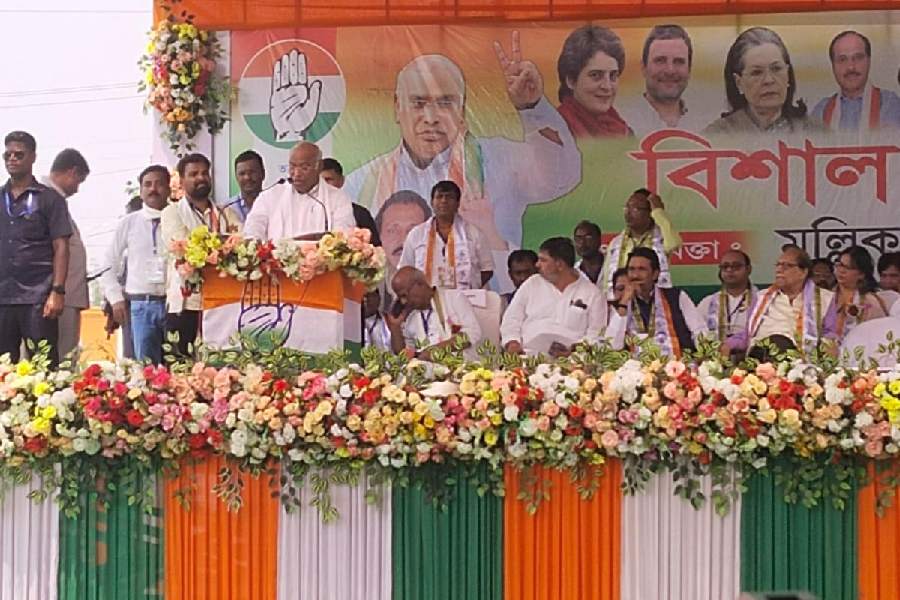
If we were groping for a symbol or metaphor that will depict the state of the nation, this will snugly answer the prayer. The Indian National Congress is the country’s oldest and largest political entity; it leads the government at the Centre. And yet its members feel no compunction in felicitating someone, judged by the Supreme Court to be corrupt, as a noble son of the soil. There can hardly be a greater instance of utter contempt of the law of the land. The demeanour of the Congressmen who organized the reception can only be interpreted as unabashed approval of corrupt practice. Since the so-called Congress high command has not till now pulled up its acolytes in Kerala for perpetrating this outrage, it too deserves to be described as at least a mute supporter of criminality.
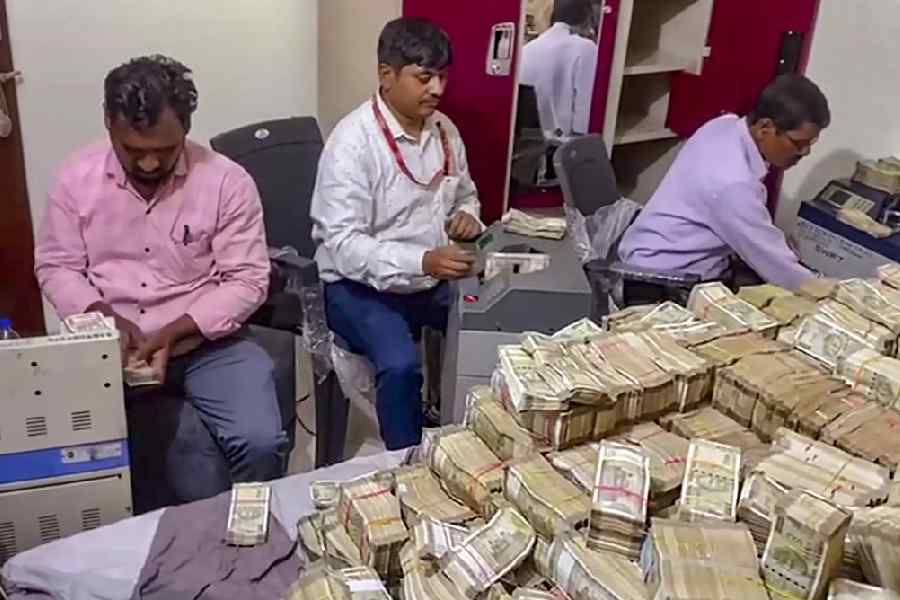
The episode is an echo of the serial tales of sleaze pouring out of New Delhi at a steady flow. No- holds-barred defalcation of public funds is seemingly the order of the day. The office of the comptroller and auditor general is doing its duty by revealing the modality and quantum of the embezzlements that have been taking place. On the basis of the reports of the CAG, the Supreme Court is hauling the government over the coals. Those occupying the seats of power, instead of behaving contritely, have the cheek to malign the CAG and express unhappiness at the ‘super-activism’ of the judiciary. Crime, that is to say, is being accorded, even if obliquely, the imprimatur of official approval — precisely what, at the party level, Kerala’s Congressmen too have done.
Can all this, though, constitute a stable equilibrium? Can stealing and thieving in high places be philosophically accepted as a way of life and left at that? Or, in the manner of the prime minister, sought to be explained away as an unavoidable by-product of ‘alliance politics’? It is, of course, possible to envisage the format of a polity where ethics and morality are turned upside down, falsehood is truth, evil is hailed as nobility and crime is anointed as saintliness. It can even be a multi-party democracy, with adult suffrage and periodic elections as its features: one set of politicians will rule the roost for some while, make their pile and withdraw, another set of politicians will at that point take over and repeat the performance of the first set; they too will use the processes of government to make pots and pots of money and then recede into the background, to be followed by either the return of the original set of politicians to power or the emergence of yet a third group which will, conforming to the precedent firmly established, plunder the national exchequer.
Can such a set of circumstances, however, continue for ever and ever? The answer will normally be in the negative. Instead of what happens under a dictatorship, in the case of a multi-party democracy, an excess of graft on the part of the ruling coterie will, it will be argued, provide the parties in the opposition the scope to organize protest and gather enough strength to eject the corrupt rulers in the next elections; people will exercise their sovereign right to vote out the rascals. But suppose the new group of rulers turns equally venal and repeats the acts of malfeasance of their predecessors? Change of regime does not bring down corruption, it merely amounts to supplanting one bunch of thieves by another; the citizenry gradually grows inured to gross acts of impropriety committed by those whom it elects to office and corruption is regarded as endemic to governance.
Pessimism of this genre is all of a sudden receiving a come-uppance. The events in Tunisia and Egypt — and their aftershock being felt all over North Africa and West Asia — indicate that even authoritarian regimes can be vulnerable if corruption is carried to wild excess. Besides, corruption is not the only malady affecting the country. It is often accompanied by a high level of unemployment and spiralling food prices. The administration is either unwilling or unable to control these evils. Should the deadly combination of unbridled corruption, restless young people without the opportunity of jobs and householders weighed down by continuously rising prices of essential commodities, including cereals, persist for long, even authoritarian rule, the Middle East is proving, would be of no avail; people, at the end of their tethers, will rise in collective revolt and make mincemeat of the dictators.
Is our multi-party democracy proof to the North Africa-type of upheavals? Is there any objective basis for the quality of smugness exemplified by the politicians who have glorified someone convicted of corruption? Should not some rethinking begin to take place in a few quarters? For here too, corruption is being kept company by the two other nagging phenomena, horrendous unemployment and galloping food inflation. Ruling politicians and their hangers-on talk ceaselessly about the supposedly high growth rate the country has achieved; if they are to be believed, with gross domestic product vaulting towards 10 per cent per annum, India is already a paradise. If, on the other hand, in pursuit of one of the directive principles of state policy enshrined in the Constitution, the criterion of economic development was shifted to the degree of success in providing the means of livelihood to each able-bodied citizen and, accordingly growth measured in terms of the annual rate of increase in employment, the picture would be completely altered: aggregate employment in the country has been barely one per cent in the recent period; in a number of individual years, it has in fact been negative.
The behaviour of food prices is no better. Good year or bad year, harvest time or otherwise, prices of food articles continue to rise. The authorities are seemingly in no mood to check this rise; ministers routinely express the hope that prices will level out six months hence or thereabouts; they do nothing worthwhile towards ensuring that end; class interests presumably intervene; the alibi is sought in the upward trend of global food prices.
Who knows whether a time bomb is not ticking somewhere. The conjuncture of open corruption, high unemployment and uncontrolled inflation is capable of creating a situation where even the safety-valve of periodic elections could be rendered infructuous; people might not have the patience to wait for the next elections or they may lose faith in all parties, including those currently in the opposition. The searing flames from Tunisia and Egypt could reach our shores too.
True, globalization has crushed the organized trade union movement in the country; its lure has also sucked in a section of the middle class. The immiserized rural poor are both riven by caste animosities and dispersed in hundreds and thousands of villages, apart from being victims of illiteracy and a low level of consciousness. It is nonetheless an uncertain horizon, and on account of a probability to which attention was drawn nearly 90 years ago by Allyn Young, the Harvard economist. Pick a country bumpkin from a wilderness, let him roam aimlessly in the thoroughfares of a metropolis like London or New York, he will watch the city lights, the procession of fleeting cars, rows of huge mansions and skyscrapers, the billboards and huge departmental stores, the assortment of smartly attired men and women rushing about. At the end of just one week, he will no longer remain a dumb country bumpkin, he has absorbed the sights and sounds of metropolitan existence, he is a changed human being, his awareness and intelligence have shot up even though not a penny has been spent to improve his bearings.
This is the imponderable factor. Television, the internet and cell phones have enabled India’s rich to become enormously richer. These, at the same time are directly as well as indirectly, raising the level of consciousness of the country’s impoverished, exploited, hitherto mute millions. Such awakening is a dangerous incendiary. The trade union movement may be dead. The peasantry may be inordinately backward and faction ridden. Thievery at high places coinciding with massive worklessness and inflation could nevertheless, without the courtesy of a warning, give birth to a nationwide fury convulsing the system.
|