TT Epaper
The Telegraph
TT Photogallery
 
IN TODAY'S PAPER
WEEKLY FEATURES
CITIES AND REGIONS
SEARCH
 
ARCHIVES
Since 1st March, 1999
 
THE TELEGRAPH
 
 
CIMA Gallary
Email This Page
The little big film

Well, you just knew that this was not going to be A.R. Rahman’s night, just as you knew he would win a Bafta for Original Music for Slumdog Millionaire two years ago.

Nor was it a night for Danny Boyle, who dominated both Bafta and the subsequent Oscars in 2009, but whose 127 Hours went unrecognised this time. It is a harrowing tale about a mountain climber who hacks off his trapped arm with a dull knife in order to free himself and save his own life. This provoked presenter for the evening, Jonathan Ross, to risk one of his questionable jokes: “Any actor would give his right arm for the role.”

The evening began with former Beatle Sir Paul McCartney giving away the prize for Original Music. “Some of the best music is written for film,” he said and jokingly reeled off a list of Beatles numbers composed for movies.

Around the time Andrew Lloyd Webber was putting together the musical Bombay Dreams, the impresario, who was proud he had “discovered” Rahman, had compared the Indian genius with McCartney for the range and variety of his music. It would have made a great photograph — Rahman accepting an award from McCartney.

Alas, it was not to be. Instead, it went to Alexandre Desplat for The King’s Speech, which is clearly the film of the moment, not just in Britain or America, but worldwide. It picked up seven Baftas, against three for The Social Network, so the Oscars on February 27 looks like being a fight between the two.

As expected, Colin Firth won Best Actor for his portrayal of King George VI, a monarch who has to conquer the stammer which had made his life a misery right from his childhood days. It was a popular choice, as was Helena Bonham Carter’s as his wife, Queen Elizabeth I. The Australian actor, Geoffrey Rush, was not present to pick up his Bafta for Best Supporting Actor for his role as the unconventional speech therapist who helps the king overcome his impediment. The prizes for Firth and Rush, some would say, could easily have been reversed.

The King’s Speech picked up Baftas for Best British Film and Best Film overall. It is odd there should be these two categories but the British film industry wants to make sure it is not steamrollered by Hollywood. That said, the presence of American stars is considered essential for the Bafta ceremony to retain its glamour.

Strangely, though, there was no Bafta for the film editor, Delhi-born Tariq Anwar, without whose subtle and sensitive assembly, none of the others might have succeeded. He lost out to The Social Network, which tells of the birth of Facebook. Still, he remains in the running for an Oscar.

It was also a surprise that Tom Hooper did not win Best Director for The King’s Speech. It went to David Fincher for The Social Network — it is a pity no one in India thought before of making a movie about the arrival of Infosys or Wipro.

The King’s Speech cost only £10m to make, which is peanuts by Hollywood standards. Even Hindi films have similar budgets these days. It has already picked up 10 times that sum at the box office and the revenue will continue to roll in from across the globe, especially if, as seems likely, it triumphs at the Oscars. The man who won a Bafta for the original screenplay of The King’s Speech, David Seidler, 77, a Brit who moved to the US, put it very well when he said: “It’s a small film — two men in a room. But it seems to have spoken to the world.”

May be this is labouring the point but it would not have spoken to the world if Tariq Anwar had not cut it the way that he did. It should be studied in film schools in Mumbai and elsewhere in India for if The King’s Speech, which was shot entirely in London, illustrates anything, it is that big is not necessarily always the best.

In a way, film award ceremonies, whether in Mumbai, London or Los Angeles, are similar. Very beautiful women dressed to kill walk the red carpet accompanied by balding but rich producers. ’Twas ever thus. Perhaps that is a trifle cruel for there are handsome actors, too. These days, the fashion among many of the men is to wear a thin black tie rather than the traditional black bow tie.

The Oscars are grand, the ultimate glamorous show on earth. The Baftas, sponsored by the Orange telecom network, are smaller but more intimate. It is held in Covent Gardens in the Royal Opera House, which is far more elegant than the Kodak Theatre in LA. For some reason, it always rains on Bafta night, as it did this time, though not quite as badly as a few years ago when Kate Winslet’s high heels got stuck in the squelching red carpet.

The Indian film industry should also analyse the nominations for Best Foreign Film, won this year by The Girl with The Dragon Tattoo from Sweden. Biutiful from Spain (and Mexico) and Of Gods and Men from Algeria (and France) had also been nominated in a strong field.

The award for Outstanding Debut was presented by the American Kevin Spacey to Chris Morris for his film, Four Lions, which takes a satirical look at homegrown Islamist terrorists in Britain. The prize for Animated Film went to Toy Story 3.

This year, as in recent years, there was an impressive American presence. For example, the honour of announcing the Best Film The King’s Speech — an important moment — was given to Samuel L. Jackson.

There were no Bollywood stars this year to give away any of the glittering prizes but British boy Dev Patel, who shot to fame with Slumdog Millionaire, gave away the award for Costume Design. As far as one could tell, Freida Pinto wasn’t around.

Giving away the award for Outstanding British Film to The King’s Speech, Emma Watson, who wears her hair very short to distance herself from the role that made her famous — Hermione Granger in Harry Potter — admitted: “It makes me very proud to be British”.

She has every reason to feel that way for the Bafta committee this year decided to honour J.K. Rowling and the entire Harry Potter team for creating what author and broadcaster Stephen Fry called “one of the most remarkable franchises in film history and possibly the most successful”. Seven Harry Potter films had picked up 28 Bafta nominations over the years and 6,000 people had worked on each production. The films had appealed to adults and children alike across the world, Fry pointed out.

“Thank you,” said Rowling in her acceptance speech. “It is very strange to look back after seven films and remember how wary I was of letting anybody put Harry on the big screen, and I kept saying no. And it was (producer) David Heyman — not Warner (Brothers) — who persuaded me and he has been there from start to finish. So tonight, I really need to say publicly how right I was to trust him, how much I owe him, how grateful I am to him, and to say that being involved in these films has been one of the best experiences of my life, and particularly being involved with these wonderful people standing behind me.”

Towards the end, Bafta moved into Bollywood territory. In India, actors are honoured for turning up. In London, they are sometimes given a prize before it becomes too late. There was a Bafta Fellowship for Sir Christopher Lee, now 88, who will be remembered for his Dracula movies but, as the citation recalled, also acted in Lord of the Rings and played the founder of Pakistan in the film Jinnah. There was a telling clip from the movie where Jinnah talks of the kind of Islam he wants for his Pakistan: “Islam means men of vision who will build the country.”

He accepted the Fellowship from the American director Tim Burton, who described the 88-year-old as possessing an “electrifying screen presence”. Thanking his “fellow thespians” and the Bafta committee, Lee said: “This is a truly great honour, a great, great honour. Two things really make it so, the fact that this was voted to me by my peers and secondly that I received it from one of the great directors of our age.”

May be the lesson from Bafta is that the British can still make exceptionally good films but have no money. Perhaps Reliance and the Ambanis should direct some of their largesse towards the UK where there is a thriving cinema culture and people do love to go to the cinema. This weekend only Asians will go to see Patiala House and, that, too, not all Asians. Given a choice, many Indians may opt either for The King’s Speech or The Social Network.

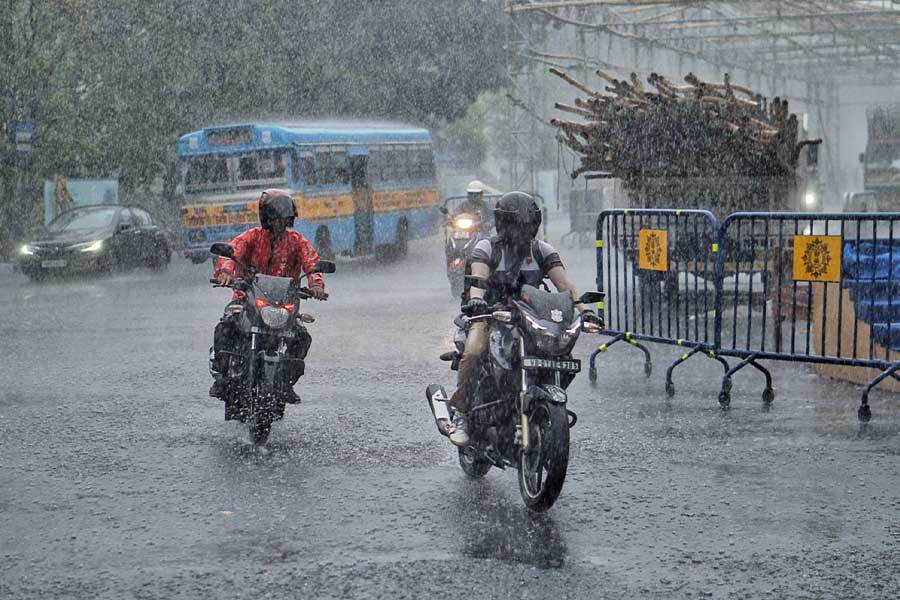
It rained in true Bafta tradition, but there was no stopping the stars from shining down on the red carpet at covent gardens on sunday night.

Emma Watson and J.K. Rowling,Eva Green,Julianne Moore Jessica Alba Thandie Newton

Top
Email This Page