TT Epaper
The Telegraph
 
  This website is ACAP-enabled
IN TODAY'S PAPER
WEEKLY FEATURES
CITIES AND REGIONS
SEARCH
 
ARCHIVES
Since 1st March, 1999
 
THE TELEGRAPH
 
Calcutta Weather
WeatherTemperature
Min : 12.1°C (-1)
Max : 24.6°C (-2)
Relative Humidity:
Max : 84% Min : 41%
Sunrise : 6:25 AM
Sunset : 5:11 PM
Today
Mainly clear sky. Minimum temperature likely to be around 12°C.
 
CIMA Gallary
Email This Page
Pamuk adds spark to Jaipur literary fest brawl

Jaipur, Jan. 21: There’s nothing quite like a literary brawl to get a festival going. But when Nobel Laureate Orhan Pamuk took the mike, you knew that India’s biggest literary festival had arrived.

An elderly gentleman asked Pamuk what seemed like an innocuous question during a discussion on his new book, The Museum of Innocence.

What’s deeper, the questioner asked the Turkish writer, philosophical or physical love.

“It depends on the penetration,” Pamuk replied.

“Let’s move to the next question before I am deported,” he joked.

Before Pamuk went up to the stage, the spotlight had been on writer William Dalrymple, one of the organisers of the festival, described as the “greatest literary show on Earth” by former Vanity Fair editor Tina Brown. An article in Open magazine had questioned the “literary Raj” that was thwarting Indian talent and wondered how Dalrymple had established himself as the “pompous arbiter of literary merit in India”.

Dalrymple, the author of White Mughals, gave a spirited reply. The attack, he said, “reeked of double standards and reverse racism” and was “the literary equivalent of pouring s**t through an immigrant’s letterbox.”

All this went for a toss as the festival, now in its sixth year, opened in Jaipur this morning. The DSC Jaipur Literature Festival, being touted as India’s literary answer to Woodstock, will over the next five days host over 200 authors from across the world, including Nobel laureates, Pulitzer Prize winners and regional authors.

Not many, in fact, were ready to give the debate much thought. “If a foreigner has a better idea, let us give him the credit for it,” said commentator Gurcharan Das, one of the speakers at the festival.

“So many Indian writers are being showcased. Why should we feel insecure if foreigners have good ideas?” asked Das.

Festival co-director Namita Gokhale was equally unfazed. “The session by veteran lyricist Gulzar on Hindi poetry was held alongside Pamuk’s session.

But Gulzar managed a bigger turnout than Pamuk.” That, she argued, was the reply to all questions about the “elitist” nature of the festival.

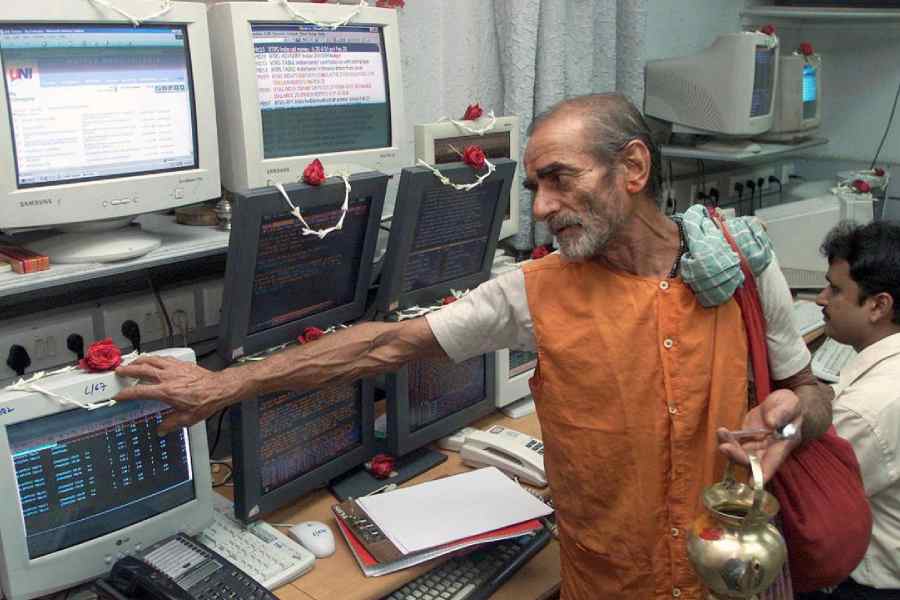
Indeed, the five-day annual festival, being held at luxurious Diggi Palace, was attended by an eclectic mix of people — from women in their best pashminas and bespectacled men in tweed to eager schoolkids in uniform. The westerner was there, as was the local. A sadhu, clad in saffron, was all ears when American reporter John Lee Anderson spoke about his new book on Che Guevara.

Not everybody was impressed, though. When Pamuk was introduced as the one of the greatest living authors, a schoolgirl sniggered. “Not really, I haven’t read him,” she murmured.”

Along with a group of classmates, she had bunked school, hoping to catch a sight of her favourite writer J.K. Rowling. Days before the festival, there was speculation that the creator of Harry Potter would attend the fest.

The diversity of writing in Indian languages is being showcased with sessions in Hindi, Urdu, Sanskrit, Tamil, Bengali, Assamese, Oriya, Gujarati, Malayalam, Kashmiri, Punjabi, Nepali, Bhojpuri and Rajasthani.

A special session on north-eastern writing, children’s workshop and interaction with gay writers are expected to bring variety to the fest, inaugurated by chief minister Ashok Gehlot. Other dignitaries at the inaugural session included author-politician Karan Singh, US ambassador Timothy Roemer and Indologist Sheldon Pollock.

Dalrymple, on his part, believes that he is just bringing the world to Jaipur and Jaipur to the world. Everything else is just in-between.

Top
Email This Page