TT Epaper
The Telegraph
 
  This website is ACAP-enabled
IN TODAY'S PAPER
WEEKLY FEATURES
CITIES AND REGIONS
ARCHIVES
Since 1st March, 1999
 
THE TELEGRAPH
 
Calcutta Weather
WeatherTemperature
Min : 25.70°C (+1)
Max : 34.10°C (+2)
Rainfall : 0.00 mm
Relative Humidity:
Max : 96.00% Min : 53.00%
Sunrise : 5:31 AM
Sunset : 5:22 PM
Today
Partly cloudy sky. Maximum temperature likely to be around 33°C.
 
CIMA Gallary
Advertisement

Email This Page
Mandir partisans can misuse rulings

Before looking to the future, it’s important to try to establish what Allahabad High Court’s judgments actually said. I use the plural ‘judgments’ because the three judges differed on many matters and agreed on some crucial points to create either majority judgments or unanimous ones. I ought to emphasise that these are first impressions because this is a very lengthy and complicated judgment.

The most important preliminary in this judgment was the dismissal of the title suits of the Sunni wakf board and the Nirmohi Akhara. The judges decided that the suits were time-barred.

Once this was decided, the verdict was no longer centrally about the wishes of the parties to these suits; the judgments that were delivered were more expansive ones about the historical and religious claims of Hindus and Muslims to the disputed site.

Justice Dharam Veer Sharma and Justice Sudhir Agarwal held that the mosque was built after the demolition of an earlier Hindu religious structure, using the ASI report as the basis for their decision. Justice S.U. Khan accepted that there had been a prior Hindu structure but not the assertion that it had been demolished to build the mosque, holding that the temple had been in ruins for some considerable period of time before the mosque was constructed.

Justice Sharma had the most radical view on this matter: he held that the Babri Masjid had never been a mosque at all because it had been built by demolishing a Hindu religious building which rendered it illegitimate according to the precepts of Sharia law. Justice Agarwal didn’t essay Islamic exegesis but joined Justice Sharma in accepting that Hindus had a prior religious claim to the site.

This majority judgment in favour of the Hindu petitioners was further consolidated by Justice Sharma and Justice Agarwal joining to agree that the disputed site of the demolished Babri Masjid was to be seen as the birthplace of Lord Ram. Justice Agarwal ruled that “(t)he area covered under the central dome of the disputed structure is the birthplace of Lord Rama as per faith and belief of Hindus”.

Justice Sharma took a more fulsome and more categorical view of the Ram Lalla claim: “The disputed site,” he said, “is the birthplace of Lord Ram. Place of birth is a juristic person and is a deity. It is personified as the spirit of divine worshipped as birthplace of Lord Rama as a child.”

In keeping with the tenor of his judgments, Justice Sharma ruled that the entire site belonged to Ram Lalla and his Hindu worshippers. For him, the ASI’s report and his own theological insight that Islamic law made the mosque illegitimate led directly to this conclusion.

Justice Agarwal and Justice Khan, however, joined to rule that since the disputed area had been used by both Hindus and Muslims for centuries, it would be divided into three parts, a third going to the Muslim parties to the dispute and a third each going to the two Hindu parties, namely the Nirmohi Akhara and the people who had filed suit on behalf of the infant Ram.

Both Justice Khan and Justice Agarwal specified that the area under the central dome of the demolished mosque where the idols were currently installed in a make-shift temple, would, in any partition, fall to the share of Ram Lalla’s proxies.

Justice Agarwal and Justice Khan also ruled that the Government of India should make the land it had acquired around the disputed site available to all three parties to make sure that they “might utilise the area to which they are entitled to, by having separate entry for egress and ingress of the people without disturbing each other’s rights”.

To summarise, Justice Sharma and Justice Agarwal established in their judgment the prior Hindu claim to the site, while Justice Agarwal and Justice Khan combined to act as arbitrators of the dispute, setting up a framework of partition in which to resolve the matter.

The net effect of these two interventions was a judicial vindication of the central arguments of the Ram Janmabhoomi movement: a) the claim that there was a temple that was demolished to build the mosque in the early sixteenth century and that this ought to determine the ownership of the mosque’s site in the 21st century and b) that Hindus had always believed the birthplace of Ram was exactly under the central dome of the mosque, and that this belief was sufficient reason to accept this was Ram’s Janmasthal.

This is, in its purest form, the argument from faith, vigorously made by the Sangh parivar during the Ram Mandir mobilisation.

The television discussion of this judgment had two stages. In the first, there was a general acknowledgement the verdict had gone in favour of the Hindu parties to this dispute.

In the second stage, public figures and politicians not associated with the Sangh parivar tried hard to discern in the tripartite partition, proposed by Justice Agarwal and Justice Khan, a creative resolution of the dispute.

The more optimistic of these commentators saw the partition of the disputed site as a necessary prologue to the adjacent coexistence of a new Ram temple and a new mosque. This seemed a bit hopeful given that no office-bearer of the Sangh parivar said anything that could be construed as an acceptance of this prospect.

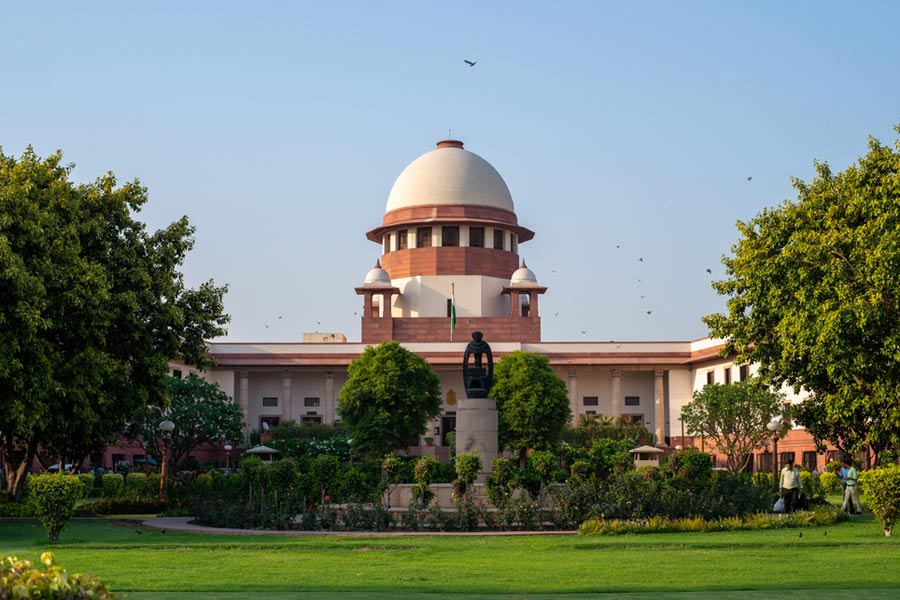
It’s clear from the statements of the Sunni wakf board’s representatives that this judgment will be appealed in the Supreme Court and it is appropriate that this should happen because the high court arrived at historical conclusions about medieval India which, given the evidence, seem speculative and then invoked them to settle a modern, republican dispute.

The court also seemed to endorse the argument from faith in a way that is certain to be controversial. Both decisions, as they stand, might set precedents that could have worrying consequences for pluralism and the freedom of religious belief and practice, especially for disputes between a religious minority and a religious majority.

I can already see partisans of the Ram Mandir movement rhetorically citing the judgment to argue that the razing of 1992 wasn’t, morally speaking, a demolition at all, merely a form of Hindu housekeeping, given the mosque shouldn’t have been there in the first place. For this and other reasons, it’s important that the Supreme Court should be asked to re-examine the matter of Ayodhya.

Top
Email This Page