|
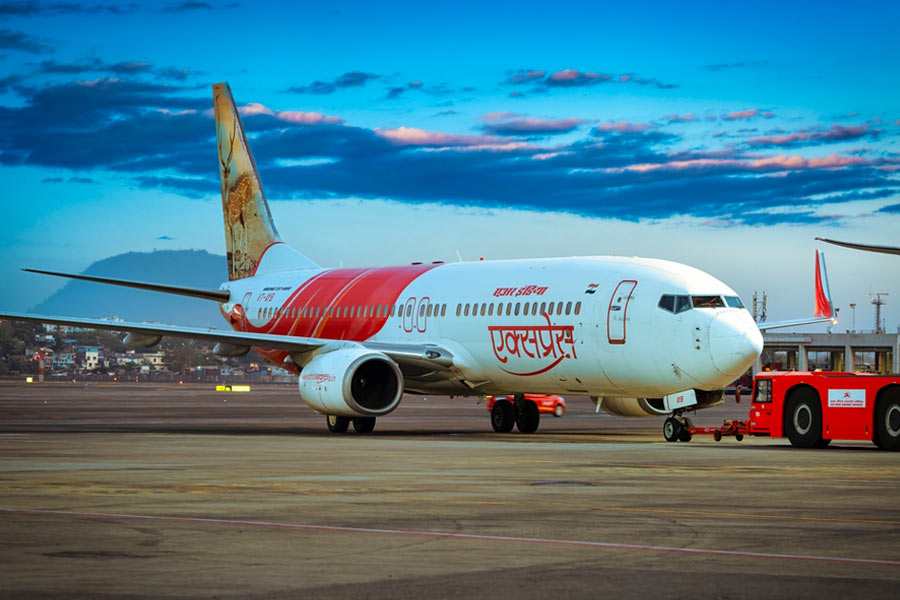
As the Embraer jet nears Dhaka, I look out to see a vast expanse of broad blue water, snaking through golden-green fields. Tiny specks on boats are casting nets on the river, which is obviously none other than the mighty Padma, the swollen face of the Ganges after it enters Bangladesh.
Ilish, the name of the fabled fish flashes through my mind. The fishermen must be netting the silvery fish which travels upstream to breed during the monsoon.
We were brought up on myriad stories revolving around ilish or hilsa. Tales of the fish being cooked in its own oil on-board steamers which plied up and down the Padma were fed to us as children. We heard accounts of giant king ilish caught midstream in the Padma and of smaller tastier hilsa from its distributaries.
I am on-board a special flight carrying finance minister Pranab Mukherjee, the Indian Cabinets man for all seasons, who is flying out on a hurricane visit to mend fences with Sheikh Hasina.
The Bangla Prime Minister, is reportedly upset with Indias dilly-dallying over her demands for more trade, a deal on sharing Teesta waters and much more.
 |
|
Dhaka’s jaan jot — the traffic which
refuses to move |
Our convoy speeds through Dhakas streets with traffic kept at bay by uniformed paramilitary soldiers. Our destination is Jamuna, a state guest house, which used to be Begum Khaleda Zias residence when she ruled Bangladesh. Pranab babu will hold meetings with Bangla ministers there.
The joke in Bangladesh is that it is a country where only one of the two Begums can rule. The army gets a shot at ruling only when the two ladies get tired of their internecine feud. Though, it must be mentioned that the last time an army-backed government usurped power, both ladies served time behind bars.
A series of meetings are accompanied by heavy snacks at the end of each session concluded late in the evening at Hasinas official residence Ganabhaban or Peoples Hall. But to my regret no sign of the Bangladeshs national delicacy, ilish, yet.
Once Pranab babu and his entourage left Dhaka and weighty matters of state been set to rest in newsroom dispatches, we make our way thro-ugh what seems like endless streets clogged with Toyotas and Pradas jostling for space with colourfully decorated cycle rickshaws. Dhaka is reputed to have nearly 4,00,000 cycle rickshaws, more rickshaws per head than any city in the world.
 |
|
Hilsa cooked with mustard paste is a favourite on both sides of the border |
In the cacophony of rickshaw bells drowning out car horns, I believed it. We weave our way to the portals of that relic of the Raj — the Dhaka Club. Some Bangladeshi friends have invited us for dinner at the nearly century-old club. I am worried the dinner will turn out to be the usual club fare of mulligatawny soup and chicken steak. However, luckily for us the khana organised that night has ilish as the pièce de résistance.
Fried ilish and bhuna khichuri is served hot. Fried ilish is just that — chunks of hilsa skilfully cut and cooked in mustard oil with a pinch of turmeric, salt and chillies thrown in.
The wood-panelled Dhaka Club, modelled on the older Bengal Club in Calcutta, has the typical burra sahib atmosphere which most clubs founded by the British exude.
It has had some colourful moments in its history. On December 16, 1971, the club, played a role, albeit small, in the drama which unfolded at Ramna Race Course just across the road. Generals J.S. Aurora and A. A.K Niazi were to sign the instrument of surrender which would give Bangladeshis a nation, India its biggest military victory till date and turn some 92,000 Pakistani soldiers into prisoners of war.
 |
|
The Dhaka skyline during monsoons; (below )
Former Bangladesh President Sheikh Mujib-ur Rahman’s house is now a
memorial |
 |
What was missing was a table and two chairs for the surrender ceremony. Dhaka Club offered one of its dining tables — a simple wooden affair and two straight-backed chairs. The chairs went missing in the euphoria which swept the city of 12 million people, in the aftermath of victory. But the historic club table was saved and today finds pride of place in Bangladeshs Liberation War Museum!
Dawn in monsoon-hit Dhaka is a sight to be seen. The suns rays come diffused through thick grey clouds, shrouding the city in surreal light. We have woken early to travel to Swarighat, the citys oldest known wholesale market. It derives its name from a combination of the farsi word — sawari (passenger) and the Bengali word — ghat (river bank), appropriate in a country which prides itself in synthesising Bengali moorings with Islamic influences.
Some 700-odd wholesellers deal in fish worth Rs 25 lakh daily, brought from all over Bangladesh as well as from India and Myanmar. Huge mounds of fish of all kinds lie around. And of course among them — the prized ilish.
Hilsa Ilisha, which Bengalis call ilish, travels upstream from the Bay of Bengal when the monsoon begins and rivers in Bangladesh and India start flooding, to be caught by fisherfolk.
With India building a dam at Farakka in the 70s, the fish which used to travel up the Ganges as far as Benares till the 60s, can now only be found in parts of West Bengal and that too in ever dwindling numbers. Larger shoals of ilish travel up the Padma and Meghna. Indias loss has become Bangladeshs gain.
About 40 per cent of fishermen in Bangladesh earn the better part of their livelihood by following the fish. Bangladesh lets India get some of this prize catch but at a huge premium, setting a minimum export price for ilish at $6-$12 per fish depending on its weight.
Indian traders have been lobbying hard to get Bangladesh to do away with this floor price. However, as Lal Mian, a trader at Swarighat, explained: If thats done, Dhaka wont get any ilish to eat ... there are too many Indians who want to eat the silver fish, everything will go to the markets of Calcutta.
Not that the restrictions have helped check local ilish prices, which have skyrocketed this Ramzan month to over Taka 1,000 (Rs 650) a kilo.
As I come out of the marketplace, the muezzins call to prayers rents the air. The rickshaw capital of the world is also a city of mosques. My guide drives me over to Tara or Star Masjid, a striking 18th-century mosque, whose name derives from a glittering mosaic of broken china adorning its domes.
We drive on towards Sheikh Mujib-ur Rahmans simple whitewashed house turned memorial in crowded Dhanmondi. On August 15, 1975, when neighbouring India was celebrating Independence Day, soldiers stormed Rahmans home and murdered him, along with seven members of his family.
It took 34 years for Bangladeshis to come to terms with this black chapter and hang the killers of the father of their nation.
My next stop is a plush cafe, Mango, near Mujibs house. I am supposed to meet the chief executive of a start-up computer firm — Tech Mania.
Chain smoking, salwar clad, Taslima Miji, is part of a new breed of confident, suave Bangla women who have broken into business. Client calls, orders to hardware engineers interrupt our conversation which is accompanied by strong coffee and a Spanish omelette.
I am getting late for my next appointment, which is with another lady, the second most important one in this country — Dipu Moni, the Bangladesh foreign minister. Caught up in another of Dhakas inexplicable but perennial traffic jams, I have to jump out of my car and sprint the last few hundred yards to get to the luncheon meeting at her office.
Moni speaks in measured tones, smiles gracefully and thinks before speaking. She has managed to successfully negotiate the tightrope between Bangladeshs aspirations of getting a better trade and border deal from India and the need to build bridges with a country which encircles it from three sides.
A product of Dhaka Medical College and of Johns Hopkins University School of Public Health, Moni has nearly 1,600 Facebook fans, and represents Chandpur, one of Bangladeshs poorest districts — also famous for its ilish catch.
Predictably, we have ilish as the first course. The hilsa, has been smoked for 30 minutes in tomato sauce after being de-boned manually by head chef Jamal of Bangladeshs state guest house.
We at Chandpur have the best ilish found anywhere ... you have to taste this to understand, Moni told me as I tucked in.
The Bangladesh foreign ministrys spokesperson is also a lady — Saida Muni Tasneem. It is said that the more upstream the ilish travels, the tastier it gets. By the time the hilsa travels up the Meghna River to Chandpur it has already swam to less muddy water and attained a suppler taste, Muni says.
Researchers at Chandpur Fisheries Research Institute are experimenting with farming hilsa, a fish believed to survive only in flowing water, in ponds. If that succeeds, Indians, especially Bengalis on this side of the border may well be willing to exchange all Indian border enclaves in Bangladesh for the technology!
India has about 106 enclaves in Bangladeshs Rangpur, to Bangladeshs 92 in the Cooch Behar district of West Bengal. These are a medieval legacy of the Maharaja of Cooch Behars card games with the Nawab of Rangpur, where whole villages were up as stakes. Bangladesh would like to end the confusion on the border by swapping the enclaves, but India has yet to agree.
It is evening now, and the streets are almost impossible to negotiate with cars, trucks and cycle rickshaws entangled in a city-wide snarl. I have to reach another destination — the house of a civil servant. He has promised me hilsa cooked the traditional way — steamed in a banana leaf with pungent mustard seeds.
Photographs by Rafiqur Rahman Raqu |