|
For roughly two months in every year I live with my family on a Scottish island, and as I write one of our finest summers here is coming to an end. Tomorrow our bikes will be wheeled into storage, our small boat taken from the water and laid up for the winter. The day after we’ll set out on the 450-mile drive to London, our sadness thickening with the traffic as the motorway leaves the empty northern hills and heads towards the crowded plains of the midlands and the south.
This year we’re especially sad because the summer has been so glorious — a procession of blue-sky days interrupted only briefly by showers blown in from the Atlantic. The sea in the Firth of Clyde, though far from warm, has been swimmable, and the paths across the hillside dry enough to walk without boots. Over the past few years, our Scottish Augusts conformed to an altogether different pattern. We would wake up and go to sleep to the sound of rain and light coal fires in the afternoon, while southern Britain baked in heat waves. “Why do we come here?” became the family refrain as we shivered under the clouds. This summer we know why we do.
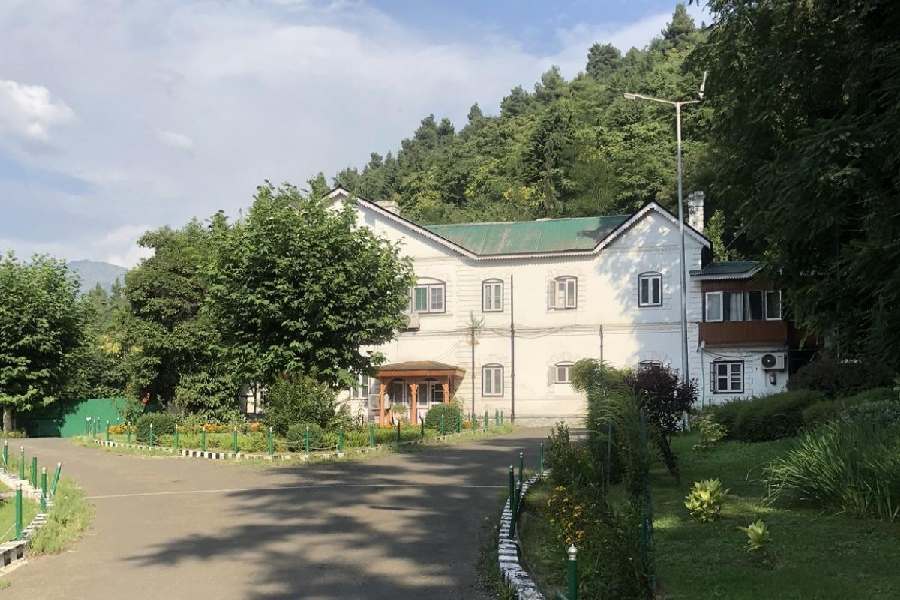
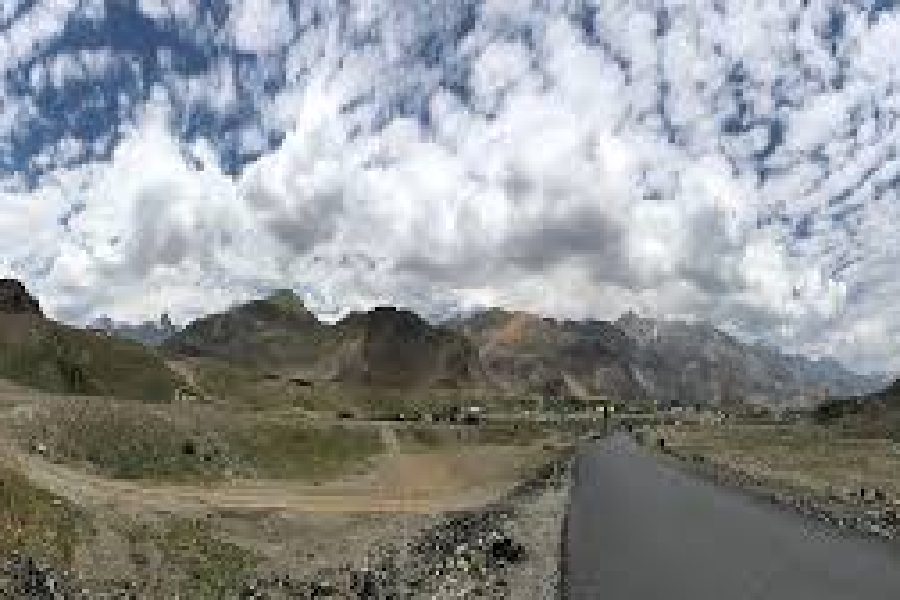
An Indian friend from London spent a few days with us. She kept marvelling that somewhere so beautiful should be so empty. Unpopulated landscapes are, of course, an ordinary enough feature of the Scottish highlands and islands. Many landlords in the 18th and 19th centuries evicted their crofting tenants and replaced them with more profitable sheep: the phenomenon known as the Highland Clearances. Many thousands of other Scots left their land more willingly, exchanging poverty for the richer prospects of the new industrial towns of Canada and Australia. Our island, Bute, isn’t ‘empty’ in that absolute sense. Seven thousand people live here. It has a good local newspaper (the Buteman), many hotels, pubs and cafes, and two Chinese and two Indian restaurants (one specializing in what it advertises as ‘Bengali cuisine’). On the other hand, Bute is nowhere near as full as it used to be. Only a few miles from its little capital, Rothesay, you can walk along a beach or over a hill and encounter no other human being. Even in the town itself — a town with a promenade, a yacht harbour and a putting green — a silence falls across the streets when the last shops close at six.
Businesses struggle. The creamery which makes Bute cheese closed this year. The number of island farms has shrunk from 40 to 14. Boarding houses usually display ‘Vacancies’ signs in their windows. Many shops are shuttered and abandoned. Ivy grows up the walls of derelict churches. Some of this can be blamed on the same economic forces that have withered the main streets of many British towns and villages, but the main reason for Bute’s decline is the changed habits of British, and especially Scottish, holidaymakers. For more than a century, Rothesay was to Glasgow as Puri and Darjeeling still are to Calcutta. In summers from the 1850s to the 1960s, Glaswegians in their thousands took the two- or three-hour journey here by steamer, so that for a few weeks every year Bute’s population was multiplied many times over; one account from the 1900s suggests 60,000 landed with their suitcases in the course of a single weekend. This thriving summer economy gave the island surprisingly urban features, including two theatres, three cinemas and, until the 1930s, electric trams that took visitors from the pier and through the fields to a popular beach. Even in the 1950s, when as a child I first came here, rowing boats still splashed around the bay and crowds queued at the pier for the steamers that criss-crossed the firth to other resorts and islands, and up the long sea lochs that poked north into the mountains.
Jet planes and cheap holidays to the guaranteed warmth of the Mediterranean ended these scenes abruptly. By the 1980s, the Rothesay holiday had become for most people a folk memory. When as a family we began to rent a house here a dozen years ago, Scottish friends saw our behaviour as mildly eccentric. We liked Bute for its quietness and neglected beauty and the kind of pleasant melancholy — departed glories and so forth — that can (or could) be found in places such as Ootacamund or Puri’s BNR Hotel. In India, an older generation often regrets how the faded charm of old hill stations and seaside resorts has been destroyed by the pressure of too many people and too much new money. Bute is an example of the reverse: its new money was Victorian, and when that age passed the money began to drain away, leaving memorials in the shape of putting greens, floral gardens and handsome villas that look across the bay to the hills. Not much newer money has arrived since.
More people should come here. To any potential Indian visitor to Scotland, I’d recommend it over more celebrated destinations such as Ben Nevis and Skye, with their tartan tat shops and whisky distillery tours. Out of our window I can see a blue sea rippling with white-crested waves and the palm trees in our garden waving in the wind. Palm trees so far from the tropics? The warmth of the Gulf Stream is a favourite local explanation, but in fact they’re a Victorian import: New Zealand cabbage palms that proved sturdy enough to survive a Scottish winter. Rothesay is full of them, which is why, in more innocent times, the town appeared on tourist posters as “the Madeira of the North”.
All this and the Sonargaon restaurant and its alleged specialism in Bengali cuisine. So far as I can tell, this simply means prawns are on the menu. Still, when the sun is on the hills and yachts sit like butterflies in the bay, I guarantee that not even the fussiest Calcutta gourmet would care.
************
As a judge of a literary prize, one of my holiday duties has been to read 50 novels in the space of a summer. The world is increasingly filled with literary prizes. Prizes for first novels and second novels, for novels in translation, for Commonwealth novels, for Scottish novels, for thrillers, for romances, for ‘novels of feeling’: you begin to feel that every novel has a prize in it somewhere. The award I’m helping to judge is new — the first winner of the DSC Prize will be announced at the Jaipur literary festival in January.
The prize money is generous, as are the rules that define eligibility. Authors can be of any nationality or ethnicity, but their work should be in English or English translation and “feature themes based on South Asian culture, politics, history, or people”. South Asia is defined as India, Pakistan, Sri Lanka, Bangladesh, Nepal, Bhutan, Maldives and Afghanistan. In other words, a novel by Martin Amis about Pakistani Muslims in Bradford would be included, while a novel by Amit Chaudhuri about an entirely white English community (fishermen, say) couldn’t be considered. I invent these fantastical examples only to show how unusual this prize is. Eligibility for literary prizes is almost always governed by the author’s nationality, and not by what he has chosen to write about. There isn’t (yet) a prize for the best novel exploring European themes or set in Europe and open to writers everywhere, including South Asia.
So far, I’ve read some very good books. Most are from India, which is understandable given the country’s size and literary traditions, but one or two of the best come from Pakistan, which in the past few years has been talked up in London and New York as a source of the most interesting new writing. I once heard a literary agent say “Pakistan is the new India”, meaning it was the place that literary prospectors now looked for gold, and he wasn’t being completely ironical. Unhappy and unstable societies often produce great literature. A sentence nobody should want to hear is “India is the new Pakistan”.
|