|
 |
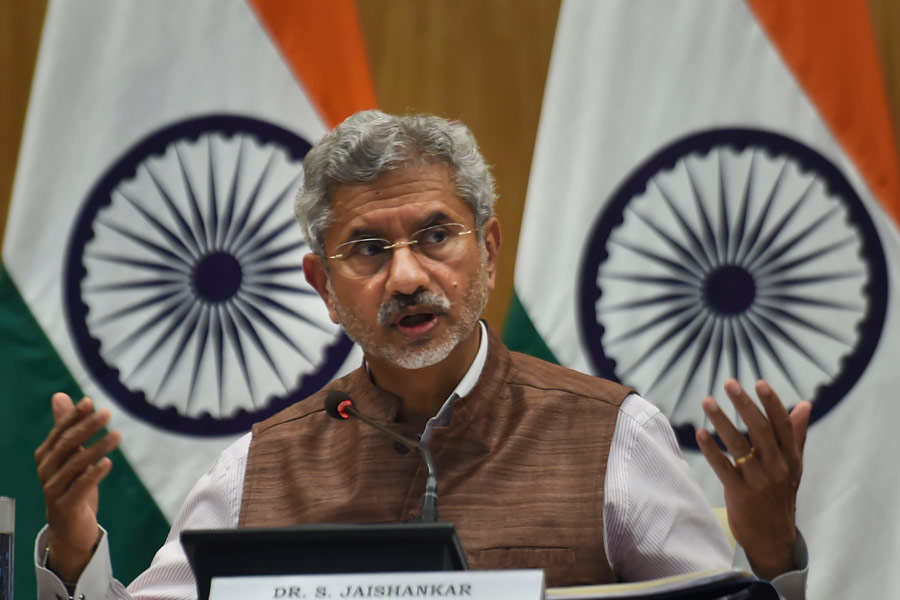
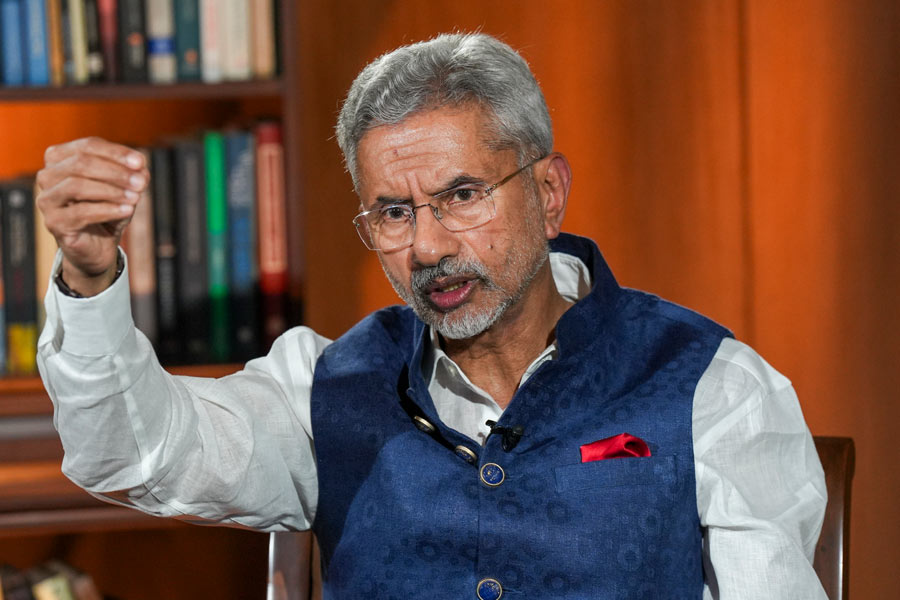
| Shah Mehmood Qureshi (top), SM Krishna |
Washington, July 17: Exactly a year after the UPA government was convulsed by a joint statement by India and Pakistan in Sharm-el-Sheikh, Prime Minister Manmohan Singhs policy of rapprochement with Pakistan has reached its Sharm-el-Sheikh point for the second time.
But unlike in July 2009, by the wisdom of hindsight, Singh did not let Pakistan this week to rock the Indian boat in political terms.
India has emerged from the foreign minister-level talks in Islamabad with the appearance that its diplomacy with Pakistan is firmly tethered by a careful calibration of its interests balanced against the Prime Ministers determination to seek normal relations with the troublesome northwestern neighbour.
Pakistan pushed for more when its foreign minister Shah Mehmood Qureshi met external affairs minister S.M. Krishna on Thursday because it wanted to close the deal on Sir Creek and Siachen to demonstrate progress in bilateral engagement and then move ahead with a diabolical plan to prise Kashmir away from Indias bosom for the nth time.
A formal opening statement by Qureshi, which was prepared while talks were going on with Krishna and delivered at a joint media conference by the two ministers on Thursday, was a dead giveaway that Pakistans foreign minister was being economical with the truth when he accused India of being selective during the discussions.
In our discussions, we were very frank and we had a discussion on all the issues that are of importance, whether it is terrorism, Jammu and Kashmir, the recent developments in Jammu and Kashmir, Sir Creek, Siachen, Qureshi read out from the prepared statement at the start of the joint media conference.
How there are opportunities of economic co-operation, and how through economic integration we can uplift the quality of the ordinary citizens of South Asia, how people-to-people contacts will facilitate and create an enabling environment to sustain the dialogue, all these issues were discussed in a very open, in a very frank, and in a very candid manner, he added.
Yet, shortly thereafter, Qureshi ate his own words in a separate conversation with Pakistani reporters at the Foreign Service Academy in Islamabad, scolding India for narrowing down the talks by focusing solely on terrorism instead of a broader range of bilateral issues, including water and Kashmir.
Krishnas amazement on landing back in New Delhi and learning about Qureshis extraordinary remarks was understandable because he had responded to the Pakistani ministers opening statement on identical lines.
Foreign minister Qureshi and I, along with our delegations, have had cordial and useful exchange of views on all issues concerning our relationship. We reviewed the current state of bilateral relations and discussed steps to promote trust and confidence in keeping with the mandate given to both of us by the respective Prime Ministers of India and Pakistan during their meeting in Thimphu.
Qureshi and I discussed a number of other bilateral issues.
The hope across the border that Kashmir would fall into Pakistans lap like a ripe apple, although not new, has been given a new fillip by the ongoing ferment in the Valley and has encouraged the Army General Headquarters in Rawalpindi to make a reassessment of the so-called Thimphu spirit which triggered Krishnas visit.
Foreign secretary Nirupama Rao was at her diplomatic best when she said as much in several television interviews last night without actually spelling out Pakistans sinister designs and making the post-Islamabad atmosphere get any worse.
There was a hiatus, if I may say so, in expectations because I believe that the Pakistan side had certain ideas about the re-engagement that were not completely acceptable, Rao said in one of three interviews where she repeatedly paraphrased this idea.
Qureshi made a tactical mistake when he accused Krishna of having gone to Islamabad unprepared, of seeking frequent instructions from New Delhi and of not having a clear mandate for talks.
Barring the nine rounds of talks between NDAs external affairs minister Jaswant Singh and US President Bill Clintons deputy secretary of state Strobe Talbott following the Indian nuclear tests in 1998, South Block has rarely approached any bilateral interaction with such meticulous preparation as the Krishna-Qureshi talks.
This was done because the Prime Minister wanted to be able to soon announce concrete decisions on settling some outstanding disputes with Pakistan and Krishnas visit was to have cemented the ground for this as part of an incremental approach.
For all of Pakistans intelligence activities in India, the ISI would appear not to have told Qureshi that unlike during the Indo-US negotiations for their nuclear deal, the Opposition was fully briefed this time, before Krishna left for Islamabad, about how the government was going about the business of dealing with its northwestern neighbour.
In addition, South Block had initiated the commendable step of taking the parliaments standing committee on external affairs into confidence on Krishnas mandate in Islamabad.
All of which explained the BJPs role of playing the part of loyal opposition on Friday by extending backhanded support to the external affairs minister by its scathing criticism of Qureshi without appearing to be uncritical of the UPA at the same time.
The Krishna-Qureshi meeting in Islamabad was a replay of their first encounter in New York on September 27 last year. But Qureshi does not appear to have learnt from that meeting that the Indian minister with five decades behind him in public life is no pushover.
At that time, Qureshi was guilty of precisely what he accused home secretary G.K. Pillai of: pre-empting the course of the bilateral dialogue.
Just before leaving Islamabad then for talks with Krishna on the sidelines of the UN General Assembly, Qureshi unilaterally announced that former foreign secretary Riaz Mohammad Khan would be Pakistans envoy for back channel talks with India and challenged New Delhi to reciprocate.
Krishna promptly showed Qureshi his place by rejecting the proposal with a withering public remark: Where is the need for a back channel dialogue when the front channel is open?
As India and Pakistan now seek to leave behind the bad taste of their Islamabad encounter, the foreign secretarys view that bilateral talks have not collapsed has been vindicated by Qureshis U-turn today.
He said Pakistan was very serious about talks with India and hoped for a new beginning of normal relations. Prime Minister Yousaf Raza Gilanis praise of Singh today as an honourable man is seen as an effort to backtrack after India saw through Islamabads game.
|