TT Epaper
The Telegraph
TT Photogallery
 
IN TODAY'S PAPER
WEEKLY FEATURES
CITIES AND REGIONS
ARCHIVES
Since 1st March, 1999
 
THE TELEGRAPH
 
 
CIMA Gallary
Email This Page
Call of the wild

I was correcting papers and my husband was watching television. Suddenly he said, “You know, we can do that too.” Do what? Well, he was watching NatGeo and he suddenly thought that we too could be ‘digitalising’ lion prides on the African grasslands. For me, Jaldapara was a place I dreamt of now and then, but Africa? Anyway, I have learnt over the years that it is best not to dissuade, reason or disagree with my husband when he is all fired up with enthusiasm, so I said “why not” and went back to my class VI’s interpretation of ancient history.

I was not prepared for the preparations that followed. We love to travel, but African safaris have never been on our itinerary before. That had always been confined to beautiful photographs in magazines, television and films like Hatari or Born Free.

Wildlife in Kenya thrives in the second half of May because the animals wander around the different African countries throughout the year, following the rain clouds. I was a little nervous about being in Kenya during summer because it sits smug bang on the Equator. But I was told not to worry as the altitude of Kenya makes up for its latitude.

Our trip began at 6am from Nairobi to Samburu — the first of our four safari areas, situated in northeast Kenya. Leaving Nairobi was not pretty — there was a lot of construction going on and it was raining so there was mud, slush, cold wind and traffic, but once we were out of the city, the roads were beautiful, the scenery picturesque and our spirits soared.

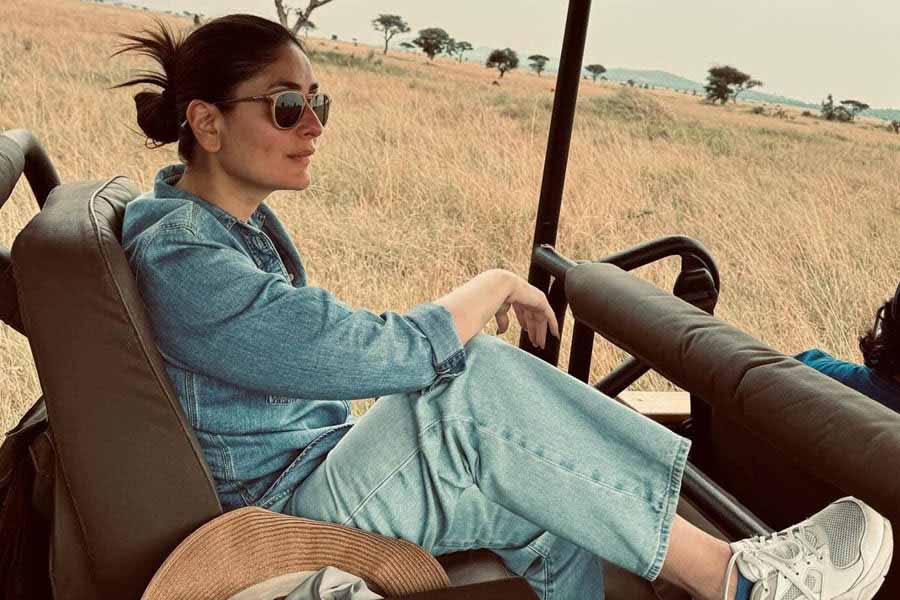
Settled comfortably in a Toyota van, whose roof could be raised to look out and take photographs, we headed towards Samburu with Eustace, our guide, friend and driver. He told us that apart from the other animals, there were the ‘Samburu Five’ which were unique to this area — the gerenuk (a deer), the short reticulated giraffe, the Somalian ostrich (which has a pink neck and legs), the oryx and the Gravy’s zebra, which has no stripes on its belly.

Believe it or not, we saw all five on the very first day — most people on these safaris don’t get to see all. We were thrilled! We also saw the mandatory lions, elephants, baboons, deer, hyenas and myriads of birds, but I confided to Eustace that my special dream was to see a cheetah or leopard in the wild. He said ‘I will try my best’. To top off the ‘wild’ experience, we checked into the Samburu Simba Lodge that was right next to a natural water hole. So we had a ringside view of lazy crocodiles, elephants and a wide variety of birds from our room.

Next we travelled west to Lake Nakuru, which is one of four lakes in that region. Nakuru’s claims to fame are the thousands of pink flamingos and two kinds of two-horned rhinos — black and white rhinos. The lake shimmered in the sunlight and turned rosy at sunset, all the while stained pink with the flamingos. It was breathtakingly beautiful.

It was amusing that the wildlife was quite unfazed by human presence. Sometimes the babies showed some curiosity, but the adults seemed downright bored. However, the silly birds, flamingos in particular, would rise en masse, squawking indignantly at the least sight of us. The hotel here was very nice too — we settled into cosy cottages built on a hillside overlooking the lake.

Our next stop was Mt Kenya in the central region. The most fertile area in Kenya, we could see rolling green hills and massive fields of crops. On the way near Nanyuki town, we took a pit stop and bought a certificate that said that we had crossed the Equator!

However, as we ascended the slopes the air grew cool and then quite cold. The Fairmont Hotel was an oasis of luxury amidst huge landscaped grounds where peacocks, ibis, storks, cranes and other small animals roamed around. Situated near Jane Goodall’s chimpanzee shelter, ‘Sweetwaters’, it faces Mt Kenya where the glacier was clearly visible in the morning. We treated ourselves to some well-deserved rest. I learnt that the Bongo (a hump-backed deer) is found only in this region.

The last safari area on our agenda was the famous Masai Mara (Ma = a tribal language, sai = people, mara = land) in southwest Kenya. We were told that women have to do all domestic chores including building and furnishing huts, but are not allowed to light a fire, even to cook — a man has to rub two sacred sticks together to ‘make’ the fire. I also gained an eight-year-old admirer in one of the villages, who gave me a flower. I was so touched!

The national park was everything we’d imagined, but we were totally unprepared for its sheer size. In whichever direction we turned, the savannah stretched to the horizon. At Masai Mara, Eustace managed to show me not only a cheetah but also a leopard. Though they were hidden from plain sight by the tall savannah grass, the black spots were unmistakable. The leopard walked quite close to our van, though quite indifferent to our awed presence. And the white spot on the leopard’s tail as it rose above the grass was splendid. My dream came true.

Back in Nairobi, we drove around the city, taking in its rhythms and charms. We topped off the sensational trip with a typical Kenyan meal. Kenyans rarely eat vegetables, though the butternut pumpkin is popular and meat of all kinds, barbequed and roasted is the staple diet with ugali (an East African dish) made of maize flour.

However, with the scenery, wildlife, cuisine, culture and people on one side, what did impress me most about this African country was that every village had a school. After centuries of nomadic life, the tribal folk have finally decided to set up permanent villages so that the children can be educated and only the men folk will go out to graze their cattle. A small change, but something nevertheless. And a truly memorable adventure.

Ready reckoner

Getting there: Emirates operates regular flights to Nairobi from Calcutta, via Dubai.

Staying there: Rooms at the Samburu Simba Lodge are available from about Rs 11,500 per night (low season), while tariff at the Fairmont Hotel Mt Kenya starts from approx. Rs 14,000 per night.

Top
Email This Page