|
Menfi (Sicily), May 5: Which Italian wines go best with Indian food? More specifically, which Sicilian wines amplify Bengali cuisine?
The exacting and exciting quest to match various Indian recipes with just the right Italian wine has brought Michelin-starred chefs and senior executives of four of Londons most upmarket Indian restaurants — the Bombay Brasserie, Tamarind, Quilon and Zaika — to Planeta, one of Sicilys most distinguished vineyards.
The estate covers 1,000 hectares and contains five wineries that produce a range of 14 red, white and Rose wines, plus 100,000 litres annually of olive oil.
The head of the family-owned business is 70-year-old Diego Planeta, who has developed a taste for Indian vegetarian food following numerous trips to the country since his first in 1970.
The family history goes back to 1510, said Diego, who has been evaluating wines himself for over 50 years. My generation is number 18.
Wine in Sicily is like dal in India, he said. Can you imagine India without dal?
Diego gave the thumbs-up after tasting a number of typically Bengali items made for him by Saikat Nag, 30, executive sous-chef at the Bombay Brasserie.
I cant believe this is potato! murmured Diego when Nag disclosed the mystery of the humble aloo bhaja.
I like them all, Diego continued, as he had several helpings of ladies fingers, along with Basmati rice, begun bhaja, gota masoor dal, Red Snapper machher jhol (which, Nag said, is, like rui, part of the carp family), and tomator chutney containing kishmish.
Diego experimented with two of his white wines — Alastro and Cometa — but surprisingly settled for Cerasuolo Di Vittoria, a light red he drank slightly chilled.
Diegos own chef, Angelo Pumilia, who travelled to India recently with the groups head of public relations, Penny Murray, explained his bosss choice: The light red, when cool, has a good balance of body and heart.
Diegos family, notably his daughter, Francesca Planeta, the groups director of marketing, is hoping to promote sales to India, a country where the wine market is expected by western experts to grow rapidly.
Diego has been all over India with one notable exception: Its Calcutta next.
He said he wanted to experience the real India before it was changed beyond recognition by progress. He swam in the Ganga at Varanasi but feared the holy city might boast a McDonald Ghat the next time he returned.
I would like to retire in India, mused Diego, as he surveyed his idyllically beautiful estate with the grape vines and olive trees sweeping away to the Mediterranean beach from where Tunisia on the African continent can be glimpsed on a clear day.
For his daughter, Francesca, there was meticulous work to be done as she sat all afternoon with the team from London going through the groups range of 14 wines.
They swirled the wine in fresh glasses, smelt the bouquet, took little sips and carefully spat the liquid into decanters.
The next evening, the reputation of Indias cuisine hung in the balance as Francesca invited 30 leading food and wine journalists from Europe to a contemporary Indian dinner prepared by the chefs from London. She would provide the wines selected by the chefs.
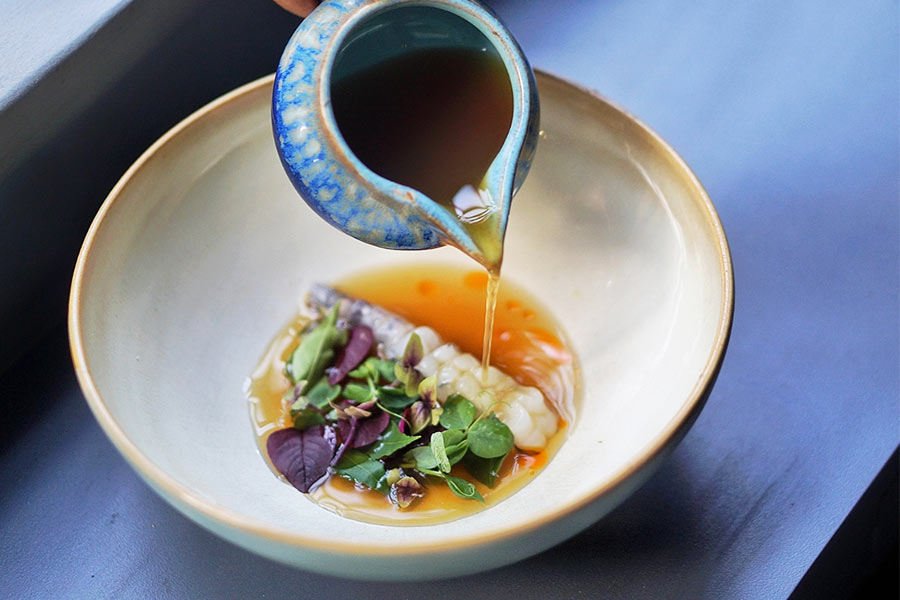
For the gala banquet, Alfred Prasad, chef at the Tamarind, offered grilled scallops on spiced tomato chutney, accompanied by Chardonnay 08, and for dessert, cardamom rice pudding with mango coulis, served with a sweet wine, Passito 08.
For the main courses, Lamb Roghani was preceded by Murg Khatta Pyaz and Masala Red Snapper — all three items were made by Nag, who worked through the night.
The lamb was accompanied by two red wines, Santa Cecilia 06 and Syrah 05, the chicken by Cerasuolu 08, and the Red Snapper by a white, Cometa 08.
The Telegraph did notice that the waiters cleared away plates mostly wiped clean. Nag and Prasad were also warmly applauded when they took a bow before their guests.
|