TT Epaper
The Telegraph
 
IN TODAY'S PAPER
WEEKLY FEATURES
CITIES AND REGIONS
ARCHIVES
Since 1st March, 1999
 
THE TELEGRAPH
 
 
CIMA Gallary
Email This Page
MOBILITY IN CALCUTTA
- Too many experiments with transport have failed in India

Calcutta has some beautiful spaces. The central court of the Oberoi Grand and the atrium of the Taj Bengal come readily to mind. So when I come to Calcutta, I try and spend my time in such welcoming environments, and as little as possible on the streets. The streets are a battleground for a peculiar genre of warfare, in which people and vehicles advance aggressively at one another only to avoid collision at the last minute. There are collisions once in a while; more often, there are collisions of tempers. But most of the time everyone takes it very coolly. For this I admire Calcuttans, but however much I tried, I could never be so good at the game as they are, so I retire before I get hurt.

Congestion is nearly as great in the business centres of Europe, except for certain forms of transport that are to be found only in India, such as rickshaws. Rickshaws and trams made the conjunctions more complicated in Calcutta. But for better or worse, foot rickshaws have been largely removed from the main roads, although one or two still occasionally mingle with buses and trucks when their runners think no policeman is around. With their passing, Calcutta has come closer to being a modern metropolitan city. Trams still pass, but they have become much rarer. The few still on the roads are decrepit, so at last they are looking like authentic museum pieces.

There is one respect in which Calcutta still differs from other cities, even Indian ones: it has fewer traffic lights. So there are crossings where one still sees the primordial chaos in its full glory, observes the triumph of unpredictability. Even where there are traffic lights, there is a big difference between Calcutta and other cities: humans carry on crossing activity as if traffic lights did not exist. Since touching a human is taboo, other vehicles are reduced to tooting; whenever the traffic light changes, there is a loud chorus of toots from drivers trying to clear the foot or two in front of their vehicles.

But then, traffic lights are outdated, 19th-century technology; the latest thing is bridges. Delhi leads in them. At one place in the bed of river Jumna, it has built a bridge factory; it casts long cement blocks. When a junction is to be cleared of traffic lights, engineers dig foundations, weld together reinforcing, and pour cement to make base columns. Then they bring readymade cement blocks out of the factory, lay them between the columns, and pour a layer of tar. Voilà! You have an overbridge. By now there are over a hundred, and a dozen are probably being built at any time.

One consequence of this proliferation of bridges is the disappearance of pedestrians. Delhi was always rather sparse in pedestrians. Buses have always been plentiful, and the long distances persuaded people to jump into a bus rather than walk. But even walking is better than trudging up a bridge along a narrow pavement while dangerous vehicles run within inches; so pedestrians have taken even more to buses.

Since buses did not solve the problem, planners looked abroad again. They went to European cities like Berlin, and found that traffic moved smoothly there. The reason is that there are few cars on the roads. Everyone has a car, but everyone leaves the car at home; it is used only to go on holidays or to drive into the countryside over the weekend. They go to work by train; metros have become the norm in Europe.

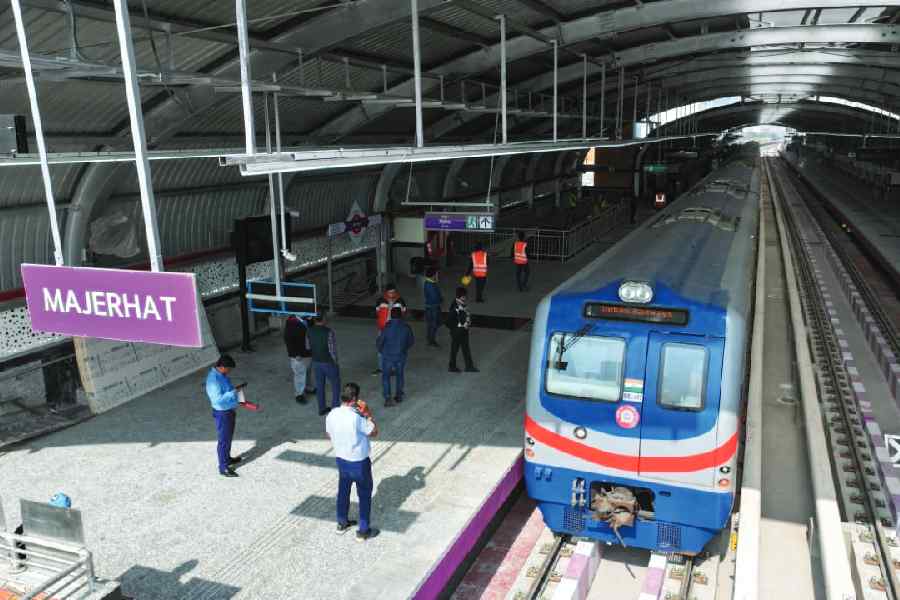
So increasingly, planners in India are taking to trains. The metro started in the north of Delhi, the habitat of traders and the poor; the south, where the wealthy reside, was little affected. But now it is spreading south towards the airport and east into Noida; and while it spreads there, it has turned roads into obstacle races. So where they can, even the rich are taking to the metro, which is fast, light and cheerful. Where they cannot, they either sit for hours in traffic jams, or they just stay at home. Calcutta Metro was better planned; most of it is underground. So although it is getting a bit old, it runs fairly well, and it disturbs the rest of the traffic little.

All over India, the public authorities thought they were going to solve traffic problems with bridges. But they did not. Then they thought of solving the problems with trains, and they did not. Now they have to think again. Where might they go next? I think they will go to Japan. Japan is a very congested country; and it is rich — richest next only to the United States of America. To make cars compatible with the city, they have built elevated highways in Tokyo which traverse the whole city. The result is that although the airport is some 40 miles away, one can reach one’s hotel, even in the oldest and most congested parts of Tokyo, in less than an hour. The future lies in double-story roads — the upper story for fast vehicles, and the lower story for all other kinds of lower life, including humans.

This sounds rather inhuman; for those who care for humans, there is the Latin solution. A number of Latin American cities, starting with Bogotá, have constructed what are essentially dedicated busways. They are like the old tram tracks, except that there are no rails; instead, there are high-capacity, articulated, luxury buses. They are a good way of persuading people to move away from cars; they may be a good solution for many American cities. Delhi experimented with them, but did not go far. They work well when the dedicated busways range over long distances. Delhi simply has not the road capacity to dedicate it to busways; other Indian cities have even less.

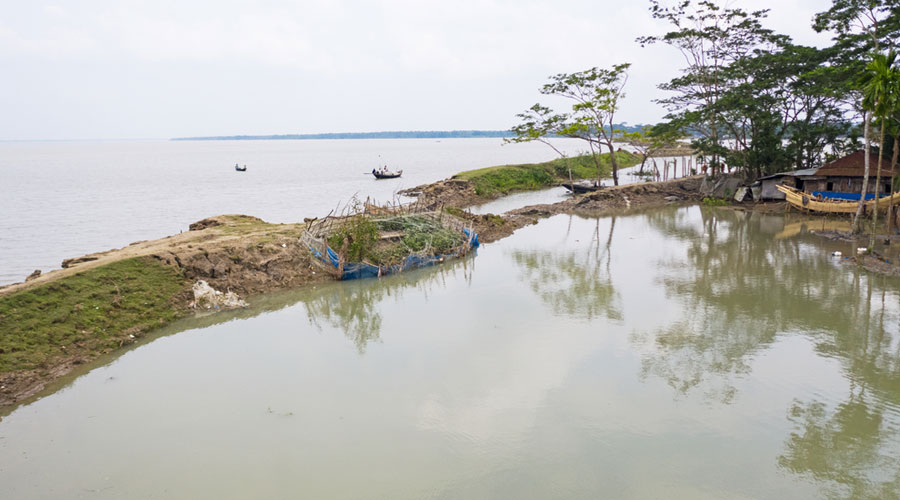
After all these failed experiments, do Indian cities have a chance? Maybe Calcutta does. It has so many waterways; whichever way I go in Calcutta, I am likely to come across one within a couple of kilometres. Today, the waterways are dirty drains, along which stretch slums. But at one time they must have been streams or canals; they can still become waterways. All one has to do is to fill them with flowing water; it should not be difficult in Calcutta, which has plenty of water around it. Water has the advantage that humans cannot walk on it. So the uncontrollable confusion of human with vehicular traffic that afflicts Calcutta is unlikely on waterways. The embankments could be planted with flowering plants. Old men would sit on the embankments and catch fish; their leisuretime activity could replace the fish being imported now from Bangladesh and other places. Waterbus stations could be built with restaurants and shops; families could repair in evenings to the nearest bus ghat and have some fun. And once Calcuttans rediscover the beauty of water, they will look again at all the water close to them, and begin to use it for work and recreation. There was a time when the Hooghly was the lifeline of Calcutta. Let this river be supplemented by a thousand liquid lifelines crisscrossing Calcutta.

Top
Email This Page
 
 
" "