|
|
|
Hand of friendship
|
LOOKING EAST TO LOOK WEST:
LEE KUAN YEW’S MISSION INDIA By Sunanda K. Datta-Ray,
Viking, Rs 499
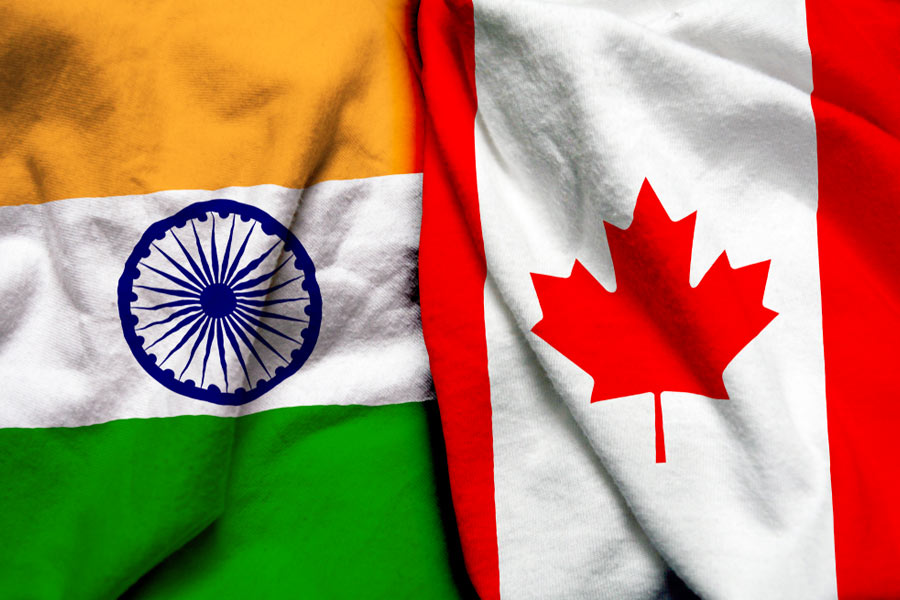
Singapore is a little bit of the West in Asia. Anyone who has been there is unlikely to mistake it for a typical Asian city. It is not teeming with people and its public services are excellent. Of course, Singapore has size on its side and its makers have made the best use of it. Thus what was once dismissed as the Little Red Dot by a former Indonesian president is now one of the world’s busiest entrepôt and a clean and lovely city. What is even more noteworthy, as Datta-Ray points out in this book, it is of critical importance to India’s emergence as a major player in Asia.
India’s relationship with Singapore has never been easy despite the best efforts, according to Datta-Ray, of Lee Kuan Yew, Singapore’s first prime minister, who has, in 2005, assumed for himself the grand, if a trifle bizarre, title of Minister Mentor. The book opens, in fact, with the account of how immediately after Singapore’s independence in 1965, Lee, as prime minister, wrote to his Indian counterpart, Lal Bahadur Shastri, seeking military assistance. The appeal was ignored, even though Lee and Shastri had met three months earlier. This was the first of many refusals from the Indian side till P.V. Narasimha Rao became prime minister and pursued a Look East strategy. Lee, however, did not waver from his vision of India as an Asian player. Singapore has become important to India because of what the author describes as “Lee’s robust proselytization”.
What is inadequately analysed are the reasons for India’s reluctance to respond positively to Lee’s overtures. Datta-Ray suggests a few reasons but does not probe any of them in any depth. First comes that term, the Cold War — used often to explain a lot of developments between 1950 and 1990 — which prevented India and Singapore from coming together since the two countries belonged to two different sides of the great divide. Two related questions need to be asked in this context: one, why was it that despite the division Lee continued with his overtures and India, more often than not, demurred? Lee may have been “a man before his time” and driven by a vision or a “mission”, but why was India so unresponsive? This leads to the second question, which is, in fact, a counterfactual: if there had been no Cold War, would India and Singapore have come together in the 1950s and 1960s?
The other reasons that Datta-Ray gives are all given by people from the Singapore side. One that India was not willing to pursue domestic reforms so there could be no meaningful relationship with an economically dynamic Singapore. (This rather seriously undermines the Cold War argument.) Two, India was inward-looking and prickly. What may have been critical from the Indian point of view — and Datta-Ray only touches on this — was India’s own self-perception as a world power. It thought it didn’t need Lee’s vision.
The strength and weakness of Datta-Ray’s book are suggested by its subtitle. The book is about Lee and his mission and often in Lee’s own words. The real strength of the book is its fast-paced narrative in that limpid prose one has come to associate with the name Sunanda Datta-Ray. His choice of anecdote is enviable, and the manner in which he places them and the various important events give to the book a structure without imposing on it any kind of theoretical overtone. The real meat of the book lies in the hours and hours of interviews that Datta-Ray recorded. A later-day historian will have to match these with what is there in the archives.
Superior journalism is often the first draft of contemporary history. Datta-Ray’s book shows how valid this description is. It is a book that one can engage and argue with. This is, any day, preferable to what is often dished out as the Truth.
|