|
All nations think that they are virtuous. But the United States of America has a particularly high opinion of itself. Its national myth is that its ideals and policies are flawless, relevant not just for its citizens but for the entire world. When George W. Bush said that America was the “the greatest nation on Earth and the last, best hope for mankind” he was speaking not merely for himself or for his party, or for his particular tribe of politicians. In fact, one part of the statement came from an earlier president, whereas both parts shall be endorsed by his successor, and by the vast majority of the voting public. The conceit that the US provides the best if not the only model for the rest of us to follow is widely shared by the American intelligentsia as well.
A consequence of this belief is that if other nations choose to disagree with any aspect of American policy, they are seen as malign or stupid. It is rarely conceded that they might have legitimate or honourable reasons for not standing shoulder-to-shoulder with the US. Consider, in this respect, a recent essay published in the Newsweek magazine. This provides a perspective on relations between India and the US past and present, in the context of the forthcoming meeting of the Indian prime minister, Manmohan Singh, with President Barack Obama. This is how the article begins:
“Until very recently, India seemed to pride itself on poking a finger in the eyes of rich superpowers, particularly the United States. Beginning in the mid-1950s, India was the leader of the group of poor, postcolonial nations that banded together in what they called the nonaligned movement, but which routinely tilted to the Soviet Union and bashed American imperialism. To Washington’s consternation, New Delhi voted against the U.S. at the United Nations time and again.... Even after the fall of the Berlin Wall, when India began to abandon Soviet-inspired economic planning, New Delhi retained a reputation for obstructing America at every opportunity.”
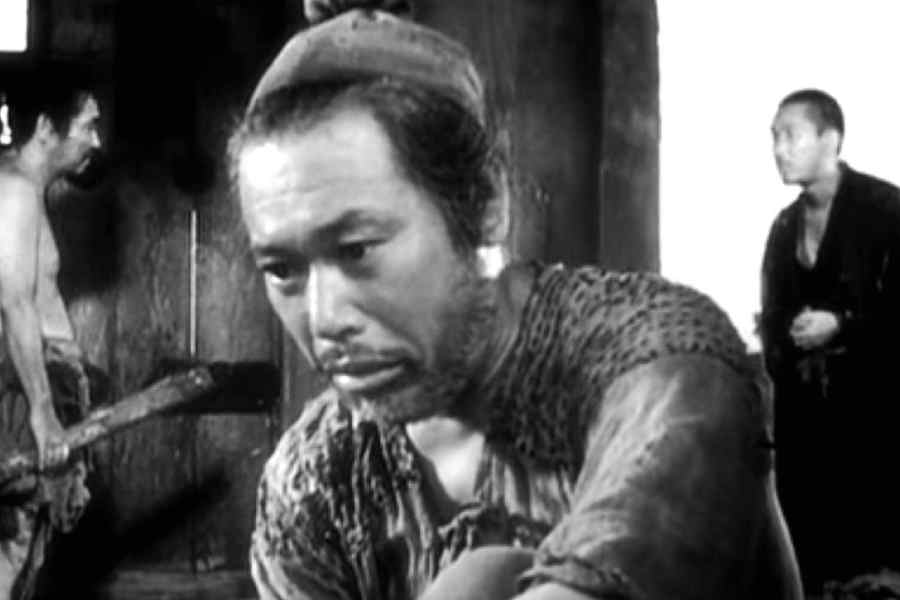
This is a misleading, not to say tendentious, representation of the history of relations between the two countries. For it was they who turned their backs on us. Through the late 1940s and early 1950s, the government of India was keen to cultivate good relations with the other great multi-cultural democracy. However, in 1954 the US secretary of State, John Foster Dulles (picture), signed an arms pact with Pakistan which effectively made that country a client State of America. Even so, India sought hard not to take sides in the Cold War. Although relations with the US soured somewhat after its pact with Pakistan, India continued to maintain close ties with the countries of Western Europe.
The votes in the UN that the Newsweek writer complains about were not so much anti-American as anti-colonial. Through the 1960s, the main points of contention between Indian and American diplomats (and governments) were Palestine and Vietnam. India rightly demanded that Israel grant equal rights to Palestinians, and rightly chastised America for waging a war in Vietnam.
I would not wish to reproduce this one-sidedness by claiming that we were blameless. For we, too, can be a preachy people — and Jawaharlal Nehru in particular seems to have taken the lofty high ground in talking down to Americans. Moreover, a large section of our intelligentsia was then left wing in orientation, and hence prone to disparage the ideals and institutions of the capitalist West in general and of the US in particular.
Anyway, in recent years the two countries have finally begun to come closer together. In the opinion of the essayist in Newsweek, this change in orientation is largely the product of the policies of the current Indian prime minister. He claims that “Manmohan Singh is repositioning India as an emerging power that can say yes. In place of the resentful leader of poor, postcolonial nations, Singh is defining India as an emerging powerhouse that can sit at the table of rich nations, with fewer chips on its shoulder”. Singh is praised for his work in apparently “removing India from the camp of global-warming denialists”, and for “nudging India to go beyond ‘no’ on a host of other global issues”.
Once more, one is obliged to correct the author’s history. For it is in fact the US that is in the habit of saying ‘No’ to global treaties and trans-national co-operation. The US refused to sign the Kyoto Protocol in 1997 — had it done so then, China and India would have been compelled to come aboard, and the world would now be a cleaner place. The US defied international opinion by invading Iraq in 2003; had it listened to wiser counsel, the world would now be a safer place. For very many years now the US has regularly and routinely said ‘No’ to international initiatives that seek to serve the interests of humanity as a whole. Thus it has failed to endorse the International Criminal Court and the treaty to ban landmines worldwide.
The article in Newsweek ends on a note that is at once hopeful and hortatory. We are told that “Singh will arrive at the White House on Nov 24 with the political momentum to push India deeper into the American camp”. Then a warning is issued to the prime minister’s domestic critics: “India is too big a country, too large an economy to simply opt out of global discussions. If it continues the politics of ‘no’, it risks being left behind as leaders of other nations — competitors, rivals, and allies alike — attempt to find their own solutions to the world’s problems”.
(The captions to the article are as revealing as its contents. ‘India Cleans up its Act’, says one caption, meaning this in more than an environmental sense. ‘Singh drops the habit of just saying no’, runs another.)
In the past, the thought leaders of India — by which I mean its politicians, scholars, and newspaper editors — were suspicious of American intentions and motives, sometimes (but not always) with good reason. Now, however, there is a great desire to befriend America among the same class of Indians. I share this desire, so long as friendship is clearly distinguished from subservience.
Manmohan Singh told the last American president that he was greatly loved in India. I hope he does not say something similar to Barack Obama, even though Obama is actually much more admired in this country than was George W. Bush. More generally, Singh must resist the temptation to “push India deeper into the American camp”. For India should seek not to be a camp follower but a “bridging power” (to use a phrase coined by Sunil Khilnani). That is to say, it must simultaneously cultivate good relations with the European Union, Russia, China, and the United States of America.
Among business and media circles, there is a strong lobby that seeks to privilege our friendship with the US above all. The argument usually made in favour of this choice is that we need the Americans to combat or thwart China. To this argument I answer with this cautionary tale from our recent history. In the summer of 1971, India was coping with a crisis of monumental proportions, caused by the flight of ten million East Bengalis into our territory. We asked for help from, among other countries, the US. Instead, the US even more energetically backed the barbaric military regime that had caused the crisis. The reason for this was not so much that Pakistan was a loyal ally, but that its good services were vital to opening a bridge to communist China.
The choice was characteristic. For despite what American politicians may profess in public, their foreign policy is always dictated by narrow self-interest. In 1971, they dumped humanitarian and democratic India in favour of autocratic Pakistan and totalitarian China. They may yet do so again. |