|
|
|
The University of Mumbai: for a brighter future |
An Indian born US citizen, Venkatraman Ramakrishnan, having won a Nobel prize, has brought immense happiness to us as a nation, and in particular to the academic community. That the Nobel laureate was an undergraduate student at one of India’s leading state universities — Maharaja Sayajirao University, Baroda — is even more gratifying. In fact, our state universities have always been home to some of the most outstanding students who have come to occupy positions of high professional and academic standing in later life.
While good students are still persuaded to go to the state universities for higher education, sadly their numbers are fast declining. The abysmal state of affairs in these universities is a cause for great concern. With the newer Central universities coming in, and with many other universities — world-class, private, foreign — in the pipeline (if Kapil Sibal has his way), a serious challenge is going to be posed to existing state universities.
Not only will the new universities attract good quality students, but they will, even more so, attract many good quality faculty from the state universities. These faculty members will move for a variety of reasons — and foremost among these will be the freedom to pursue intellectual pursuits without getting bogged down by the archaic governance structure that impedes the functioning of state universities. Monetary and other professional benefits, post the recommendations of the sixth pay commission, would also add to the reasons in some ways, but will not be the sole criterion.
This is not to say that all Central universities attract good quality students and faculty. For a variety of reasons, barring some really well-known and well-established Central universities, a number of them are still struggling to attract the very best. In some cases, Central universities (especially in the northeastern region) have not been able to attract a mix of pan-Indian and academically engaging students or a bright faculty because of their remote locations and lack of proper infrastructure and medical facilities.
On the contrary, one would find, even today, that there is still some attraction left in the state universities. A lot of students from rural and mofussil areas, and even from the Northeast, continue to come to state universities located in urban areas.
Therefore, while too much attention is being focused on Central universities in terms of expansion and liberal funding, it is equally important that some of India’s leading state universities, which have had a legacy of imparting liberal education and of developing an atmosphere for intellectual pursuit, should be revived.
While some serious efforts have been made by the human resource development ministry, along with the University Grants Commission and the Planning Commission, to help state universities in a variety of ways, unfortunately, most state universities continue to suffer. In fact, the prime minister, Manmohan Singh, in his 150th anniversary address at the University of Mumbai aptly summarized the current state of affairs: “Our university system is, in many parts, in a state of disrepair. We need better facilities, more and better teachers, a flexible approach to curriculum development to make it more relevant, more effective pedagogical and learning methods and more meaningful evaluation systems. The quality of governance of many state educational institutions is a cause for concern. I am concerned that in many States, university appointments, including that of Vice-Chancellors, have been politicized and have become subject to caste and communal considerations. There are complaints of favouritism and corruption. This is not as it should be. We should free university appointments from unnecessary interventions on the part of governments and must promote autonomy and accountability. I urge states to pay greater attention to this aspect. After all, a dysfunctional education system can only produce dysfunctional future citizens!”
One of the urgent ways in which state universities can be revived is by addressing the most important issue of the governance of universities. This issue has been raised and addressed in the recommendations of the National Knowledge Commission and, subsequently, in the Yash Pal committee’s report as well. In spite of these issues being deliberated, the efforts towards such reforms that have been undertaken by the state governments are found wanting.
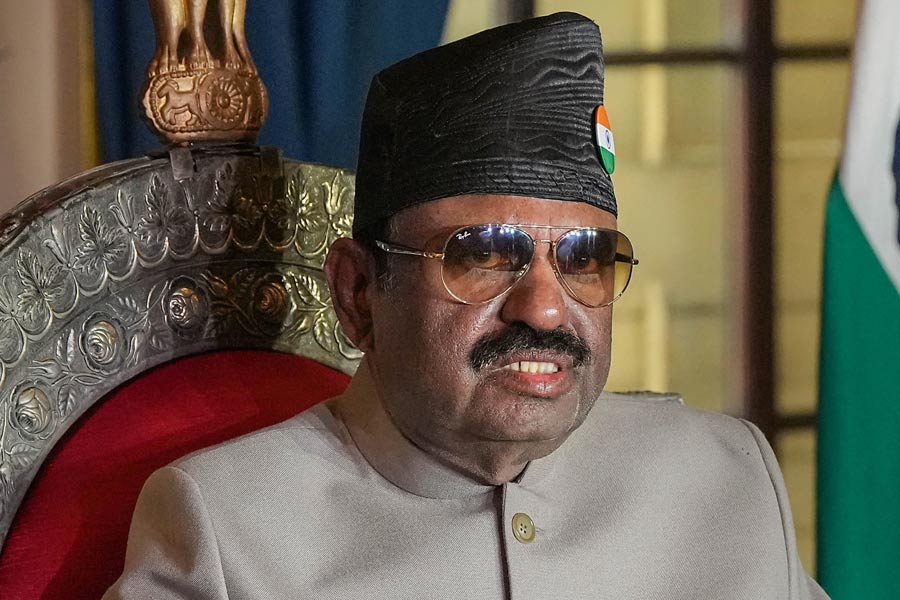
However, Maharashtra is an example that many states could usefully emulate. But for that to happen you require enlightened governors who are also sensitive to the changes taking place in the realm of higher education at the national level. The governor of Maharashtra, S.C. Jamir, in his capacity as chancellor of universities, has played a landmark role in institutionalizing a process of governance through which the standards of selecting a vice-chancellor have been raised enormously. This has been made possible with the support of the state cabinet through which the Maharashtra Universities Act 1994 was amended, and a new process has been put in place — this despite the fact that higher education does not figure anywhere as a priority for the Maharashtra government.
The new process is a huge improvement over the previous one. It institutionalizes a system in which there are definite timelines for completing the process of selecting vice-chancellors. It also delineates clearly the persons of eminence who will be a part of the search committee. A cursory look at the names of the chairpersons of the search committees in case of the universities of Mumbai (André Béteille), Pune (B.N. Srikrishna), Kolhapur (Yoginder K. Alagh) and Nashik (N.R. Madhava Menon), for which the process of selecting vice-chancellors has commenced, reveals that the level of the search process has been clearly raised. In addition, members of the search committees also include existing directors of the Indian institutes of technology and the Indian institutes of management. Further, the search committee will be assisted by a nodal officer identified by the chairperson or an external member who will provide all administrative and logistic support to the search committee. This nodal officer will be from the institute with which the chairperson or the external member is associated. This is an additional, but extraordinary, step as it will truly insulate the process of selection from the state government, the governor’s secretariat and the concerned university, as well as minimize the interference of interested parties.
The intentions are clearly visible and seem to be geared at selecting the best. In addition to these initiatives, reforming the composition of the syndicate, academic council and senate is equally important. Together, these changes will set the benchmark for maintaining high standards in the overall governance of universities. One hopes that other states, as well as the mandarins in Shastri Bhavan, are taking note of these momentous changes happening in a state that is known to encourage education barons. |