TT Epaper
The Telegraph
TT Photogallery
 
 
IN TODAY'S PAPER
WEEKLY FEATURES
CITIES AND REGIONS
ARCHIVES
Since 1st March, 1999
 
THE TELEGRAPH
 
CIMA Gallary
 
Email This Page
Making space

PROFILE

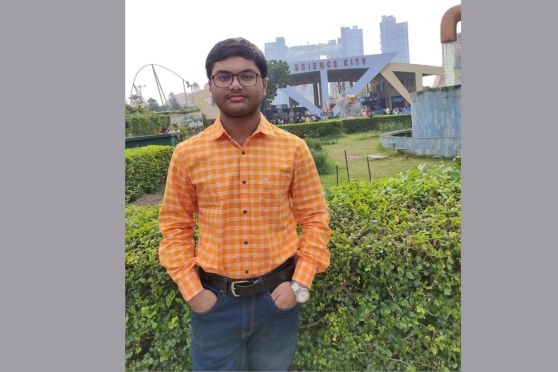
Amalin Datta is a designer with a difference. He shies away from the tag of an interior designer, preferring to call himself an artist who creates a space and artefacts that aptly fit into it. He works with clay, ceramic, wood, metal, stone and ceraclay (a durable mix of ceramic and China clay). The appreciation of all things beautiful runs in his blood. His parents — muralist Alokemay Datta and fashion designer Sharbari Datta — have been shaping the city’s aesthetics for a while now.

Alokemay Datta’s studio was the playground that shaped his son’s imagination and provided him with the exposure and inclination towards crafting pieces of art. “I remember young artists working in my father’s studio, and my mother helping out with the nitty gritty. I imbibed all that,” says Datta.

While he doesn’t hold a fine arts degree, taking on the mantle of his father’s business once he graduated from St Xavier’s College, Calcutta in 1987 was a natural step for him. The Dattas were part of the growth that followed in the ’90s and beyond, being involved in beautification projects around the country.

So from Mumbai airport to Metro stations or even Calcutta’s airport, they left their signature touches by way of murals and artefacts, some of which they sourced from overseas and others designed by them. And alongside he went ahead with a series of facelifts for corporate houses and individual homes.

Amalin, his signature line, includes exterior artefacts — pieces for outdoors, accent pieces and interior artefacts including stone panels, arches, ornate brackets, utility and decorative pieces in wood, interior fittings like hand-crafted pottery, staircase railing, doors, windows, ceilings, columns and so on. He, along with his team, also creates murals and frescoes on request.

Datta, is also responsible for the creative and execution part (that’s overseeing the karigars, helping with patterns and designs) for Sharbari, his mother’s garment line. He says that much of his creative energy went in building the brand in the ’90s.

Not that his interest in beautification of interiors — something he terms as spacescaping — ever took a backseat. He was quietly working at his own pace, tackling demanding individual homes and hospitality projects with equal elan. “We were doing everything, as the muse dictated, without trying to make a business out of it. It is chaotic, but that gives you a creative outlet,” says Datta.

TRENDS

Datta doesn’t buy the idea of trends as such. “You have to go by what appeals to your eyes as beautiful and not what the market tries to sell you,” he says.

He points out that an entirely Oriental or ethnic interior is something we’ve left behind: “Doing that takes a long time. You have to collect, hoard and create that kind of a space over a long span of time. It can’t be created overnight.”

He also wants to take a modern space, with minimalist steel and glass décor, and create an ambience using warm classical formations, or with typically traditional artefacts from various corners of the world. So, it could be an African mask or an Egyptian chest, an ornately carved wooden door or even a ceramic handcrafted door handle, which becomes the key element in the ambience.

He strongly emphasises Indian crafts and artefacts and rues the fact that we tend to ignore them, in a marked contrast to say Far Eastern or some of the European countries where they incorporate their indigenous art into the milieu. “We have everything and yet, we don’t use them enough and we do not try to create a market large enough for traditional Indian crafts,” says Datta.

PRODUCTS

The murals are commissioned on request and the prices vary according to the size. So an 8ft by 6ft mural may come for about Rs 50,000 while a bigger 15ft by 8ft one may have a heftier price tag of Rs 1.5 lakh.

Exterior artefacts that include everything from ceraclay planters to stone panels come in the range of Rs 5,000 to Rs 50,000. The wooden, ceramic and metal knick-knacks come at a more affordable Rs 2,000 to Rs 5,000.

“It is very difficult to put a price on art. I do not have a so-called product range. I create and source collectibles and depending on the medium, the design and the effort involved, the price varies,” he says.

In the pipeline now is a plan to open a dedicated store for Amalin. For now, Datta continues to work out of their Kasba studio as it’s easier for him to keep an eye on the Sharbari team there. He is also planning to use his website as a business forum.

Top
Email This Page