TT Epaper LHS
The Telegraph
TT Mobile
 
 
IN TODAY'S PAPER
WEEKLY FEATURES
CITY NEWSLINES
FEEDS
  RSS
  My Yahoo!
SEARCH
 
Archives Web
 
ARCHIVES
Since 1st March, 1999
 
THE TELEGRAPH
 
CIMA Gallary
 
Email This Page
Divest with aam-aadmi face
Sale pool widens, cash for welfare

New Delhi, Nov. 5: Divestment, an economic pill detested by Mamata Banerjee as well as the Marxists, has been given an aam aadmi sugar-coating.

The Centre today relaunched a drive to sell shares of public sector enterprises and sought to pre-empt a political storm by allowing the proceeds to be directly ploughed into social sector projects.

Till now, such funds were locked in the National Investment Fund (NIF), a facility from which only earnings of the corpus could be used for welfare projects.

Along with unlocking the money for aam-aadmi projects — the UPA government’s signature theme — the government has decided to make it mandatory for all PSUs which have made profits in the last three years to list on stock exchanges.

All listed profitable state-run firms will have to place at least 10 per cent of their shares with the public. The decisions will allow investors to pick up stakes in at least 100 central public sector units. The rules will not apply to undertakings run by state governments.

The relaxation on funds use will be valid for three years from April 2009 till April 2012. The Planning Commission and the expenditure department will pick the projects to be funded.

Political card

The decisions today mean the government can say divestment is being pursued to finance social welfare projects such as the rural job scheme that has become the UPA’s trophy project whose parentage is also claimed by the Left.

The rules were altered by the cabinet committee on economic affairs, chaired by the Prime Minister. Mamata is a member of the top decision-making panel but she was in Calcutta today because of the political violence in the state.

The Trinamul Congress is opposed to divestment, a stand iterated by the party today. “It is clearly stated in our manifesto that there shouldn’t be any divestment of profitable PSUs. If the central government’s desired objective is to use the money from the sale of PSU equity for the social sector, we are against it. It is the government’s job to look after the social sector and earmark funds for that,” Trinamul’s Partha Chatterjee said.

The Left dismissed the stated reason as “bunkum”. CPM central secretariat member Nilotpal Basu said: “The argument that the money is used for the social sector is bunkum. In the past, too, the government said so, but what happened?”

Fiscal compulsion

Home minister P. Chidambaram, who briefed the media on the cabinet decisions, said the special dispensation was being made in view of the tight fiscal situation and the need to fund social security programmes.

The budget for this year had forecast an unparalleled fiscal deficit (the gap between the government’s income and expenditure) of over Rs 4 lakh crore or 6.8 per cent of the gross domestic product, which means the country is spending beyond its means.

In the budget, probably fearing an uproar among some allies and the Opposition, the government had proposed to raise a modest Rs 1,120 crore from the selloff. But the economic survey suggested that the government should look at raising Rs 25,000 crore every year from divestment.

Some analysts saw in today’s decision an effort to make good a part of the shortfall, though the government did not offer any projections on how much money it hoped to raise from the selloff now.

“Since the tax collection will be lower this year, the only prudent way left for the government to fund the social sector projects was to reduce its stake in the PSUs,” said N.R. Bhanumurthy of the National Institute of Public Finance and Policy.

Investor option

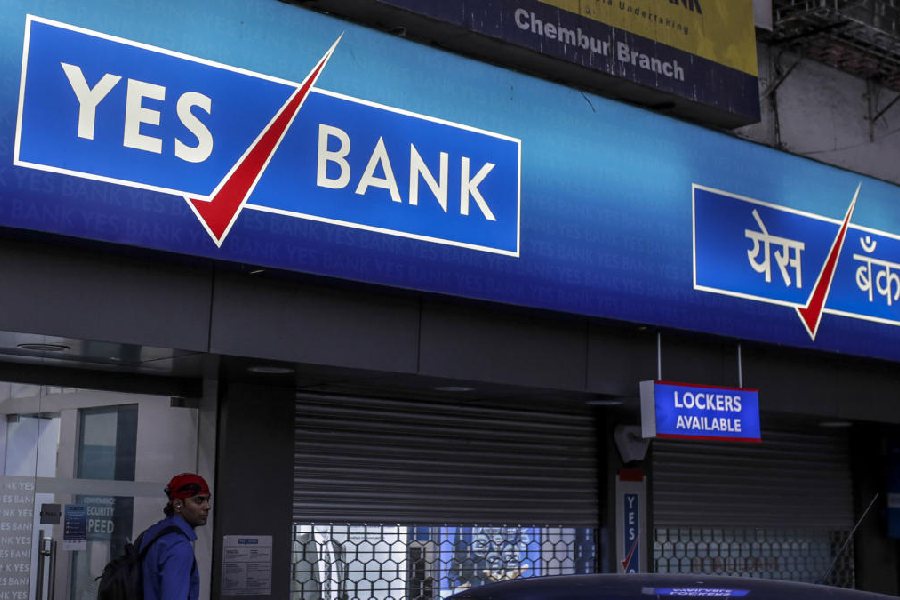
The divestment drive will offer investors a window of opportunity to buy into state-run firms and household names such as BSNL, Coal India, Konkan Railway Corporation, Hindustan Fertiliser Corporation, Fertiliser Corporation of India, Indian Telephone Industry and BSNL and NACIL (the combined entity of Air India and Indian Airlines).

At present, 48 PSUs are listed. The BSE PSU Index gave an annual compounded return of 23.81 per cent since its launch in 1999. In other words, an investment has doubled every three years.

Top
Email This Page