TT Epaper LHS
The Telegraph
TT Mobile
 
 
IN TODAY'S PAPER
WEEKLY FEATURES
CITY NEWSLINES
FEEDS
  RSS
  My Yahoo!
SEARCH
 
Archives Web
 
ARCHIVES
Since 1st March, 1999
 
THE TELEGRAPH
 
CIMA Gallary
 
Email This Page
From barrel of gun, little welfare flows
(Left) Tribals displaced by the Maoist conflict outside a south Bastar camp; (right) a tribal in the Dandakaranya forests, still living a hunter-gatherer existence. Pictures by Sankarshan Thakur

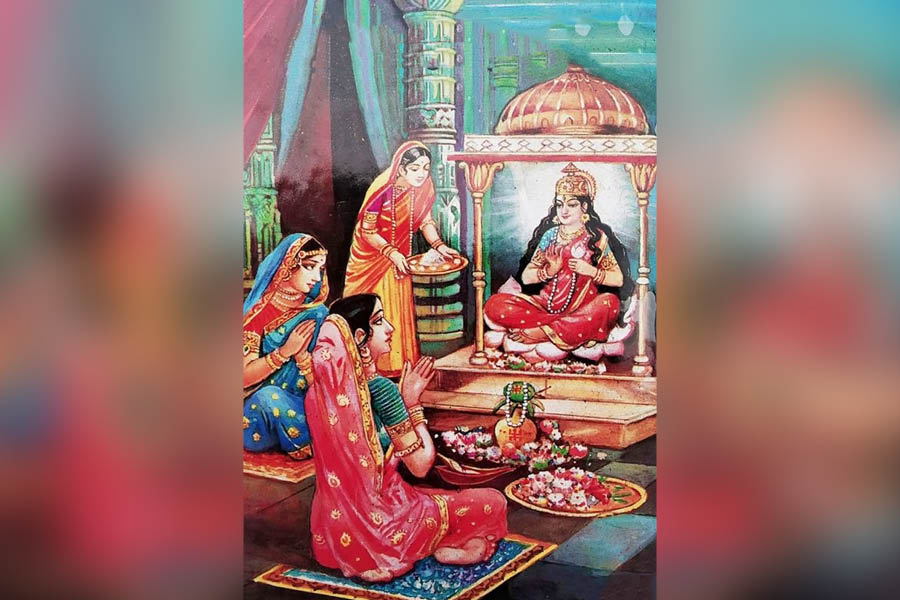
Kusma (South Bastar), Nov. 2: There are two myths about the Dandakaranya forests of South Bastar. The first, that this was the jungle bivouac of the exiled prince of Ayodhya and his wife. The second — less epic but more insistent — that it’s part of a welfare state.

If 21st-century India is a surging galaxy packed with twinkling constellations of prosperity, this most definitely is where its prime black hole is located — a carbuncled gash so radical in contrast to neighbourhood reports of double-digit well-being that it is no surprise it has begun to torment the body politic.

Pity, because nature had meant Bastar to be bountiful and beauteous: oceans of sal and sangwan bustling with wildlife; seasons rich in tendu and seasons rich in tamarind and mahua; top quality iron ore and tin, mica and bauxite, rubies and garnets; a slew of rivers and natural dams that crisscross the plateau, more than enough to sustain its sparse tribal communities. Even a scorched day brings its celebrations.

At twilight, the forest begins to sweat out its fragrances — honey, gums, the headiness of fermented “mahua” and “sulfi”, fresh off the palms, the splendoured white flowering of “kuleech” which springs rebellious from the heart of rock.

But most of those endowments have been brutally tapped or plain burgled by fortune hunters of the entrenched industry-contractor complex, their cynical profiteering aided by successive governments. What remains is a mostly ransacked wilderness whose inhabitants have been thrown back to a state-of-nature existence — hunter-gatherer, barter-trader, that’s how the tribals of Dandakaranya get by.

“It has been one way loot for decades,” says Manish Kunjam, former CPI MLA from South Bastar. “We had some of the richest resources in the country, we still do, and yet we must live in abject conditions, no wonder there is such anger, no wonder people are attracted to anyone who offers an alternative to a government that has just not been there.”

You take the arrow-road heading south of Raipur’s freemarket bustle — all-glass malls erected on air-conditioned steel, a new flotilla of five-star hotels, neon-lit seductions to profit margins on the share market, a chief minister gone to South Africa to woo more riches — and in next to no time the glitz is gone.

There is just the arrow-road and the odd signposts of governance. A malaria warning painted several monsoons ago, a forlorn foundation stone, already crumbling, a NREGA wage-list obliterated by Lara Dutta in a mermaid leap from Blue; in these parts you can probably understand them for thinking a starlet is more achievable than a daily wage.

“Naukri?” retorts a wayside village quizzically, as if an extinct bird had been mentioned, “sarkar naukri deti nahin, aur agar de to naxal sarkar ki naukri karne nahin denge.” (The government doesn’t offer jobs, and if it does, the Naxals won’t let us.”

You venture just a little off this road —National Highway 43, headed to the Dantewada hotbed of the Maoists and into Andhra Pradesh further south — and you’ve leapt headlong into the black hole. The state’s few signposts — the last clue it exists — vaporise quite at once, and it becomes an excursion into a living museum of the 18th century or thereabouts.

Medieval dwellings of mud and nettle, unclad dwellers, bales or firewood and rashes of rough millet put out to dry. Further into the woods, a hunting party of tribals, scrounging for the day’s meat with bows and arrows, or, if not that, fruit and drink. This is very far from our time, very far from roads and schools and healthcare centres, or water or power.

In more fortunate parts —villages closer to arterial roads — what was built has collapsed, through disuse and dereliction, or courtesy the Maoists. They will not brook roads because they will facilitate security ingress. They will not leave schools and dispensaries standing because they will be used as jungle bases for troops. Besides, it works well for them to keep people deprived because that bolsters that slogans against the “exploitative, bourgeois state” they want to overthrow.

About the only quality-of-life markers that appreciate in the jungles, month after month, year after year, are death counts. The rest has been left to deplete in the harsh shadow of conflict.

The natives haven’t an option but to eke out their inhuman indices — literacy begins at nil and strains to reach 21 per cent in pockets; 86 per cent of tribals remain marginal agriculture workers, which is a euphemism for being unemployed because barely any agriculture has been possible these past years.

“There was a time we used to report a Rs 500 crore industry out of here,” says journalist Karimuddin, a native of Bastar. “Tendu leaves, tamarind, chiraunji (a wild berry that turns into dry fruit) and mahua used to bring enough money. The government and the Maoists have killed nearly all of that between them. Both sides claim their objective is peace and prosperity for the people, both are bent on waging war on them.”

That probably makes for the third myth of Dandakaranya: that welfare flows through the barrel of a gun.

Top
Email This Page
 
 
Biz2Credit Bizsense