|
|
Fu Kian fried rice |
It never fails to amaze me how we docket our food as we move on. Take something like Chinese food. First there was something called Chinese, which encompassed everything that we ever ate from crispy fried lamb in garlic sauce to chilli chicken and even a terrible dish called the gobi manchurian. Then came the food of the regions and we got to know about the cuisine of Schezwan or that of Canton. Then, just when we had mastered that, India was introduced to world Chinese, which was a celebration of the East and the West, and occasionally of the East and East.
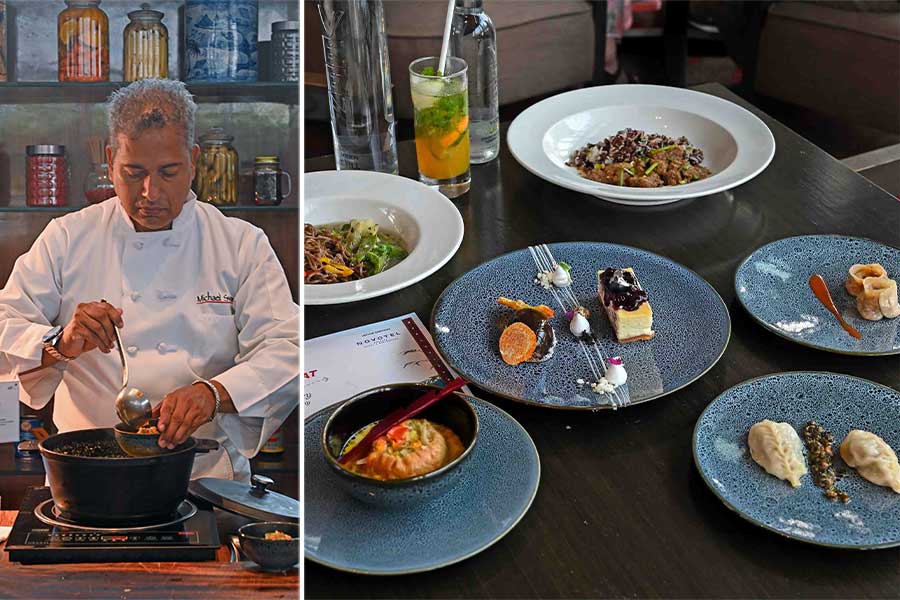
Now its the turn of what Sujan Mukherjee, the executive chef of Taj Bengal, calls nostalgia food. The chef waxed eloquent about this as I happily tasted the white fungus and lilybird soup that he had prepared for me. By the time I had bitten into the dry cooked bacon with pork sausages and had a taste of his stir-fried choysum (quite like the pak choy) with mushroom, I knew what he meant. Nostalgia food showcases all that is the best of Chinese cuisine.
|
| Steamed silken tofu with ginger soya sauce |
Any good hotel or restaurant goes through different phases of food journeys. But a successful restaurant makes sure that as it moves with the times, it doesnt forget its past. Chef Mukherjee tells me that Chinoiserie the Chinese restaurant in Taj Bengal has been highlighting some of the recipes culled out from its treasure trove of the old and the new which were brought to India by a succession of master chefs from China.
The chef hopes to recreate all that has happened in the hotels Chinese kitchen over the years. There are a great many dishes that cant be surpassed when it comes to simplicity of taste. Take something like the Fu Kian fried rice, named after the region in China that it comes from. The recipe which is essentially that of an egg fried rice with oyster sauce to which pork, chicken and lamb have been added was introduced to the restaurant by Chef Hubert Wen. Chef Hubert, often described as a New World chef, liked to experiment with new ingredients, but preferred to cook using old methods.
|
| Goo loo chicken |
Or take a steamed silken tofu dish tempered with the flavour of ginger and soy sauce that chef Lian Lei brought with him. The chef, another member of the New World school of Chinese cooking, enjoyed playing around with flavours, as the silken tofu dish, with its subtle and strong flavours, demonstrates.
By highlighting nostalgia food, chef Mukherjee is seeking to raise a toast to all the chefs who contributed to the Chinese cauldron at the Taj. So while you eat your steamed scallop with pickled chilli, or a dish of minced steak with fresh chilli and celery, you can also enjoy a chilli plum lotus stem, another chef Hubert recipe that presents different kinds of flavours, yet is cooked in a simple way.
Two other chefs chef Brando and chef Tong gave a boost to Chinas traditional cuisine at the Taj. The formers famous traditional dishes included chicken tossed with dry chillies and crushed black pepper, and trout steamed with soy. His Pe fung thong prawn is again a very simple dish of prawns cooked with onions, leeks, celery and ginger.
Chef Tong is still known for his Goo loo chicken, consisting of chicken roundels crisply fried and served with a plum sauce. He has added several countryside recipes essentially a farmers hearty food to the menu. I ate one of his dishes, and that was a lovely mix of minced lamb and green beans in a hot bean sauce.
Quite like Rome, a restaurant isnt built in a day. On the contrary, good food is a result of years of hard work. And while some of us would like to believe that a single chef carries a restaurant on his shoulders, the truth is that behind every good eatery is a band of good men and women. They know their food and it shows.
Pe fung thong prawn (crispy prawns tossed with spicy black bean flavoured with fried garlic)
Ingredients
• 500gm jumbo prawns • 100gm cornflour • 50gm zucchini • 1 egg • Salt, to taste • 15gm white pepper powder • 25gm chopped garlic • 250ml oil • 100gm chopped onion • 15gm chopped leeks • 15gm chopped celery • 15gm chopped ginger • 25gm chopped fresh red chilli • 10ml Chinese rice wine • 5gm black beans • 100gm chopped spring onions • 5ml sesame oil
Method
De-shell and de-vein the prawns and wash them well. Marinate the prawns in wine, salt, white pepper powder and egg. Place the prawns in cornflour and roll them over. Leave them aside. Chop the black bean and mix with a bit of oil. Mix chopped onions, leeks, celery, fresh red chilli and ginger. Deep fry the prawns till they are done which means crispy from outside, but soft and juicy from inside. Heat some oil and sautι the garlic. Add the onion mixture and chopped black bean. Add chopped spring onions. Add seasoning. Now add the prawns and quickly toss them together. Finish with Chinese rice wine and a few drops of sesame oil. Serve hot.
Chilli plum lotus stem
Ingredients (to serve 1)
• 250gm lotus stem • 25gm dried red chilli • 50gm plum sauce • 10gm sliced fresh red chilli • 50gm cornflour • Salt, to taste • 25gm sugar • 10ml vinegar • 100ml oil •10gm roasted white sesame seeds
Method
Soak the dried red chillies in water for about two hours and make a coarse paste of it. Peel and slice the lotus stems. Marinate them with salt and roll them over a bed of cornflour. Now deep dry the lotus stem. In a wok, heat some oil and add the chilli paste. Add the plum sauce, sugar, salt, sliced fresh red chillies and vinegar. Stir well.
Toss in the crispy fried lotus stem. Serve hot, garnished with some fresh red chillies and roasted white sesame seeds. |