|
Earlier this month, a 22-year-old man from Sonarpur first shot his wife, and then himself, with a countrymade revolver the day after he had been scolded by his father for failing to become financially independent. The young man, an only child and a Higher Secondary dropout, was not only living off his parents after marrying the girl of his choice, but was also keeping bad company. Apparently, both he and his wife of 10 months had taken to drugs; so the father, disgusted with their lifestyle, had asked them to move out of the family home.
In India, a man living with his parents after marriage is usually perceived as a model son. The dynamics among the members of such a household may not always be pleasant or simple, but occasional compromise and mutual tolerance can go a long way towards domestic harmony. As long as the son and the daughter-in-law show a token respect towards the patriarch (or the matriarch) of this quasi-nuclear family, and happen to be financially self-sufficient and supportive, the question of their living apart usually does not arise. Very rarely would a father ask his successfully breadwinning son to move out of the house just because he wants the young man to find out what it is like to live entirely on one’s own, deprived of the comforts of the parental welfare system.
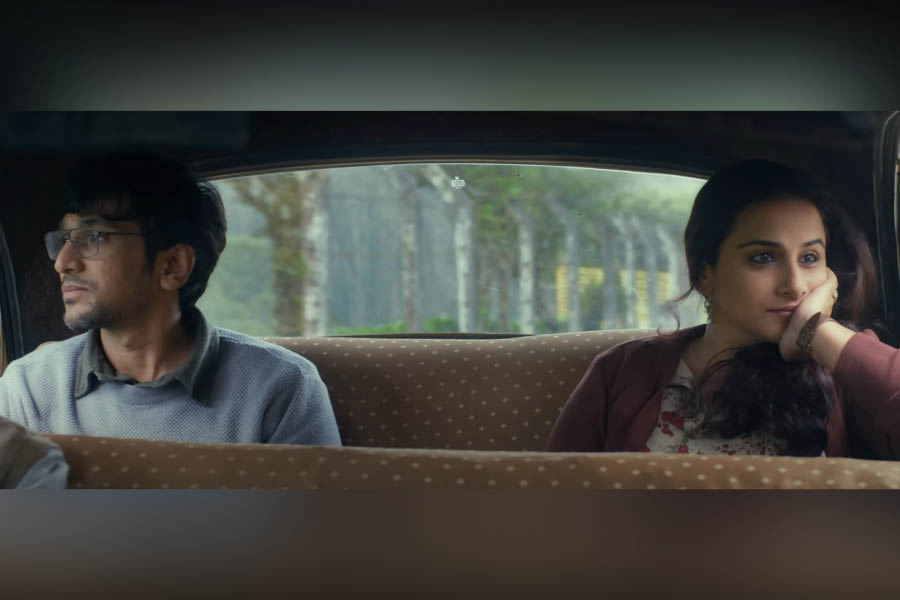
Recently, while watching the film, Wake Up Sid, I was rather taken by the story of how an insufferable brat, spoilt by doting parents and unlimited wealth, comes of age. It was quite encouraging until the thumping disappointment at the end. After all the trouble Sid had taken by walking out of the family cocoon to face the big, bad world and get himself a job, it was anti-climactic to see him crawl back into his father’s arms and mother’s bosom the moment he finds his ‘independence’. The film seems to suggest that without this sentimental reconciliation and return to the family, a reformed Sid would have somehow fallen short of the right sort of ending.
Independence, in Sid’s case, as in the case of many young people like him, simply amounts to having a job. It seldom implies the prospect of living on one’s own and managing the difficult, but unavoidable, cycle of cooking, eating, cleaning, washing, and shopping for oneself, of taking sole responsibility of the whole of one’s life.
It is true that independence is an adult word; yet, it deserves to be planted, and nourished, in the mind from the earliest years. Only then can it mature into a way of being later in life. In the West, children are weaned from an age, and in a way, that traditional Indian society still finds appalling. Indian mothers tend to be excessively protective of their children, especially of their sons. Cloyed by such care, most male children grow up singularly unprepared to look after themselves. They do not have even the basic life skills. (How many boys can sew their own buttons?) Thanks to the adoring women hovering around them ever since they can remember, boys in Indian families often grow into men who consider self-criticism a waste of time. Girls, much less pampered and raised with the prospect of eventually leaving home, generally turn out to be more rounded, self-reliant individuals.
However, both boys and girls in urban, educated Indian families experience puberty, sexual awakening, and the first stirrings of romance in an environment of adult surveillance or a perpetual lack of privacy at home. Even after they start working, they find it inconceivable to live on their own in the same city as their parents. It is a huge social embarrassment, even shame, for the parents to accept their grown-up offspring wanting to live on their own. This makes it equally difficult for single men and women to earn their independence, although they may be earning a handsome salary at the end of the month. So, many of them move to other cities, using education or work as an excuse, but actually driven by the desire for privacy and by an unwillingness to inflict on their parents what they assume to be a grievous form of hurt. The less-fortunate are compelled to get married to be able to live out their private lives. If the relationship happens to be unconventional (inter-caste, inter-religion or same-sex), there could be endless suffering or forced defiance.
Yet, middle-class India can be unpredictable. In the Sonarpur incident, a neighbour tellingly points out that the parents hadn’t objected to their son marrying a girl who was older than him, nor were they against the idea of their son and his wife living with them. They were only worried about their son’s inability to look after himself, his wife and parents. As long as one grows up, marries, breeds and nests under the approving gaze of one’s family, minor aberrations can be overlooked.
|