|
|
Picture by Rashbehari Das |
for HER
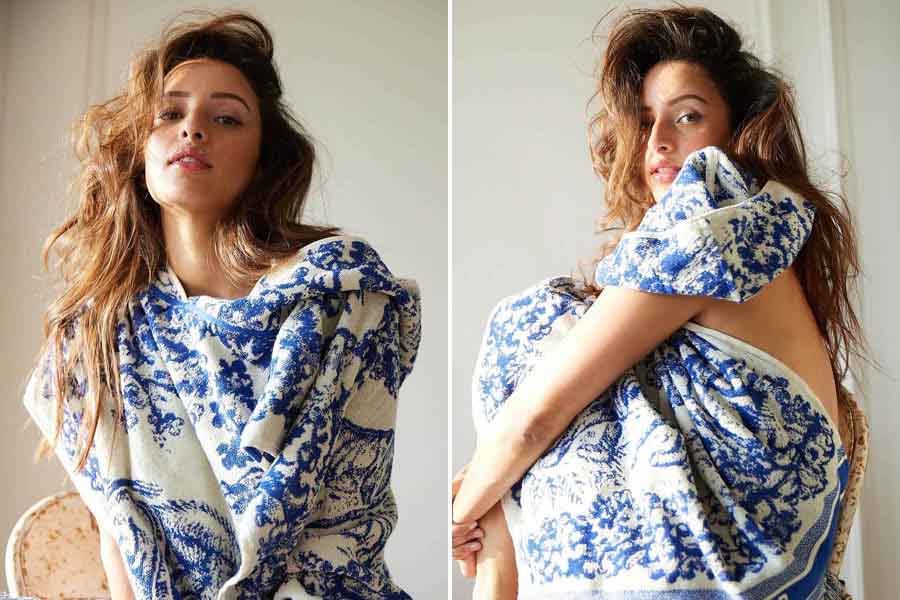
Priyanka Chopra has sizzled in it in Desi girl, and looked bewitching in its folds again in Kaminey. Enough has been said about the sari being the most flattering garment imaginable. But how many young women of today know how to wear one — without assistance? I think young girls should opt for chiffons or georgettes that drape well, instead of starched cottons that look more voluminous, says Karan Singh Parmar, stylist. They are also lighter and easier to carry. But remember: if you are getting near anything that is burning bright, cotton is your best bet. That said, heres how to drape it right or with a difference...
Sari SOS
Want to wear a sari on but mom is out of the house? Heres how to drape one the everyday way:
Make sure you are holding the sari the right way up — which means the fall should be at the bottom and you should be holding the corner which is not the palla. Tuck in the corner to the right of your navel and turn around, moving clockwise, tucking as you go. Now take the other end of the sari and toss it over your left shoulder to form a rough palla. Then, start making pleats from where you stopped tucking in. The pleats should be about five inches wide and should fall roughly in front of your navel when tucked in. Finally, return your attention to the palla, making pleats or just pinning it to your blouse.
Traditional Bengali drape
Tuck and turn in the same way as above. Then turn anticlockwise and tuck again. Now, throw the part that is left over your left shoulder, pleating this as you would a palla, though it will be much longer. The border of the sari should fall vertically down the front. Pin this in place. Then take the part that is left and bring it across your front. Tie a bunch of keys to the corner for effect (and a little helpful weight), and throw it over your left shoulder.
Sari draping expert Dolly Jain says this style is perfect for any occasion when you want to look dressy. For this look, pick a sari with a broad border. Complement it with a big bindi, traditional gold jewellery and alta. Married women can complete the look with sindoor and sankha-pala, she suggests.
If, however, you dont want to go overboard with the traditional look, stylist Karan Singh Parmar recommends that you keep the drape traditional, but play with the blouse for a more trendy look. Pair the sari with a tie-up choli or a knotted blouse, the kind Sharmila Tagore used to wear. And wear a nice choker instead of a lot of heavy jewellery, he explains.
The Mermaid Style
Another one of Dolly Jains favourites, this style is perfect with those who worry about looking slim.
Tuck in the sari as you would normally. Now pleat the sari for the palla and bring it over your right shoulder and pin it. Now take the material that is left and pull it through the cowl that has been made at the back, bringing it over the right hip and pinning it to your petticoat near the thigh.
This sari has no pleats in front. Light materials like chiffons and georgettes are ideal for this look. Since this is a very contemporary style, match the jewellery accordingly. A nice bracelet or chandelier earrings would be good. You could keep your hair open.
The Gujarati or seedha palla style
You need a sari with an ornate palla for this. The Bengali Baluchari is ideal and creates a nice fusion, says Karan. The style is similar to the normal way a sari is worn. The only difference is that the palla comes over your right shoulder. Tuck in the left corner at the left side of the waist.
 |
| Picture by Pabitra Das |
for Him
Want to compete with your sari-clad girlfriend or wife for elegance and attention? Dump those work-day trousers, and the easy-to-wear churidars for a dhoti this season. Its a very classy garment. Just as a sari transforms a woman, making her look different and more elegant, so does the dhoti for a man. I think every man should wear a dhoti on special occasions, says Sharbari Datta, designer. Heres how:
Step 1. Separate the dhoti into two unequal parts — roughly, three-fourths and one-fourth. The longer part should be to your left
Step 2. Wrap the dhoti around you so that you can bring the two sides together in front to tie a knot just below the waist
Step 4. Take the part on your right, gather it, pull it between your legs and tuck it at the back
Step 5: Pleat the remaining length of the dhoti much like you would pleat a sari, tuck it into the waistband and let the bottom part hang.
While this is the most basic way of wearing a dhoti, it too can be draped in different ways. The pleats on the left can be tucked into the pocket or held in the hand. The most difficult part is identifying the border and which side goes up. If you buy a new dhoti from the market it is usually pleated and thus easier to understand, explains Sandy, stylist. The para dhobi can also be asked to iron it in a way that makes it easier to pleat.
Another way of wearing the dhoti is by drawing the left side also from between your legs and tucking it at the back. This is a more rustic way of wearing it, but it does look cool. And its easier to carry as well, suggests Datta. The traditional Bengali look is the dhakka paar or broad-bordered, cotton dhoti in beige. But Sandy suggests a silk dhoti for a slim and uber cool look. Other kinds of dhotis are also in vogue. I get a lot of buyers for the narrow-bordered, coloured, south Indian dhotis, says Datta. For coloured dhotis, black and rich maroon are the two colours most in demand. Sandy also votes for a shibori-dyed dhoti for a trendy look. Or go for a tissue dhoti for a dressy look.
On the subject of what to wear with your dhoti, nothing works better than a dhuti-panjabi for the Bangali babu during festive times. But if you want to try out something different, go for an angarkha, a la Shah Rukh Khan in Paheli, suggests Datta. Or wear a short achkan with your dhoti. For that, though, youll have to wear a silk dhoti, so that it doesnt look voluminous, explains Sandy. Complete the look with a mul chador, draped casually over your arm. A brocade bordered chador will lend a designer touch to the outfit.
Keep the shoes traditional — mojris or leather sandals. But no flip-flops, or floaters please! Not even if it rains.
Wear your dhoti with confidence. If you look uneasy or nervous wearing it, youll spoil the look, cautions Datta.
P.S. If you are still not confident, try tying a belt over the dhoti and covering it with your kurta. Or pick up a pre-stitched dhoti.
|